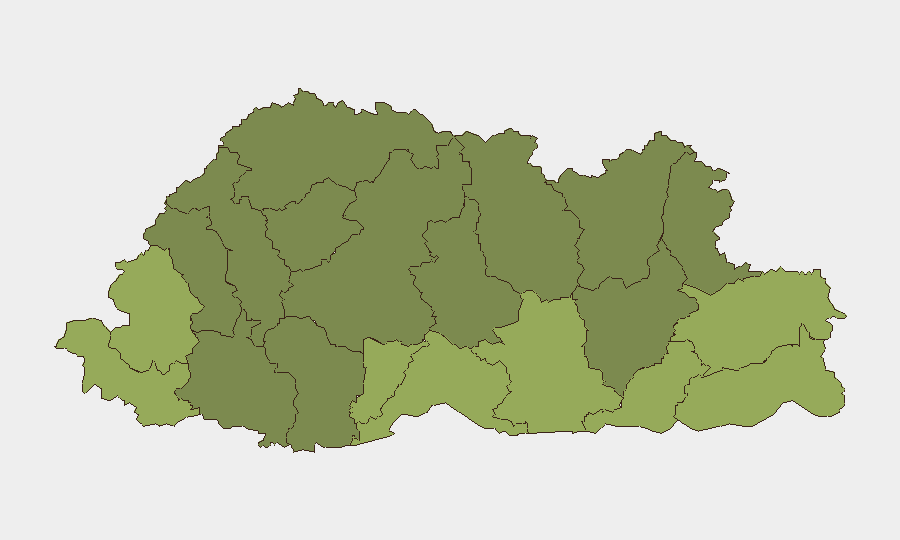
Situation Summary
Bhutan remains a stable, low-risk operating environment with no verified security incidents, civil unrest, conflict, or infrastructure disruptions reported in the last 24–48 hours. The national composite threat score of 4 (ranking #159 globally) reflects the country's historically peaceful trajectory and effective domestic governance. No near-term changes to baseline risk are anticipated, and cross-border spillover from neighboring regional instability (e.g., Manipur, Nepal political tensions) has not materialized within Bhutanese territory.
Key Developments
No discrete security incidents meeting professional thresholds were reported in Bhutan during the 24–48 hour window preceding this brief. Open-source channels, social media monitoring, and regional feeds produced no corroborated reports of protests, arrests with security implications, border incidents, major crime, transport accidents, or infrastructure failures. Neighboring countries (India, Nepal) continue to experience localized unrest, but no spillover events into Bhutan have been documented. A prior GeoBit country brief (July 12, 2026) similarly identified no confirmable security or conflict incidents in its coverage period and characterized Bhutan's environment as stable.
Highest-Risk Areas
Southern border districts—Samtse (58), Sarpang (55), Haa (52), and Pemagatshel (50)—drive sub-national risk rankings and warrant priority monitoring. These areas reflect exposure to cross-border migration pressures, regional trafficking networks, and proximity to Indian states experiencing periodic civil unrest; however, direct security incidents within these districts have not been confirmed in the current reporting cycle. Central and northern districts (Wangdue Phodrang, Lhuntse, Gasa) carry substantially lower risk scores, consistent with lower population density and reduced external connectivity. Risk concentration in the south reflects geographic and demographic realities rather than acute current threats.
How GeoBit Would Assist
AOI Monitoring & Early Warning on southern border districts (Samtse, Sarpang) would provide persistent watch for cross-border movement, trafficking indicators, or spillover civil unrest from neighboring Manipur and Assam. OSINT Fusion & Corroboration across X/Twitter, Telegram, regional news feeds, and multi-language social media would detect emerging protests, political statements, or public incidents before they escalate or affect expatriate populations. Routing & Network Analysis for corporate and NGO teams would identify alternative transportation corridors and safe zones in high-risk districts should regional instability intensify. Conflict & Military tracking would monitor Indian state-level developments (Manipur, Assam) for early warning of potential cross-border pressure on Bhutanese territory.
7-Day Outlook
No escalation in Bhutan's security posture is anticipated over the next seven days absent significant regional shock (e.g., major communal violence spilling across the Indian border). Routine administrative and judicial activity will continue; monsoon weather patterns may affect road access in southern and eastern districts, creating localized mobility constraints but no security implications. The baseline risk trajectory remains stable, and corporate duty-of-care protocols for Bhutan remain standard for low-risk environments.
Highest-Risk Areas — Ranked
| # | State / Region | Risk |
|---|---|---|
| 1 | Samtse District | 58 |
| 2 | Sarpang District | 55 |
| 3 | Haa District | 52 |
| 4 | Pemagatshel District | 50 |
| 5 | Samdrup Jongkhar District | 48 |
| 6 | Tsirang District | 45 |
| 7 | Zhemgang District | 42 |
| 8 | Trashigang District | 40 |
| 9 | Mongar District | 38 |
| 10 | Gasa District | 35 |
| 11 | Lhuntse District | 32 |
| 12 | Wangdue Phodrang District | 30 |
Sources
Previous Daily Briefs
A new Bhutan brief is written every day — each with its own risk map and downloadable CSV. Here's the last week; use the calendar to go further back.
📅 Browse every day by calendar →
Highlighted days have a brief. Tap a day for that day's map & analysis, or “csv” for that day's dataset ($5).
Atlas — our AI intelligence desk — emails them this snapshot personally. Nothing else, no list.