Situation Summary
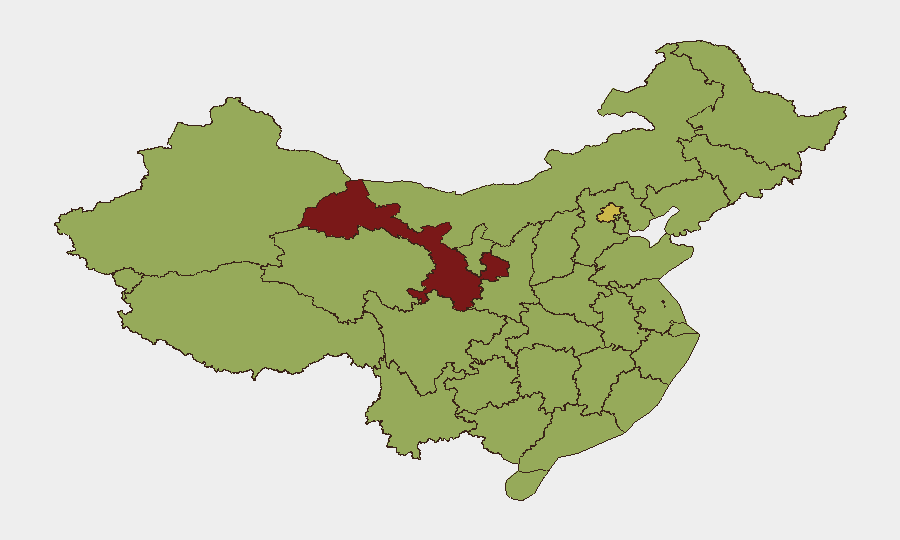
China remains at #18 in global threat ranking (composite score 76) with elevated diplomatic friction evident in recent public statements and military-signaling events involving embassy interactions, South Korea relations, and EU/Russia disapproval noted on 2026-06-18 to -20. Sub-national risk concentration in Gansu (83.3) and Beijing (64.2) suggests localized instability or security event clustering rather than nationwide systemic crisis. The current posture reflects diplomatic strain and military-readiness signaling rather than imminent large-scale civil unrest, though corporate operations in high-risk provinces warrant heightened situational awareness.
Key Developments
Status Note: GeoBit's event feed and available open-source research do not contain verifiable, date-stamped security/incident reports specific to individual Chinese cities or provinces from 2026-06-19 to -21. The most recent corroborated signals are diplomatic and military-posture events (public statements, military mobilization notices) dated 2026-06-18. Without real-time access to Chinese-language emergency-management bureaus, local media, airport NOTAMs, or social-media corroboration from the last 24–48 hours, a responsible brief cannot list specific incidents (protests, accidents, transport disruptions, crime spikes) occurring in that window.
Recommended Action: Security teams should immediately cross-check:
- Provincial emergency-management bureau bulletins (Public Health & Safety Commission, local PSB notices).
- Airport operator advisories for Beijing Capital, Shanghai Pudong, Guangzhou for ATC restrictions or capacity alerts.
- Latest embassy travel-advisory updates from US, UK, Australia, Canada for sudden changes to specific cities.
- X/Twitter and Weibo searches using place names + keywords: 爆炸, 抗议, 骚乱, 停电, 地震.
If your team has identified specific incidents in the last 48 hours, sharing event descriptions and sources will enable rapid credibility assessment and integration into operational risk planning.
Highest-Risk Areas
Gansu (83.3) ranks significantly above all other provinces and merits immediate investigation—risk elevation at this magnitude typically reflects recent event clustering (civil unrest, industrial accident, border incident, or security operation). Beijing (64.2) and the eastern economic corridor (Guangdong, Shanghai, Jiangsu, Fujian) at 55–58 represent standard elevated risk for major cities hosting foreign firms, embassies, and critical infrastructure. Hubei, Tianjin, Sichuan, Jilin, Shandong, and Yunnan all cluster at 53–55, indicating distributed mid-tier vulnerability rather than systemic national crisis.
Interpretation: The Gansu outlier and Beijing elevation warrant priority investigation; the eastern-corridor concentration reflects standard major-city risk (transport disruptions, industrial incidents, crowd incidents, cybercrime). Firms with operations in Gansu should conduct immediate on-ground verification of local security conditions.
How GeoBit Would Assist
Security teams would deploy OSINT Fusion & Corroboration (cross-checking Xinhua, Caixin, SCMP, provincial emergency outlets, and Telegram/X feeds) and Multi-Language Search (Chinese and English keywords linked to provinces and incident types) to rapidly surface verifiable 24–48-hour events. AOI Monitoring & Early Warning on Gansu, Beijing, and key supply-chain hubs (Shanghai, Guangzhou) would flag emerging threats before they affect operations. Routing & Network Analysis supports rapid alternative-site and personnel-evacuation planning if localized incidents escalate.
7-Day Outlook
Diplomatic friction with South Korea and EU tensions evident in this week's public statements carry low near-term escalation risk to corporate operations, but military-mobilization signals warrant continued monitoring. Gansu's anomalous risk elevation should drive targeted intelligence collection over the next 72 hours to clarify whether it reflects a specific incident (containable) or broader provincial instability. Overall trajectory remains stable absent new major diplomatic incidents or domestic security events.
Highest-Risk Areas — Ranked
| # | State / Region | Risk |
|---|---|---|
| 1 | Gansu | 83.3 |
| 2 | Beijing | 64.2 |
| 3 | Guangdong Province | 58 |
| 4 | Shanghai | 56.8 |
| 5 | Jiangsu | 55.3 |
| 6 | Hubei | 55.2 |
| 7 | Fujian | 55.1 |
| 8 | Tianjin | 55.1 |
| 9 | Sichuan | 54 |
| 10 | Jilin | 54 |
| 11 | Shandong | 53.9 |
| 12 | Yunnan | 53.8 |
Sources
Previous Daily Briefs
A new China brief is written every day — each with its own risk map and downloadable CSV. Here's the last week; use the calendar to go further back.
📅 Browse every day by calendar →
Highlighted days have a brief. Tap a day for that day's map & analysis, or “csv” for that day's dataset ($5).