Situation Summary
Djibouti remains stable with no confirmed security incidents, civil unrest, or infrastructure disruption reported in the past 24–48 hours. However, the country sits within a volatile Red Sea security environment characterized by maritime tensions, rebel activity, and great-power naval posturing that creates a persistent—though not acute—risk layer. Routine military activity and port operations continue without impediment; no travel restrictions or embassy alerts are in effect.
Key Developments
- 2026-07-25 · Small Arms Combat signal · Yemen–Djibouti border context — GeoBit event data flagged a small-arms combat event involving Yemen and Djibouti; open-source verification has not confirmed a discrete cross-border incident. This signal warrants monitoring for potential maritime or border-zone escalation, though no corroborated public incident has materialized.
- 2026-07-25 · Conventional Military Force signal · Residents — A signal indicating resident-level military activity was recorded; no confirmed civil unrest, armed confrontation, or security response has been verified in open reporting.
- 2026-07-23–25 · Political disapproval signals · Djibouti political and ministerial actors — Multiple disapproval signals from political wings, rebel groups, and ministries were logged; these reflect ongoing diplomatic or commercial tension (notably linked to Red Sea maritime disputes and tanker-related incidents around 22 July), but no confirmed public-order or protest activity has been corroborated.
- 2026-07-23 · Unconventional Violence signals · UK–Djibouti and Djibouti–tanker context — Signals involving unconventional violence relating to UK actors, Djibouti, and tanker operations were recorded. These align with broader Red Sea security dynamics rather than confirmed in-country incidents.
- 2026-07-23 · US Conventional Military Force activity — Routine US military activity was signaled, consistent with the ongoing US naval and diplomatic posture in the Red Sea and Horn of Africa region; no escalation or new deployment has been verified.
- Routine operations continue · National level — Military, port, and civilian infrastructure continue normal operations. No new travel advisories, curfews, or evacuation orders have been issued by Western governments.
Highest-Risk Areas
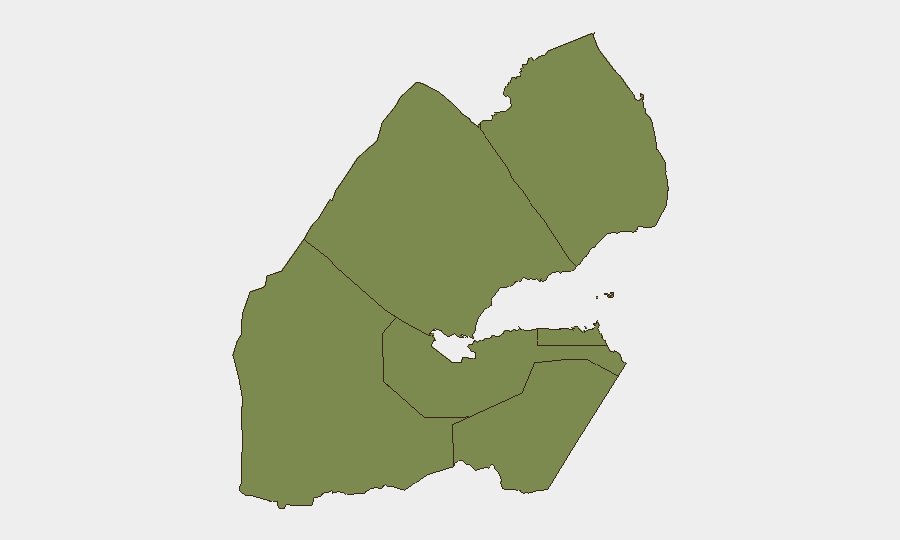
All six regions (Dikhil, Arta, Ali Sabieh, Tadjourah, Obock, and the capital Djibouti) carry identical composite risk scores of 1.3, indicating geographically distributed, systemic exposure rather than concentrated hot spots. Risk is driven by Djibouti's strategic position on the Red Sea, involvement in maritime security operations, exposure to Yemen-linked armed groups, and its role as a hub for international military bases and commercial shipping. Border regions (Ali Sabieh, Obock, Tadjourah) carry elevated exposure to cross-border spill-over from Yemen and Somalia; the capital and ports face maritime and commercial-disruption risks.
How GeoBit Would Assist
Security teams should deploy AOI Monitoring & Early Warning on ports, military installations, and border crossings to detect escalation signals in real time. Network & Actor Analysis and OSINT fusion (X/Twitter, Telegram, multi-language feeds) will track rebel demands, diplomatic statements, and maritime incident reporting to distinguish genuine threats from diplomatic rhetoric. Maritime tracking combined with conflict & military force-structure monitoring will provide early warning of naval buildups or armed-group activity that could affect personnel or asset movements.
7-Day Outlook
No acute security deterioration is expected in the immediate 7 days; Djibouti's operating environment remains permissive for business and routine travel. However, Red Sea maritime tensions and periodic diplomatic friction are likely to persist, requiring continuous monitoring of port operations, shipping corridors, and border-zone activity to identify any localized escalation early.
Highest-Risk Areas — Ranked
| # | State / Region | Risk |
|---|---|---|
| 1 | Dikhil | 1.3 |
| 2 | Arta | 1.3 |
| 3 | Ali Sabieh | 1.3 |
| 4 | Tadjourah | 1.3 |
| 5 | Obock | 1.3 |
| 6 | Djibouti | 1.3 |
Sources
Previous Daily Briefs
A new Djibouti brief is written every day — each with its own risk map and downloadable CSV. Here's the last week; use the calendar to go further back.
📅 Browse every day by calendar →
Highlighted days have a brief. Tap a day for that day's map & analysis, or “csv” for that day's dataset ($5).
Atlas — our AI intelligence desk — emails them this snapshot personally. Nothing else, no list.