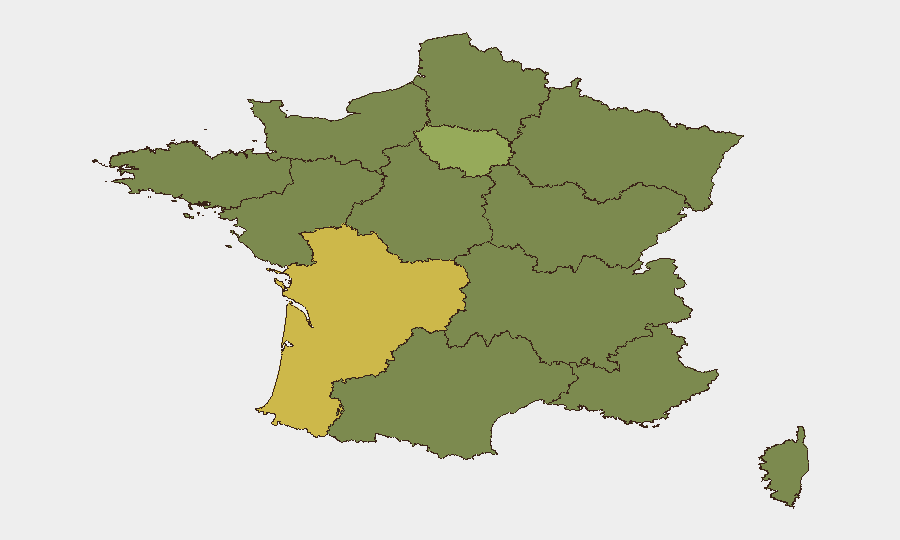
Situation Summary
France remains at composite threat rank #35 globally (score 50/246 events), with security challenges concentrated in Nouvelle-Aquitaine (65.1) and Île-de-France (49.1). The past 48 hours have surfaced a significant data breach affecting 12,800 public-sector employees, planned weekend disruption in Paris, youth-driven civil unrest at public venues, and a fresh diplomatic rupture with Burkina Faso that escalates Sahel-related political risk. Overall trajectory shows elevated but contained domestic tension, with localized protest activity and heightened police operations offsetting broader structural stability.
Key Developments
- INSEE Cyberattack (Paris, 27 June 2026): France's national statistics agency disclosed a breach of personal data—names, contact details—affecting approximately 12,800 current and former staff via compromise of an external service-provider directory. No survey or census data were compromised; affected individuals and data-protection authorities have been notified.
- Planned Weekend Disruption Warning (Paris, 27–28 June 2026): UK Foreign Office issued updated travel advisory citing planned demonstrations this weekend in Paris, with explicit warnings of potential violence, transport disruption, and police operations. Travelers advised to avoid protest zones and follow local authorities.
- Youth Gathering and Policing Tensions (Multiple urban areas, 27 June 2026): Le Monde reported escalating civil-unrest patterns tied to large youth assemblies at public swimming venues, generating police crowd-control operations and localized confrontations. Risk of disorder and minor violence during continued operations over coming days.
- Burkina Faso Diplomatic Rupture (Paris/Ouagadougou, 27 June 2026): Ouagadougou announced expulsion of three French diplomats and terminated diplomatic relations, citing French "subversive activities" in the Sahel. Immediate impact on French consular support and security posture for French nationals in West Africa; signals broader political instability in French sphere of influence.
- Organized-Crime and Drug-Trafficking Focus (France, nationwide, 26–27 June 2026): Franco-Italian dialogue and allied statements underscore heightened operational concern over organized-crime networks, drug trafficking, and associated infrastructure threats. Increased police and customs operations at transport hubs expected.
- Overseas Civil Unrest (French Caribbean, current as of late June 2026): Canadian travel advisory confirms recurring demonstrations and labour strikes in territories such as Guadeloupe, with documented service disruption (fuel, transport) and risk of protest escalation.
Highest-Risk Areas
Nouvelle-Aquitaine and Île-de-France account for the majority of tracked risk (65.1 and 49.1, respectively), with Paris as the epicenter of planned disruption, cyberattack impacts, and diplomatic incident aftermath. Subsequent tiers (Auvergne-Rhône-Alpes, PACA, Normandy, Hauts-de-France, Pays de la Loire, Occitania) cluster at 35–36 risk score, reflecting distributed youth-unrest patterns and ongoing organized-crime enforcement operations. The regional concentration in the northwest and southeast reflects both urban density and historical labor/protest activity.
How GeoBit Would Assist
Corporate teams should deploy AOI Monitoring & Early Warning (persistent watch on Paris, major transport hubs, and overseas territories) paired with Intel Sweep and multi-language OSINT feeds to track protest scheduling, police operations, and diplomatic developments in real time. Entity extraction and sentiment analysis on social media and Telegram would surface emerging youth-organizing signals and crowd dynamics ahead of weekend escalation. Routing & Network Analysis enables alternative-journey planning to avoid disruption zones during commute and travel windows.
7-Day Outlook
Weekend (28–30 June) carries elevated disruption risk in Paris and secondary urban centers due to planned demonstrations; police operations will likely intensify around transport and public spaces. Youth-unrest patterns are expected to persist through early July, with localized confrontations probable but contained. Cyberattack fallout and Burkina Faso diplomatic tension are unlikely to produce direct France-based security incidents but warrant monitoring for cascading policy and personnel changes.
Highest-Risk Areas — Ranked
| # | State / Region | Risk |
|---|---|---|
| 1 | Nouvelle-Aquitaine | 65.1 |
| 2 | Ile-de-France | 49.1 |
| 3 | Auvergne-Rhône-Alpes | 35.7 |
| 4 | Provence-Alpes-Côte d'Azur | 35.5 |
| 5 | Normandy | 35.3 |
| 6 | Hauts-de-France | 35.3 |
| 7 | Pays de la Loire | 35.3 |
| 8 | Occitania | 35.3 |
| 9 | Bourgogne – Franche-Comté | 35.3 |
| 10 | Brittany | 35.1 |
| 11 | Centre-Val de Loire | 35.1 |
| 12 | Grand Est | 35.1 |
Sources
Previous Daily Briefs
A new France brief is written every day — each with its own risk map and downloadable CSV. Here's the last week; use the calendar to go further back.
📅 Browse every day by calendar →
Highlighted days have a brief. Tap a day for that day's map & analysis, or “csv” for that day's dataset ($5).