Situation Summary
Indonesia's composite threat score of 35 (rank #49 globally) reflects persistent but moderate-level security challenges across multiple domains: seismic activity, separatist pressure in Papua, energy-crime enforcement, civil unrest over economic policy, and internal debate over police accountability. The past 48 hours have seen localized incidents in Papua and Central Kalimantan alongside continued student and civil-society mobilization, but no indicators of imminent systemic instability. The security environment remains fragmented by region, with Jakarta and East Java substantially outpacing other areas in composite risk.
Key Developments
- Sarmi Regency, Papua – 24 Jul: Two shallow earthquakes (magnitudes 3.5 and 4.3, approximately 50–57 km from Sarmi town) reported by BMKG on 24 July; local monitoring activated for infrastructure and community impact, though no immediate damage reports confirmed.
- Papua airstrips – 24 Jul: Indonesian military announced deployment of troops to guard high-risk airstrips in Papua to prevent further armed attacks on aviation infrastructure, following recent separatist incidents; announcement made approximately 10 hours before reporting (early 24 Jul).
- Central Kalimantan drug operation – 24 Jul: National Police investigation ongoing into attack on three officers during drug eradication in Tumbang Kalemei Village, Katingan Regency; suspects named and senior officials issued public statements; case remains active law-enforcement priority.
- Central Kalimantan energy crime – 24 Jul: Police briefings highlight sustained enforcement against oil and gas crimes across multiple locations, including seizure of subsidized fuel and LPG cylinders and multiple suspects; indicates persistent infrastructure-risk and economic-crime activity.
- National civil unrest – 24 Jul: Student and civil-society groups continued street protests across the country over rising living costs and government policy, including mobilization on the free-meal program; protests remain geographically dispersed and ongoing.
- National police reform – 24 Jul: Legal observers and civil-society groups maintained opposition to the Draft Law on the National Police (RUU Polri), citing concerns about accountability and rushed ratification; political controversy remains active in domestic reporting.
Highest-Risk Areas
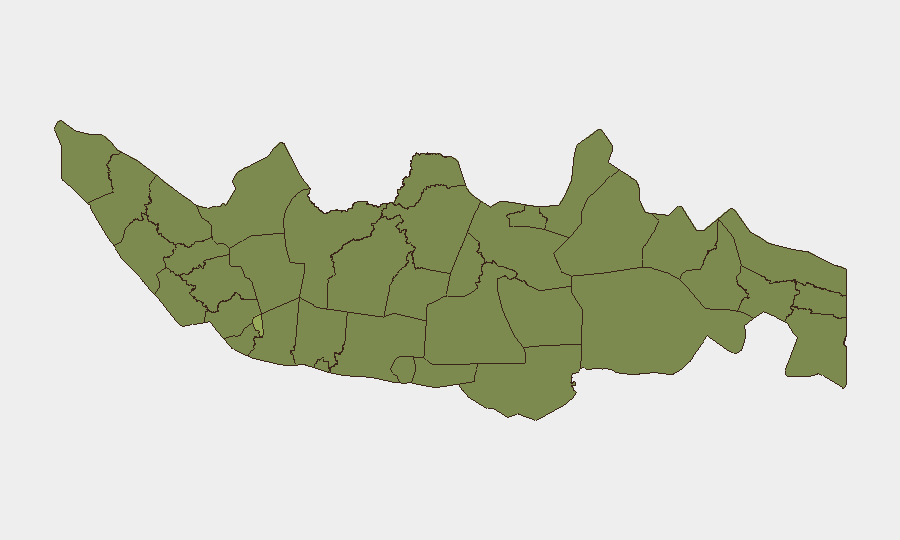
Jakarta dominates Indonesia's sub-national risk profile at 54.7, more than 20 points above the second-ranked East Java (34), reflecting concentrated political, commercial, and institutional exposure. East Java, West Java, Central Java, and Banten form a secondary tier (27.7–34), where crime, separatist activity, and socioeconomic grievance intersect. Papua (rank 9, score 26.3) and Aceh (rank 11, score 25.4) remain elevated due to historical armed separatism and ongoing military/police operations; recent military deployments to Papua's airstrips underscore persistent aviation and infrastructure vulnerability. Central Kalimantan (rank 7, score 27) shows significant crime-related risk linked to energy-sector incidents and drug operations.
How GeoBit Would Assist
Security teams with personnel or assets in Indonesia would deploy Intel Sweep and multi-language OSINT to track civil unrest, police operations, and separatist activity in real time; AOI Monitoring & Early Warning on high-risk areas (Jakarta, Papua, East Java) to detect escalation in student protests or military incidents; and Conflict & Military force-structure tracking combined with Satellite & Imagery analysis to monitor Papua airstrip security and assess physical infrastructure vulnerability. Routing & Network Analysis supports contingency planning for personnel in protest-affected zones.
7-Day Outlook
Student and civil protests are likely to persist through the week as cost-of-living and policy grievances remain unresolved; demonstrations may intensify around key government announcements or legislative votes on the police reform bill. Papua's security posture will remain heightened due to ongoing military presence and seismic activity; aviation operations should continue under enhanced scrutiny. No indicators point to sudden systemic escalation, but localized incidents in energy-crime enforcement and separatist-adjacent areas warrant sustained monitoring.
Highest-Risk Areas — Ranked
| # | State / Region | Risk |
|---|---|---|
| 1 | Special capital Region of Jakarta | 54.7 |
| 2 | East Java | 34 |
| 3 | West Java | 30.7 |
| 4 | Central Java | 27.7 |
| 5 | Banten | 27.7 |
| 6 | Riau | 27.5 |
| 7 | Central Kalimantan | 27 |
| 8 | North Sumatra | 26.5 |
| 9 | Papua | 26.3 |
| 10 | Southeast Sulawesi | 25.8 |
| 11 | Aceh | 25.4 |
| 12 | North Sulawesi | 25.2 |
Sources
Previous Daily Briefs
A new Indonesia brief is written every day — each with its own risk map and downloadable CSV. Here's the last week; use the calendar to go further back.
📅 Browse every day by calendar →
Highlighted days have a brief. Tap a day for that day's map & analysis, or “csv” for that day's dataset ($5).
Atlas — our AI intelligence desk — emails them this snapshot personally. Nothing else, no list.