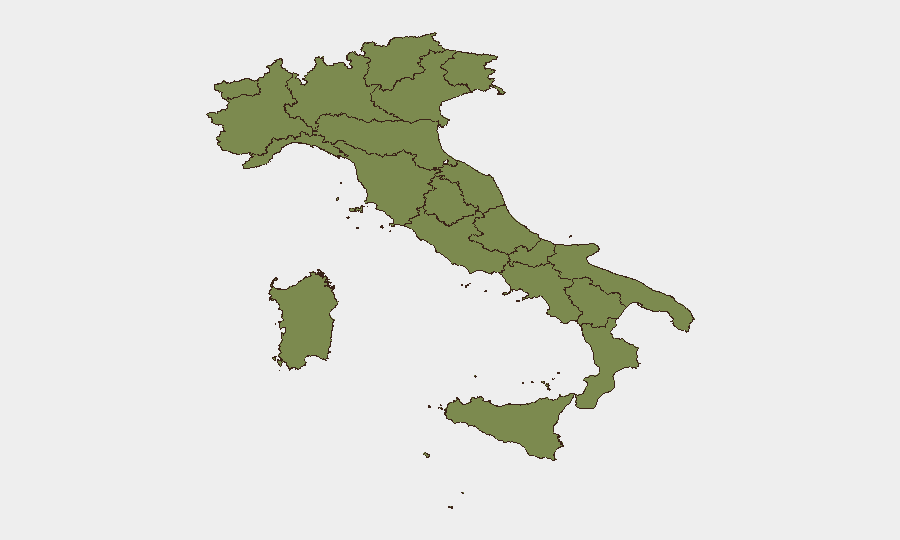
Situation Summary
Italy's national security threat profile remains moderate (rank #130 globally, composite score 5.0) but shows acute labour unrest within security forces and intensified government security legislation. A major armed-forces and police march in Rome on 19 July demanding pay and pension reforms signals potential for sustained industrial action that could degrade security-service capacity. Concurrently, new preventive-detention and expanded police powers approved by government on 19 July indicate a tightening internal-security posture, particularly targeting youth crime and minor offences against law-enforcement personnel.
Key Developments
- Rome, Lazio – 19 July 2026: Approximately 6,000 members of Italy's armed forces and security services staged a union-organized march through central Rome, publicly demanding higher pay, better pensions, and stronger legal protections; unions warned of further protests and industrial action if government does not address grievances within 90 days.
- Rome, Lazio – 19 July 2026: The Italian government approved a new security bill expanding preventive detention (including for minors), broadening police powers for deferred arrest, and allowing ex officio prosecution for minor injuries to law-enforcement officers; the Interior Minister presented the package at the end of the Council of Ministers meeting, with the bill now set to go to Parliament.
- Central Naples, Campania – Early morning 19 July 2026: Police launched a multi-agency "high-impact" raid across Montesanto to Piazza Dante, with Carabinieri, state police, and Guardia di Finanza conducting coordinated searches reportedly focused on weapons and drugs following recent gunfire incidents in the district.
- Vicenza, Veneto – 19 July 2026: Authorities confirmed installation of black netting around Vicenza's prison as part of a national initiative to prevent drone-based smuggling of contraband (drugs, phones, other items) into correctional facilities, indicating heightened concern over evolving prison-security threats.
- Vicenza area, Veneto – Night of 18–19 July 2026: Copper thefts at Arcugnano cemetery (gutters, downspouts, roofing elements) discovered by visitors and reported to authorities, continuing a pattern of infrastructure-targeted property crime in the Vicenza area.
Highest-Risk Areas
Umbria and Lombardy drive Italy's sub-national risk profile, with composite scores of 32.4 and 31.4 respectively, followed by Lazio (25.8). These three regions account for the majority of tracked security events and appear to concentrate organized-crime, civil unrest, and administrative instability. Lazio's elevated rank reflects the capital's role as a seat of national governance and labour action; Umbria and Lombardy's ranking suggests persistent criminal-enterprise activity, likely linked to historical 'ndrangheta and Cosa Nostra networks. Southern regions (Sicily, Calabria, Sardinia) show moderate-to-low composite scores despite historical mafia presence, indicating either improved enforcement or evolving criminal geography.
How GeoBit Would Assist
Corporate security and duty-of-care teams should deploy AOI Monitoring & Early Warning on Rome, Naples, and Vicenza to track labour unrest, police operations, and prison-security developments in real time. Network & Actor Analysis and Intel Sweep (X/Twitter, Telegram, YouTube union and police statements) would provide early warning of further industrial action or security-force strikes. GIS & Spatial Analysis linked to the sub-national risk ranking enables targeted asset-location risk assessment and alternative routing for personnel in Umbria, Lombardy, and Lazio during periods of civil unrest.
7-Day Outlook
Labour instability within Italy's security forces is likely to persist through late July and into August, with union industrial action or slowdowns possible if government does not engage substantively on pay and pension demands. New security legislation will move through Parliament, potentially triggering left-wing and civil-rights protests in Rome and Milan. Naples and Calabria police operations are expected to continue at heightened tempo, with monitoring for escalation in armed-gang activity advisable.
Highest-Risk Areas — Ranked
| # | State / Region | Risk |
|---|---|---|
| 1 | Umbria | 32.4 |
| 2 | Lombardy | 31.4 |
| 3 | Lazio | 25.8 |
| 4 | Liguria | 18.8 |
| 5 | Piedmont | 11.4 |
| 6 | Sicily | 11.1 |
| 7 | Sardinia | 10.7 |
| 8 | Calabria | 5.8 |
| 9 | Veneto | 2.8 |
| 10 | Apulia | 2.8 |
| 11 | Friuli – Venezia Giulia | 2.6 |
| 12 | Marche | 2.6 |
Sources
Previous Daily Briefs
A new Italy brief is written every day — each with its own risk map and downloadable CSV. Here's the last week; use the calendar to go further back.
📅 Browse every day by calendar →
Highlighted days have a brief. Tap a day for that day's map & analysis, or “csv” for that day's dataset ($5).
Atlas — our AI intelligence desk — emails them this snapshot personally. Nothing else, no list.