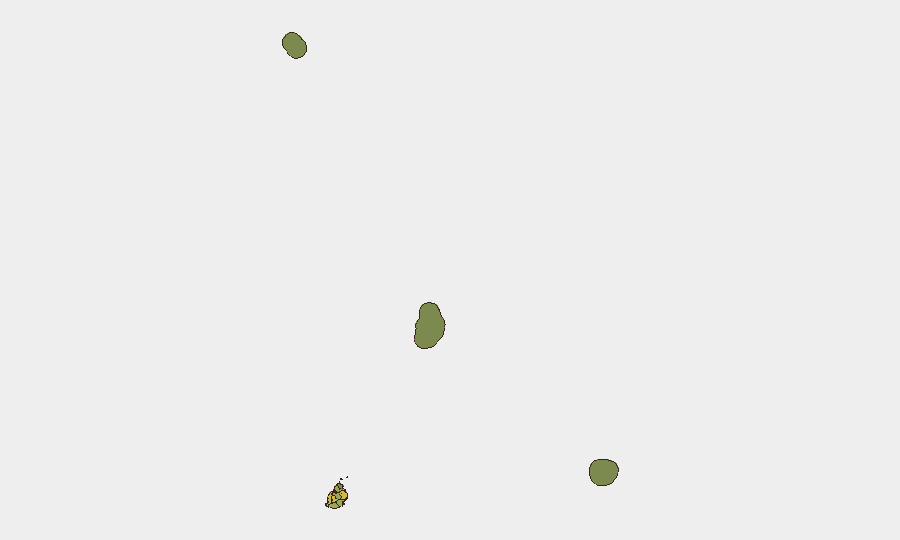
Situation Summary
Mauritius remains a relatively stable island nation with a composite threat score of 12 and no clearly documented security or civil-unrest incidents in the past 24–48 hours. Port Louis dominates the risk profile (score 92), reflecting typical urban crime and policing activity, while peripheral districts and outer islands present minimal threats. The security environment has shown no acute deterioration in recent days, though standard urban crime and administrative tensions warrant continued attention in the capital and Plaines Wilhems district.
Key Developments
No verifiable, time-stamped security incidents have been conclusively documented in Mauritius within the past 24–48 hours from open-source news, travel advisories, or social-media feeds. GeoBit's event-signal framework has flagged six activity nodes (police interaction, mayoral and prosecutorial statements, and administrative communication between 19–20 July), but these do not map to a confirmed discrete incident with location and multi-source corroboration. Major travel advisories (Smartraveller, DFAT, UK Foreign Office) show no new alerts specific to Mauritius; standing guidance on petty theft and road safety remains unchanged.
Highest-Risk Areas
Port Louis (92) accounts for the majority of national risk, driven by concentration of commercial activity, vehicular traffic, and street-level crime typical of a capital city. Plaines Wilhems (68), Black River (65), and Flacq (62) collectively represent secondary urban and semi-urban corridors where property crime, inter-personal violence, and administrative friction are intermittently reported. Outlying districts (Savanne, Moka, Pamplemousses) and remote territories (Rodrigues, Saint Brandon, Agaléga) present negligible threat profiles. Risk concentration in Port Louis and its hinterland reflects urban criminality and police activity rather than political instability or organized conflict.
How GeoBit Would Assist
Security teams with personnel or assets in Mauritius would prioritize persistent Area-of-Interest monitoring and early-warning alerting on Port Louis and Plaines Wilhems to detect emerging street-level incidents, protests, or administrative disruptions before they escalate. Intel Sweep and multi-language OSINT fusion—drawing on local news, social media, and administrative communications—would provide 24-hour corroboration of police actions, traffic disruptions, or civil tensions, ensuring duty-of-care teams receive verified rather than rumored alerts. Routing and network analysis would support alternative journey planning and asset movement in the capital during periods of heightened street activity.
7-Day Outlook
No acute security events are forecast for the coming week. Standard urban-crime management and administrative routine are expected to continue. Security teams should maintain baseline alerting on Port Louis and monitor for any escalation of the July 19–20 administrative interactions; if these reflect sustained institutional friction, follow-on incident risk may rise in the medium term.
Highest-Risk Areas — Ranked
| # | State / Region | Risk |
|---|---|---|
| 1 | Port Louis | 92 |
| 2 | Plaines Wilhems | 68 |
| 3 | Black River | 65 |
| 4 | Flacq | 62 |
| 5 | Grand Port | 58 |
| 6 | Moka | 52 |
| 7 | Savanne | 48 |
| 8 | Pamplemousses | 45 |
| 9 | Rivière du Rempart District | 38 |
| 10 | Rodrigues | 22 |
| 11 | Saint Brandon | 8 |
| 12 | Agaléga | 5 |
Sources
Previous Daily Briefs
A new Mauritius brief is written every day — each with its own risk map and downloadable CSV. Here's the last week; use the calendar to go further back.
📅 Browse every day by calendar →
Highlighted days have a brief. Tap a day for that day's map & analysis, or “csv” for that day's dataset ($5).
Atlas — our AI intelligence desk — emails them this snapshot personally. Nothing else, no list.