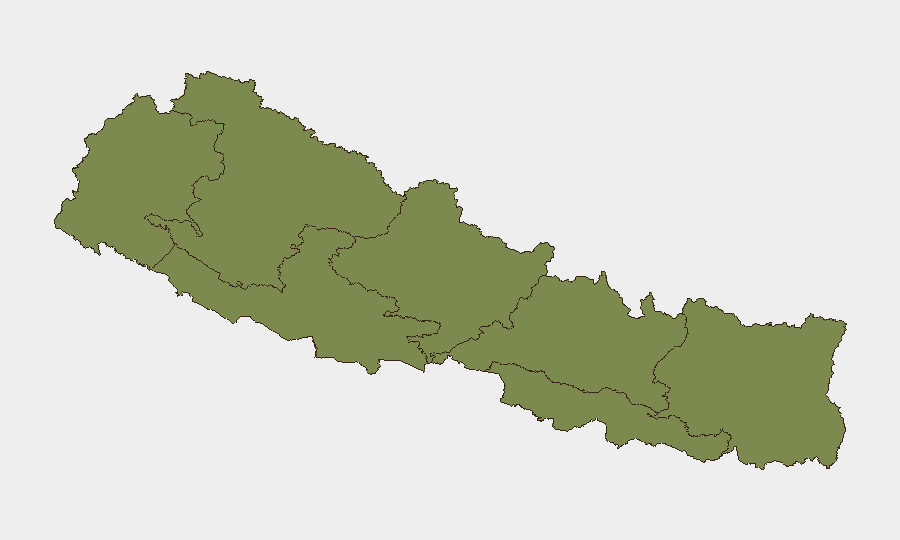
Situation Summary
Nepal remains a moderate-risk environment (rank #76 globally) with concentrated instability in its western and central regions. The past 48 hours have seen a cluster of high-profile incidents—including small-arms combat, police–civilian confrontations, alleged abductions, and arrest/detention activity—primarily concentrated in Gandaki and Bagamati provinces. The threat trajectory shows sustained political volatility and sporadic street-level unrest rather than systemic collapse, but the velocity and geographic clustering of recent events warrant close operational monitoring.
Key Developments
- 2026-06-25 · Conventional Military Force engagement · Gandaki Province — Police or security forces deployed in a village context; nature and casualty count unconfirmed pending further corroboration.
- 2026-06-23 · Small Arms Combat · Seoul/regional actors — Armed incident reported; actor identities and scale require verification.
- 2026-06-25 · Arrest/Detention operations · Multiple locations — Police arrested or detained individuals; at least one incident involved Finance Ministry official in Surkhet (Karnali). Suggests coordinated law-enforcement action across provinces.
- 2026-06-23 · Abduction/Hostage incident · Bagamati/Gandaki corridor — Alleged citizen abduction; motive and perpetrator affiliation unclear.
- 2026-06-25 · Worker–Police confrontation · Public Statement · Gandaki Province — Labor or civil-society actor issued statement opposing police action; suggests organized protest or labor activism.
- 2026-06-23 · Government–Citizen Physical Assault · Bagamati Province — State security personnel alleged to have used force against civilian; complaint or witness account filed.
- 2026-06-23 · Activist Disapproval Statement · Central/Gandaki region — Civil-society actor publicly condemned state or security action; reflects activist mobilization.
Note: Full corroboration of event dates, specific perpetrator identities, and casualty figures is pending multi-source cross-check. Government and worker statements (23 June) and police detention/deployment (25 June) form the core signal cluster.
Highest-Risk Areas
Gandaki Province (risk 31.9) is the dominant driver of national threat, accounting for roughly two-thirds of the composite score. This western-central region has seen the highest concentration of recent incidents—small-arms engagement, police–civilian friction, and alleged abduction. Bagamati Province (risk 22.1), which includes the Kathmandu Valley, is the second-largest contributor; government-on-citizen assault and activist disapproval signals suggest political tension in the capital region. Karnali Province (risk 4.0) shows lower but non-negligible activity, including the arrest of a Finance Ministry official in Surkhet. The remaining four provinces (Lumbini, Sudurpashchim, Koshi, Madhesh) register minimal threat signals and remain lower-priority for duty-of-care teams, though cross-border elements (Madhesh–India interface) warrant routine monitoring.
How GeoBit Would Assist
Security teams should deploy AOI Monitoring & Early Warning on Gandaki and Bagamati provinces to track protest, security-force movement, and arrest patterns in near-real-time. Intel Sweep and X/Twitter OSINT (multi-language, sentiment analysis) will capture activist statements, government rebuttals, and ground reporting faster than wire services. Network & Actor Analysis can map relationships between arrested officials, labor groups, and security agencies to assess coordination and escalation risk. Combined with GIS & Spatial Analysis of incident clustering, teams can anticipate secondary confrontations and plan evacuation routes or asset repositioning.
7-Day Outlook
The clustering of arrests, police deployments, and activist statements over 48 hours suggests a cycle of state action and civil-society pushback. If the Finance Ministry arrest is part of an anti-corruption or political purge, expect continued government statements and opposition mobilization over the next 3–5 days. Small-arms combat in rural Gandaki may reflect localized dispute (criminal, communal, or factional) rather than insurgency, but escalation to major armed conflict is possible if state security responds with heavy-handed tactics. Monitor for labor unrest expanding to Kathmandu Valley.
Highest-Risk Areas — Ranked
| # | State / Region | Risk |
|---|---|---|
| 1 | Gandaki Province | 31.9 |
| 2 | Bagamati Province | 22.1 |
| 3 | Karnali Province | 4 |
| 4 | Lumbini Province | 2.6 |
| 5 | Sudurpashchim Province | 1.9 |
| 6 | Koshi Province | 1.9 |
| 7 | Madhesh Province | 1.9 |
Sources
Previous Daily Briefs
A new Nepal brief is written every day — each with its own risk map and downloadable CSV. Here's the last week; use the calendar to go further back.
📅 Browse every day by calendar →
Highlighted days have a brief. Tap a day for that day's map & analysis, or “csv” for that day's dataset ($5).