Situation Summary
Oman remains domestically calm with no reported civil unrest, crime spikes, or political instability within its borders as of 10 July 2026. However, the country faces elevated indirect risk from regional US–Iran military escalation and ongoing maritime attacks in the Strait of Hormuz and Omani territorial waters, where shipping infrastructure and transit corridors are under active threat. Oman's mediation role in regional de-escalation efforts underscores its geopolitical importance but does not insulate it from spillover effects of wider Gulf instability. The composite threat ranking of 4 globally reflects this bifurcated risk: minimal domestic security concerns paired with significant external maritime and regional conflict exposure.
Key Developments
- Strait of Hormuz maritime attacks (7 July, reported in last 48h): One LNG carrier and two oil tankers transited through Omani territorial waters and were targeted by drone strikes; International Maritime Organization issued caution advisories and the US revoked certain Iran-linked shipping sanctions waivers in response. Direct impact on vessels and supply-chain routes through Oman.
- US carrier readiness escalation (9 July): USS Abraham Lincoln in the Arabian Sea reported loading munitions and increasing flight operations amid collapsed US–Iran ceasefire and anticipated further strikes. Heightens military tension in maritime approaches to Omani waters.
- Oman diplomatic de-escalation proposal (9 July, reported last 48h): Muscat submitted a formal proposal to the US and Western states on security arrangements and conflict de-escalation, reaffirming Oman's active mediation role despite regional volatility.
- Public statement by Oman vs. Iran (10 July): Oman issued a public statement addressing Iran; context and specifics remain limited in available reporting but signal Omani diplomatic positioning amid regional tensions.
- Carrier public statement in Persian Gulf (10 July): US carrier forces made a public statement from the Persian Gulf, likely signaling deterrence posture to Iranian actors.
- Regional US–Iran strike cycle (9–10 July): Continued US strikes and Iranian retaliation against US-linked facilities in neighboring Gulf states; no Omani targets reported, but maritime trade corridors and regional stability remain degraded.
- Indian External Affairs Minister visit (5–10 July, ongoing): Routine bilateral engagement in Muscat; no security incidents or protests linked to the visit are reported.
Highest-Risk Areas
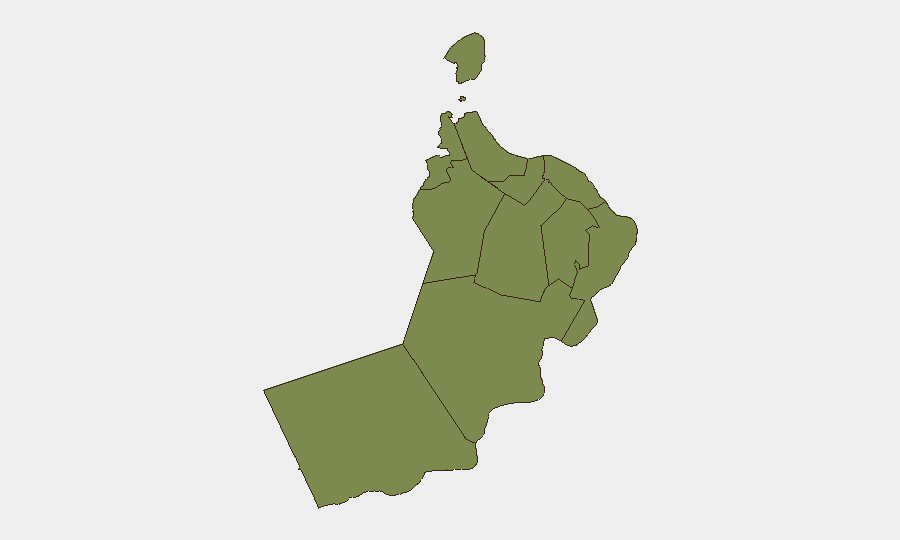
Al Wusta Governorate (risk 31.5) and Musandam Governorate (risk 25.2) drive Oman's sub-national risk profile, both reflecting maritime exposure and proximity to conflict zones and shipping lanes. Muscat Governorate (18.1) carries elevated risk as the capital and primary commercial hub, concentrating foreign nationals, critical infrastructure, and diplomatic presence. These three governorates account for nearly all tracked risk events; the remaining eight regions register minimal domestic threat (1.5 each), indicating that risk in Oman is concentrated in coastal and urban areas linked to maritime activity and international engagement rather than distributed across the interior or periphery.
How GeoBit Would Assist
Security teams should deploy AOI Monitoring & Early Warning on Muscat Governorate and the Strait of Hormuz corridor to detect escalations in maritime incidents or regional military activity before they affect operations. Maritime & Aviation tracking combined with OSINT fusion (including X/Twitter, news feeds, and multi-language search) will provide real-time visibility on shipping attacks, carrier movements, and Oman's diplomatic messaging. Routing & Network Analysis supports contingency planning for personnel and supply-chain rerouting away from high-risk maritime zones.
7-Day Outlook
The US–Iran conflict cycle is likely to continue with episodic strikes and counter-strikes through mid-July, sustaining maritime risk in the Strait of Hormuz and Omani waters. Domestic security inside Oman is expected to remain stable, though travel advisories for maritime transit and heightened port security procedures should be anticipated. Oman's mediation efforts may reduce short-term escalation risk, but resolution appears unlikely within the 7-day window.
Highest-Risk Areas — Ranked
| # | State / Region | Risk |
|---|---|---|
| 1 | Al Wusta Governorate | 31.5 |
| 2 | Musandam Governorate | 25.2 |
| 3 | Muscat Governorate | 18.1 |
| 4 | Al Buraymi Governorate | 1.5 |
| 5 | Ad Dhahirah Governorate | 1.5 |
| 6 | Al Batinah North Governorate | 1.5 |
| 7 | Al Batinah South Governorate | 1.5 |
| 8 | Ad Dakhiliyah Governorate | 1.5 |
| 9 | Ash Sharqiyah North Governorate | 1.5 |
| 10 | Ash Sharqiyah South Governorate | 1.5 |
| 11 | Dhofar Governorate | 1.5 |
Sources
Previous Daily Briefs
A new Oman brief is written every day — each with its own risk map and downloadable CSV. Here's the last week; use the calendar to go further back.
📅 Browse every day by calendar →
Highlighted days have a brief. Tap a day for that day's map & analysis, or “csv” for that day's dataset ($5).
Atlas — our AI intelligence desk — emails them this snapshot personally. Nothing else, no list.