Situation Summary
Pakistan faces a composite threat level ranked #32 globally, with 989 tracked events reflecting persistent terrorism, cross-border armed activity, and infrastructure disruption. The past 48 hours have seen three major incidents—a militant attack on a mining site in Balochistan, a suicide bombing in North Waziristan, and a contested drone strike in Sindh—signaling sustained pressure across multiple provinces and threat vectors. Federal authorities have elevated alert postures in major urban centers and are managing energy security amid regional volatility; the trajectory indicates continued high operational tempo without imminent de-escalation.
Key Developments
- Chagai District, Balochistan – 21 June 2026: Armed militants attacked a mining site at Darigwar operated by National Resources Limited, killing nine people; security forces secured the location within 24 hours.
- North Waziristan, Khyber Pakhtunkhwa – 21–22 June 2026: A suicide bombing killed at least 13 security personnel and injured multiple others, reflecting sustained militant capacity in the tribal borderlands.
- Khairpur District, Sindh – ~21 June 2026: Four civilians were killed in an alleged drone strike; the Sindh provincial inspector general suspended three station house officers and initiated a transparent investigation, indicating potential law-enforcement procedural violations.
- Attock, Punjab – 22 June 2026: Attock Refinery operations normalized after transport disruptions were resolved through intervention by the Petroleum Minister and military General Headquarters, restoring critical fuel-supply logistics.
- Nationwide Alert – 22 June 2026: Federal travel and security advisories confirm ongoing high terrorism and civil-unrest threats; authorities maintain elevated alert status in Islamabad, Rawalpindi, Lahore, and Karachi, with warnings of further demonstrations in Pakistan-administered Kashmir.
- Federal Energy & Infrastructure – 22 June 2026: Government confirmed focus on maintaining strategic crude-oil reserves and expediting EV charging infrastructure, reflecting energy-security prioritization amid regional volatility.
- Foreign Policy Messaging – 22 June 2026: Foreign Minister Ishaq Dar reaffirmed careful management of regional security dynamics, particularly concerning US–Iran tensions, signaling diplomatic containment efforts.
Highest-Risk Areas
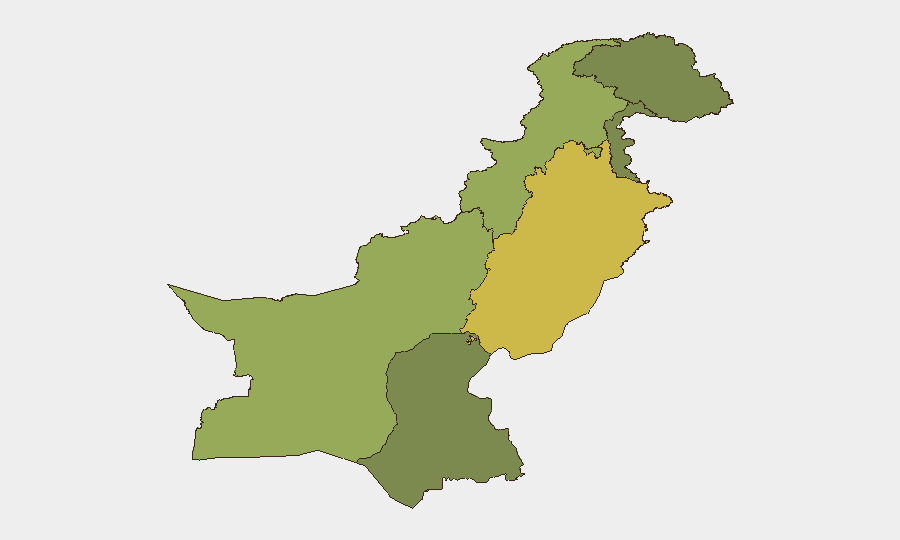
Punjab and Balochistan dominate the sub-national risk profile (61.6 and 51.2 composite scores respectively), driven by militant attack capacity, mining-sector targeting, and logistical infrastructure vulnerability. Islamabad Capital Territory (43.0) reflects elevated threat from terrorism and civil unrest in the capital itself, with Khyber Pakhtunkhwa (40.8) sustained by cross-border insurgent activity and suicide-bombing incidents. Sindh (35.0) exhibits lower but notable risk, including alleged law-enforcement incidents and drone-related civilian casualties that complicate security operations and public trust.
How GeoBit Would Assist
Security teams would deploy AOI Monitoring & Early Warning on high-risk mining, refining, and critical-infrastructure sites in Balochistan and Punjab to detect militant approach patterns and trigger advance alert protocols. Entity extraction and network analysis of militant communications on X/Twitter and Telegram would map attack planning and supply-chain vulnerabilities. Routing & Network Analysis would identify secure alternate transport corridors for personnel and fuel logistics around reported incident zones, while Intel Sweep and regional conflict mapping would track cross-border armed activity and casualty trends in real time.
7-Day Outlook
Militant operational tempo is likely to remain elevated, particularly in Balochistan and Khyber Pakhtunkhwa, with targeting of economic infrastructure and security forces. Urban areas face sustained terrorism and civil-unrest risk, necessitating continued federal and provincial alert postures. No imminent policy shift or major de-escalation is signaled; organizations should assume high operational risk and maintain protective postures in affected regions.
Highest-Risk Areas — Ranked
| # | State / Region | Risk |
|---|---|---|
| 1 | Punjab | 61.6 |
| 2 | Balochistan | 51.2 |
| 3 | Islamabad Capital Territory | 43 |
| 4 | Khyber Pakhtunkhwa | 40.8 |
| 5 | Sindh | 35 |
| 6 | Azad Kashmir | 32.6 |
| 7 | Gilgit-Baltistan | 31.6 |
Sources
Previous Daily Briefs
A new Pakistan brief is written every day — each with its own risk map and downloadable CSV. Here's the last week; use the calendar to go further back.
📅 Browse every day by calendar →
Highlighted days have a brief. Tap a day for that day's map & analysis, or “csv” for that day's dataset ($5).