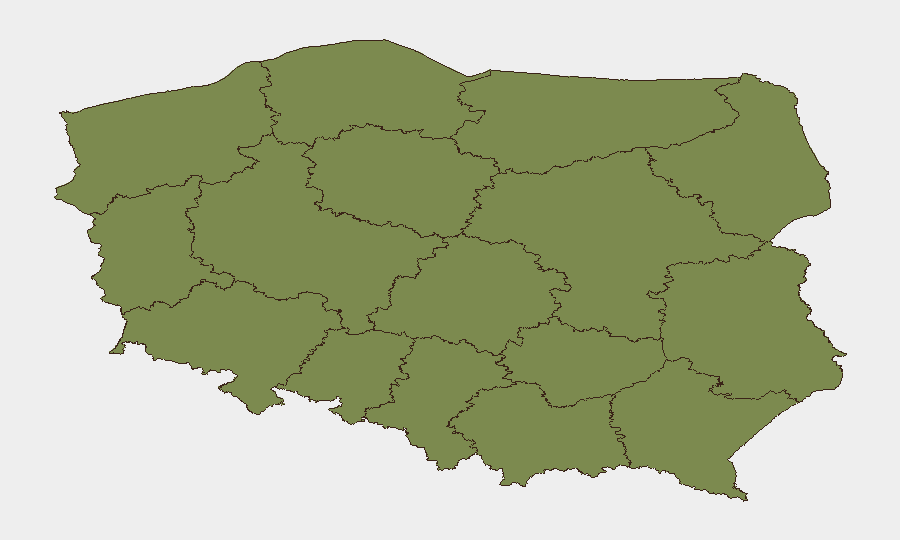
Situation Summary
Poland remains a low-to-moderate composite threat environment (global rank #125, score 6/100) with 39 tracked events, but risk is heavily concentrated in Łódź and Masovian voivodeships. The past 48 hours have been dominated by severe weather—record heat followed by powerful storms from low-pressure system Bernadette—triggering over 1,500 emergency interventions, multiple drownings, and infrastructure disruption across central and western regions. Underlying tensions persist around Ukraine policy, military preparedness legislation, and border security, though no acute violence or civil unrest has materialized in the immediate window.
Key Developments
- Nationwide severe storms (18–19 July). Low *Bernadette* produced very strong winds, heavy rain, hail, and rapid cooling across multiple voivodeships. Emergency services responded to over 1,500 calls for downed trees, damaged roofs, flooded roads/basements, and power outages. Infrastructure disruption and hazardous conditions reported in central and southern Poland.
- Record national temperature (18 July, Slubice). Poland's absolute temperature record of 40.5°C was set in Slubice (Lubusz Voivodeship, western border), immediately preceding the storm system. Health and electricity-grid strain in affected areas.
- IMGW top-tier weather warnings (18–19 July). National meteorological agency issued highest-level alerts for wind, intense rainfall, thunderstorms, and marked cooling across western and central Poland, signalling elevated risk for outdoor activities and travel.
- Four drownings in single day (reported 19 July). Police confirmed four fatal drownings amid the heat-storm transition, with cumulative drownings since June totalling 61. Enhanced caution urged at recreational water bodies; emergency services may face capacity constraints in leisure areas.
- Border Guard effectiveness report (mid-July). Ministry of the Interior announced 100% interception rate for attempted illegal crossings from Belarus in H1 2026, reflecting continued tight security posture and infrastructure effectiveness on the eastern frontier.
- Conflict-preparedness legislation (current legislative cycle). Polish authorities initiated broad review of armed-conflict legislation, drawing on Ukraine experience; proposals include raising maximum prison terms for disobeying military orders from 3 to 30 years, signalling heightened defence-readiness posture.
Highest-Risk Areas
Łódź Voivodeship dominates the risk landscape with a composite score of 31.8—more than 80% of Poland's tracked threat exposure. Masovian Voivodeship (score 17.5, containing Warsaw) is the secondary concentration. All other voivodeships cluster at 1.8–2.3, indicating that generalised Poland-level risk is heavily skewed by events and conditions in the central industrial and capital regions. The remaining 10 voivodeships present materially lower individual risk profiles. Organisations with personnel or assets outside Łódź and central Masovia face significantly reduced threat exposure; those concentrated in or transiting Łódź require enhanced monitoring.
How GeoBit Would Assist
Security teams would deploy AOI Monitoring & Early Warning on Łódź and Masovian voivodeships to detect escalation in civil unrest, industrial action, or cross-border activity. Intel Sweep and multi-language OSINT (including X/Twitter, Telegram, and local feeds) provide real-time event corroboration and temporal positioning to separate active incidents from historical background. GIS & Spatial Analysis combined with Routing & Network Analysis enable duty-of-care teams to map safe transit corridors and identify infrastructure vulnerability (power, transport) during weather or civil disruption windows.
7-Day Outlook
Storm system *Bernadette* is expected to clear within 24–48 hours, allowing recovery and restoration of utilities and transport networks. Underlying political and security tensions (Ukraine alignment, military legislation, border posture) remain stable but monitored; no escalation is forecast unless external regional developments shift. Personnel and asset safety risks will normalise as weather abates, though emergency-service capacity may remain stretched in hard-hit areas through mid-week.
Highest-Risk Areas — Ranked
| # | State / Region | Risk |
|---|---|---|
| 1 | Łódź Voivodeship | 31.8 |
| 2 | Masovian Voivodeship | 17.5 |
| 3 | Warmian-Masurian Voivodeship | 2.3 |
| 4 | Subcarpathian Voivodeship | 1.8 |
| 5 | Podlaskie Voivodeship | 1.8 |
| 6 | Lublin Voivodeship | 1.8 |
| 7 | West Pomeranian Voivodeship | 1.8 |
| 8 | Lubusz Voivodeship | 1.8 |
| 9 | Lower Silesian Voivodeship | 1.8 |
| 10 | Pomeranian Voivodeship | 1.8 |
| 11 | Kuyavian-Pomeranian Voivodeship | 1.8 |
| 12 | Greater Poland Voivodeship | 1.8 |
Sources
Previous Daily Briefs
A new Poland brief is written every day — each with its own risk map and downloadable CSV. Here's the last week; use the calendar to go further back.
📅 Browse every day by calendar →
Highlighted days have a brief. Tap a day for that day's map & analysis, or “csv” for that day's dataset ($5).
Atlas — our AI intelligence desk — emails them this snapshot personally. Nothing else, no list.