Situation Summary
Saudi Arabia faces an acute escalation in regional conflict spillover, driven by expanded Iran–U.S. military strikes and a newly declared Houthi naval blockade of Red Sea shipping routes. Multiple incidents in the past 48 hours—including reported explosions near Jeddah, civil defense alerts, and international flight suspensions—reflect an elevated and immediate threat to critical infrastructure, maritime commerce, and civilian mobility. The composite national threat score remains moderate (rank #100 globally), but sub-national concentration in Riyadh Region and coastal/border areas signals uneven risk requiring differentiated monitoring.
Key Developments
- Houthi naval blockade declaration (19–21 Jul 2026): Yemen's Houthi movement formally announced a blockade targeting Saudi ports via the Red Sea and Bab al-Mandeb Strait. Saudi officials have publicly condemned the action and pledged "all necessary measures" to protect shipping, raising maritime and energy-supply risk for vessels serving Saudi terminals.
- Reported explosions near Jeddah (20–21 Jul 2026): Multiple sources report explosions in the vicinity of Jeddah on the Red Sea coast, with Houthi sources claiming a strike on Saudi territory. Riyadh has not yet issued detailed public confirmation of impact or damage; incident signals heightened missile and drone threat to western Saudi infrastructure and aviation.
- Civil defense alerts in Yanbu and Al-Kharj (20 Jul 2026): Saudi Civil Defense issued early warning alerts for Yanbu (Red Sea port city) and Al-Kharj (south of Riyadh) citing unspecified "potential danger," followed by an all-clear announcement the same day. Episode indicates short-lived security or infrastructure concern with no ongoing threat reported.
- International flight disruptions and airspace warnings (20–21 Jul 2026): Multiple Gulf carriers have suspended or cancelled selected flights involving Saudi Arabia due to regional security and airspace risk. EASA has advised operators to avoid Gulf airspace until at least 29 July 2026; international travel advisories now recommend reconsidering non-essential travel to Saudi Arabia.
- Border narcotics interdiction, Raboua sector, 'Asir Province (21 Jul 2026): Saudi Border Guard patrols arrested three Ethiopian nationals and seized 17 kg of hashish and 7,500 amphetamine tablets in the Raboua sector near the Yemeni border, reflecting ongoing cross-border trafficking pressure in southwest Saudi Arabia.
- Regional conflict escalation backdrop (updated 21 Jul 2026): International travel guidance notes that Middle East conflict has "escalated in recent days" with military strikes and reprisal attacks across multiple locations, creating risk of sudden flight disruptions and constrained exit options if conflict escalates further.
Highest-Risk Areas
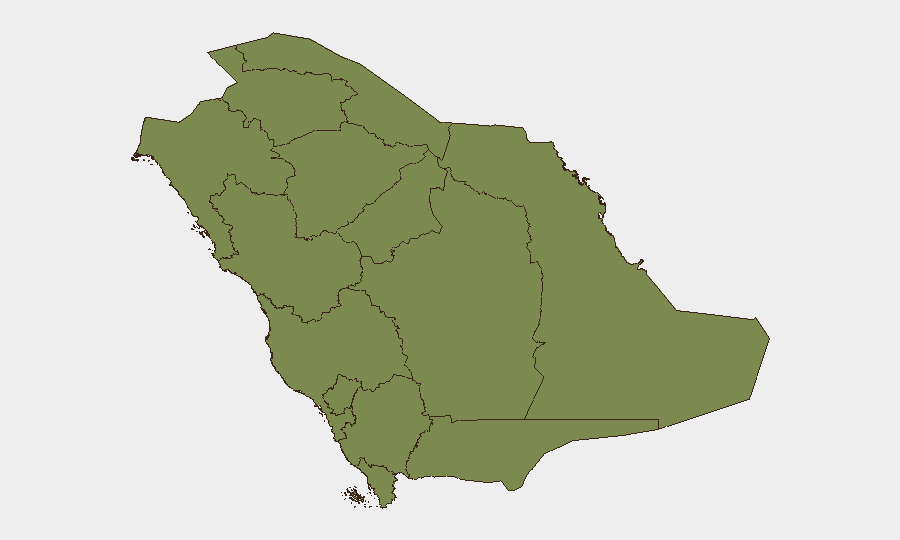
Riyadh Region dominates the sub-national risk profile (score 34.6), reflecting concentration of national government, critical infrastructure, and economic activity; the civil defense alerts issued in Al-Kharj (south of Riyadh) underscore active security concerns in the capital's periphery. Medina Province (8.7) and the Red Sea coastal belt including Makkah Region and Tabuk (5.4 each) face elevated risk from maritime and missile threats associated with the Houthi blockade and reported Jeddah-area incidents. Southwest border zones ('Asir, Jazan, Najran) remain secondary focal points for narcotics trafficking and irregular cross-border activity, though currently below the intensity seen in northern and central areas.
How GeoBit Would Assist
Security teams should deploy AOI Monitoring & Early Warning on Riyadh Region, Jeddah, Yanbu, and Al-Kharj to detect tactical changes in civil defense postures or infrastructure alerts. Maritime & Aviation tracking combined with multi-language OSINT and X/Telegram monitoring will enable real-time detection of blockade enforcement, flight suspensions, and Houthi operational claims. Conflict & Military force-structure tracking and regional event feeds provide continuous situational updates on Iran–U.S. and Houthi–Saudi activity.
7-Day Outlook
The blockade and reported strikes are likely to persist or intensify through 29 July, aligning with EASA airspace warnings and airline caution periods. Further Houthi claims or strikes, international military escalation, and aviation disruptions should be anticipated; corporate teams must prioritize contingency exit planning, supply-chain rerouting, and real-time liaison with in-country security personnel.
Highest-Risk Areas — Ranked
| # | State / Region | Risk |
|---|---|---|
| 1 | Riyadh Region | 34.6 |
| 2 | Medina Province | 8.7 |
| 3 | Northern Borders Province | 5.4 |
| 4 | Makkah Region | 5.4 |
| 5 | Tabuk Province | 5.4 |
| 6 | 'Asir Province | 5.1 |
| 7 | Al-Bahah Province | 4.6 |
| 8 | Jazan Province | 4.6 |
| 9 | Najran Region | 4.6 |
| 10 | Al Jawf Region | 4.6 |
| 11 | Ḥa'il Province | 4.6 |
| 12 | Al-Qassim Province | 4.6 |
Sources
Previous Daily Briefs
A new Saudi Arabia brief is written every day — each with its own risk map and downloadable CSV. Here's the last week; use the calendar to go further back.
📅 Browse every day by calendar →
Highlighted days have a brief. Tap a day for that day's map & analysis, or “csv” for that day's dataset ($5).
Atlas — our AI intelligence desk — emails them this snapshot personally. Nothing else, no list.