Situation Summary
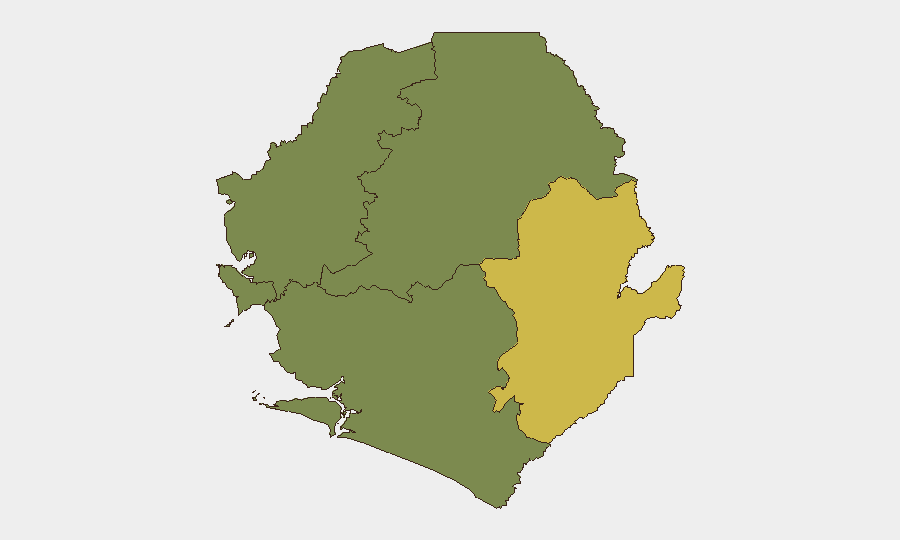
Sierra Leone remains a low-intensity threat environment (global rank #159, composite score 5/100) with no verified acute security incidents reported in the last 24–48 hours. The country's risk profile is concentrated in the Eastern Province, where composite threat scores (68) significantly exceed other regions; Western Area (Freetown and immediate surrounds) presents moderate elevated risk (35). The broader operating environment reflects endemic crime, periodic demonstration activity, and cross-border vulnerabilities rather than active conflict or mass civil unrest.
Key Developments
No verified, location-specific security or unrest incidents have been corroborated by open-source reporting or GeoBit monitoring for Sierra Leone within the last 24–48 hours. Recent web research, news feeds, government advisories, and social-media OSINT do not surface discrete, time-stamped events matching duty-of-care reporting thresholds for this reporting window. Regional monitoring (including Liberia) similarly shows an absence of acute incidents in comparable timeframes. Three lower-level events appear in the analytical signal stream (ambassador relations, civil-society statements), but none carry location specificity, immediate security impact, or corroboration as breaking incidents in the past two days.
Highest-Risk Areas
Eastern Province dominates Sierra Leone's risk landscape, with a composite score of 68—nearly twice the threat level of Western Area (35) and substantially higher than the northern and southern regions (all scored at 0). This concentration reflects longstanding vulnerabilities to cross-border crime, trafficking, and informal-economy instability linked to proximity to Guinea and Liberia. Western Area, encompassing the capital Freetown and key economic infrastructure, presents secondary but material risk driven by urban crime, petty assault, and periodic demonstration activity; staff and assets in central Freetown and transit corridors warrant standard heightened awareness. Northern, North West, and Southern provinces currently register no material composite threat signals and are assessed as lower-risk for corporate operations.
How GeoBit Would Assist
Corporate security teams operating in or transiting Sierra Leone should employ AOI Monitoring & Early Warning to maintain persistent watch on Eastern Province and Western Area, with alerts configured for demonstration activity, crime spikes, or cross-border incidents. Intel Sweep and multi-language OSINT fusion (X/Twitter, Telegram, local media, radio SIGINT) provide real-time situational awareness and early signal of emerging civil unrest or security deterioration. Routing & Network Analysis enables pre-positioning of alternative travel routes and safe-haven options, particularly for staff movements between Freetown and interior or cross-border operations, reducing exposure to high-risk corridors.
7-Day Outlook
No acute security triggers are anticipated in the near term; Sierra Leone's risk profile is expected to remain stable at current levels. Monitoring for demonstration upticks around government announcements and international events (particularly any further diplomatic activity related to the recent ambassador-relations signal) is warranted as a precaution. Routine vigilance on crime and border-area reporting remains appropriate for duty-of-care planning; no travel restrictions or asset redeployment are indicated by current signals.
Highest-Risk Areas — Ranked
| # | State / Region | Risk |
|---|---|---|
| 1 | Eastern Province | 68 |
| 2 | Western Area | 35 |
| 3 | North West Province, Sierra Leone | 0 |
| 4 | Northern Province, Sierra Leone | 0 |
| 5 | Southern Province, Sierra Leone | 0 |
Sources
Previous Daily Briefs
A new Sierra Leone brief is written every day — each with its own risk map and downloadable CSV. Here's the last week; use the calendar to go further back.
📅 Browse every day by calendar →
Highlighted days have a brief. Tap a day for that day's map & analysis, or “csv” for that day's dataset ($5).