Situation Summary
South Korea remains at low global threat rank (composite score 17) with no major security incidents reported in the past 24–48 hours. However, sub-national risk concentration in Seoul (31.3) and North Chungcheong (30.7) indicates localized instability or active monitoring drivers that warrant corporate attention. The overall security environment remains stable, though elevated activity in the capital region merits continued situational awareness.
Key Developments
GeoBit's event signals for 18–19 June captured multiple coded incident types (threats, administrative sanctions, arrests, military-related activity), but open-source corroboration of discrete, time-stamped incidents within the last 24–48 hours in South Korea remains limited.
- World Cup activity (Mexico, 18 June): South Korea's national football team participation generated significant reporting; not a domestic security matter but may affect diplomatic or consular staffing.
- Unconfirmed administrative sanctions and student incident (18 June, location unspecified): GeoBit event signals indicate student-related administrative action, but specific location and operational impact require confirmation via Korean government and institutional sources.
- Arrest/detention activity (19 June, location unspecified): One arrest/detention signal recorded; specific jurisdiction and nature unconfirmed.
- Military-related threat signal (18 June, location unspecified): Event type flagged; lacks location detail and corroboration.
- Corporate disapproval incident (18 June, location unspecified): Government disapproval of corporate activity recorded; sector and firm identity not yet isolated.
Research gap: Open-source English-language and accessible Korean media snapshots do not yet provide multi-source confirmation of specific incidents, locations, times, and operational impact. Wire-service and government-agency verification is required before risk escalation.
Highest-Risk Areas
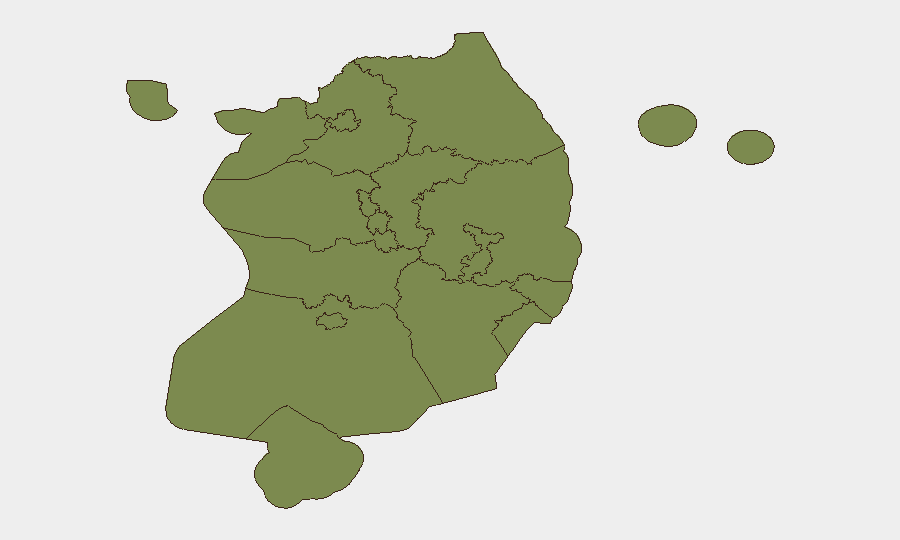
Seoul (31.3) and North Chungcheong (30.7) drive the national risk composite significantly above all other regions, together accounting for the bulk of tracked event density. Seoul's elevated score likely reflects capital-city concentration of political activity, student and labor organization, and administrative enforcement—typical for a major metropolitan center. North Chungcheong's risk score (nearly equal to Seoul's) is anomalous and warrants investigation into the specific event drivers (whether administrative, labor, environmental, or security-related). All other regions score below 6, indicating risk is highly concentrated; Gyeonggi, Incheon, Busan, and South Gyeongsang remain low-risk.
How GeoBit Would Assist
Corporate security teams should employ AOI Monitoring & Early Warning to set persistent watches on Seoul and North Chungcheong, with alert thresholds on protest, labor, administrative, and security-related activity. Intel Sweep and multi-language OSINT fusion (Korean and English feeds, X/Twitter, Yonhap) will close the current 24–48-hour confirmation gap and provide real-time corroboration of events before they escalate. Network & Actor Analysis can map student, labor, and corporate entities driving the administrative and threat signals, enabling targeted duty-of-care contact protocols.
7-Day Outlook
No major security crisis is indicated for the next week. Continued monitoring of Seoul and North Chungcheong is prudent; if event density or threat signals rise above current baselines, escalation protocols should be activated. Corporate teams with staff or assets in those regions should confirm travel and office continuity plans and maintain contact with local government liaison.
Highest-Risk Areas — Ranked
| # | State / Region | Risk |
|---|---|---|
| 1 | Seoul | 31.3 |
| 2 | North Chungcheong | 30.7 |
| 3 | South Jeolla | 5.8 |
| 4 | North Gyeongsang | 5.5 |
| 5 | Gyeonggi | 2.5 |
| 6 | Incheon | 2.2 |
| 7 | South Gyeongsang | 2.2 |
| 8 | Busan | 2.2 |
| 9 | Gangwon State | 1.6 |
| 10 | Jeju | 1.6 |
| 11 | South Chungcheong | 1.3 |
| 12 | Sejong | 1.3 |
Sources
Previous Daily Briefs
A new South Korea brief is written every day — each with its own risk map and downloadable CSV. Here's the last week; use the calendar to go further back.
📅 Browse every day by calendar →
Highlighted days have a brief. Tap a day for that day's map & analysis, or “csv” for that day's dataset ($5).