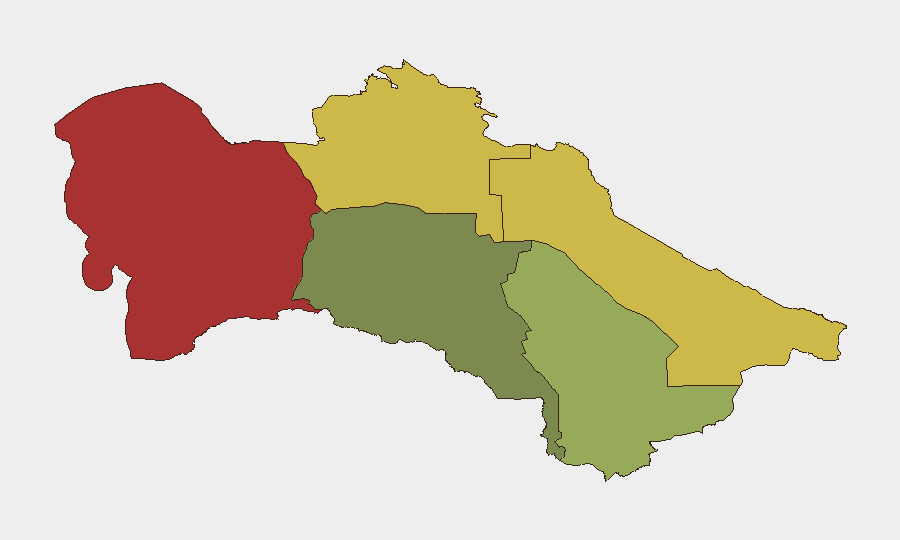
Situation Summary
Turkmenistan remains in a stable security posture with no verified incidents reported in the last 24–48 hours. The country is ranked #144 globally on GeoBit's composite threat scale, with concentrated risk in the western Balkan and northern Lebap regions rather than the capital. Recent diplomatic activity—particularly Kazakhstan–Turkmenistan treaty signings on July 1—reflects routine regional cooperation and reinforces rather than undermines institutional stability.
Key Developments
- Ashgabat – July 1, 2026: Kazakhstan's Foreign Minister visited and signed a Treaty on Friendship, Good-Neighborliness and Cooperation for the Development of Central Asia in the 21st Century with Turkmenistan, formalizing political dialogue, trade, transport, and energy collaboration.
- Ashgabat – July 1, 2026: Kazakhstan and Turkmenistan formalized a Cooperation Program between their foreign ministries for 2027–2028, institutionalizing bilateral diplomatic engagement and regional stability efforts.
- Ashgabat – July 1, 2026: Turkmenistan's President convened a State Security Council meeting on the same day as the Kazakh ministerial visit; available summaries contain no indication of acute domestic security crises or unrest.
- Central Asia (regional) – week of June 27–July 2: UN DPPA materials reference escalating attacks and airspace violations across neighboring countries, but no specific incidents on Turkmenistan territory are documented in the reporting window.
- No discrete security, crime, civil-unrest, infrastructure, or acute travel-risk incidents reported in open sources for July 1–2, 2026.
Highest-Risk Areas
The Balkan Region (composite risk 78) and Lebap Region (risk 68) account for the majority of internal threat concentration, likely reflecting geographic proximity to border zones, remote terrain, and historical smuggling corridors. Dashoguz Region (risk 62) follows, while Ashgabat City itself carries a significantly lower risk profile (18), consistent with capital-level security presence and institutional oversight. These western and northern areas warrant heightened monitoring for border-related activity, but current reporting contains no active incidents in any zone.
How GeoBit Would Assist
Security and risk teams should deploy AOI Monitoring & Early Warning on Balkan and Lebap regions to detect emerging civil unrest, border-crossing anomalies, or infrastructure disruptions in real time. Intel Sweep (global event feeds, multi-language OSINT, X/Twitter & Telegram monitoring) should remain active to catch localized reporting before mainstream media circulation. GIS & Spatial Analysis and Routing & Network Analysis capabilities support contingency planning for personnel and asset movement in the event of regional instability.
7-Day Outlook
No acute security trajectory changes are anticipated in the near term. Diplomatic engagement with Kazakhstan and routine State Security Council activity suggest institutional confidence. Continued monitoring of the western border regions and northern trade corridors remains prudent; any shift in activity patterns or cross-border incident frequency should trigger escalated alerting to stakeholder teams.
Highest-Risk Areas — Ranked
| # | State / Region | Risk |
|---|---|---|
| 1 | Balkan Region | 78 |
| 2 | Lebap Region | 68 |
| 3 | Dashoguz Region | 62 |
| 4 | Mary Region | 42 |
| 5 | Ahal Region | 35 |
| 6 | Ashgabat City | 18 |
Sources
Previous Daily Briefs
A new Turkmenistan brief is written every day — each with its own risk map and downloadable CSV. Here's the last week; use the calendar to go further back.
📅 Browse every day by calendar →
Highlighted days have a brief. Tap a day for that day's map & analysis, or “csv” for that day's dataset ($5).