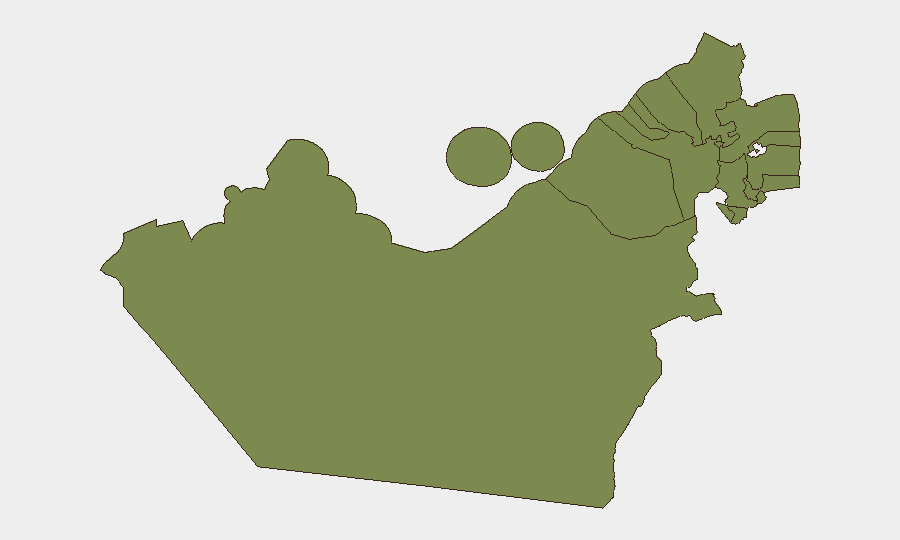
Situation Summary
The United Arab Emirates remains a relatively stable operating environment (global threat rank #96; composite score 12), but faces elevated maritime security risks from regional tensions in the Strait of Hormuz. A countrywide missile alert issued on 2026-06-27 was quickly followed by an all-clear notice, underscoring heightened regional volatility. Dubai dominates the national risk profile (score 31.9), driven by its concentration of international commerce, expatriate populations, and exposure to spillover effects from Gulf maritime activity.
Key Developments
- UAE (countrywide) — 2026-06-27 — Authorities issued an incoming missile alert, followed within hours by an all-clear/situation safe notice. Initial trigger remained unclear; alert reflected broader regional tension.
- Strait of Hormuz / UAE waters — 2026-06-27 — UKMTO and JMIC issued elevated maritime warnings following a confirmed tanker/ship incident in or near the strait. Mariners advised to expect naval presence and possible mines; shipping delays and insurance implications likely.
- UAE–Iran diplomatic engagement — 2026-06-26 — UAE Foreign Minister Abdullah bin Zayed held talks with Iranian counterpart, emphasizing protection of maritime corridors and freedom of navigation through Hormuz; signals ongoing diplomatic effort to contain maritime escalation.
- Dubai — ongoing — As the highest-risk emirate, continued exposure to maritime disruption, expatriate community anxiety, and commercial supply-chain vulnerability; missile alert may amplify reputational and operational risk for multinational offices and logistics hubs.
- Abu Dhabi Emirate — 2026-06-27 — Investigation underway (details limited in available reporting); secondary focus of national risk after Dubai.
Highest-Risk Areas
Dubai's risk score (31.9) is approximately 3.7× that of Abu Dhabi and 12–17× that of other emirates, reflecting its role as a global financial and logistics nexus. The missile alert, maritime corridor disruption, and regional Iran–Gulf tensions create compounding exposure for multinational personnel, supply chains, and critical infrastructure. Abu Dhabi (8.7) carries lower but meaningful risk tied to energy infrastructure and diplomatic volatility. Remaining emirates (Sharjah, Ajman, Fujairah, Ras al-Khaimah, Umm al-Quwain) show significantly lower risk profiles and remain suitable for routine operations.
How GeoBit Would Assist
Intel Sweep and OSINT Fusion would track missile-alert origins, Iranian and Emirati official statements, and maritime-incident signals in real time to distinguish routine posturing from escalation. Maritime tracking and AOI monitoring with persistent alerting on Strait of Hormuz shipping incidents and naval activity would enable early warning of supply-chain disruption and travel risk elevation for personnel transiting Gulf waters. Network and actor analysis of UAE–Iran diplomatic and military communications, combined with regional conflict and regime-stability assessment, would support scenario planning for multinational duty-of-care teams across Dubai and Abu Dhabi.
7-Day Outlook
Regional maritime tension is likely to persist through early July as diplomatic channels remain engaged but underlying Iran–Gulf friction unresolved. Dubai operations should assume sustained elevated alert posture and supply-chain delays; missile-alert drills or precautionary measures may recur. Personnel should confirm evacuation plans and communication protocols; non-essential travel to or through the Strait should be reviewed against operational necessity.
Highest-Risk Areas — Ranked
| # | State / Region | Risk |
|---|---|---|
| 1 | Dubai | 31.9 |
| 2 | Abu Dhabi Emirate | 8.7 |
| 3 | Ras al-Khaimah | 2.7 |
| 4 | Sharjah Emirate | 1.9 |
| 5 | Ajman Emirate | 1.9 |
| 6 | Fujairah Emirate | 1.9 |
| 7 | Umm al-Quwain | 1.9 |
Sources
Previous Daily Briefs
A new United Arab Emirates brief is written every day — each with its own risk map and downloadable CSV. Here's the last week; use the calendar to go further back.
📅 Browse every day by calendar →
Highlighted days have a brief. Tap a day for that day's map & analysis, or “csv” for that day's dataset ($5).