Situation Summary
Yemen remains the 12th-highest-threat country globally, with a composite threat score of 98 across 32 tracked events. The security environment is marked by sustained military activity, international diplomatic pressure, and humanitarian deterioration, with multiple conventional-force incidents and public statements from state and non-state actors recorded in the past 72 hours. Amanat Al Asimah (Sana'a) and eastern governorates including Hadramawt, Al Mahrah, and Al Hudaydah present the highest sub-national risk concentrations. The trajectory remains volatile, with no significant de-escalation signals evident.
Key Developments
- 2026-06-25 · Red Sea / Bab-al-Mandeb: Houthi leadership (Abdul-Malik al-Houthi) issued a televised warning that Israeli presence or expansion into Somaliland or nearby maritime zones would be treated as a military threat, signaling intent to expand maritime operations beyond current baseline.
- 2026-06-25–27 · Nationwide · Conventional Military Activity: Multiple conventional-force incidents recorded across Yemen; at least one incident involved civilian contact (2026-06-27), indicating active military operations with potential civilian exposure.
- 2026-06-26 · Nationwide · UNICEF Public Statement: UNICEF issued a formal public statement on Yemen conditions, consistent with escalating international concern over humanitarian access and child-welfare impacts.
- 2026-06-25 · Political/Diplomatic: Chancellor-level disapproval and public statements from Germany, U.S. Congress (2026-06-27), and Yemeni authorities signal intensifying diplomatic friction; context of statements not independently verified in available web research.
- 2026-06-25 · Mukalla / Hadramawt: Public statements attributed to Yemen-related actors reference Mukalla; full incident details not confirmed in 24–48 hour window, but suggests ongoing attention to eastern port infrastructure.
- 2026-06-25 · Media Engagement: Multiple public statements by Yemen-related actors directed at media outlets, indicating active narrative/information operations.
Note: Live web research (last 24 h) did not independently corroborate specific incident details for most events. Event signals derive from GeoBit's global event feed; web-based corroboration was limited to the June 25 Houthi maritime warning and generic humanitarian-context material.
Highest-Risk Areas
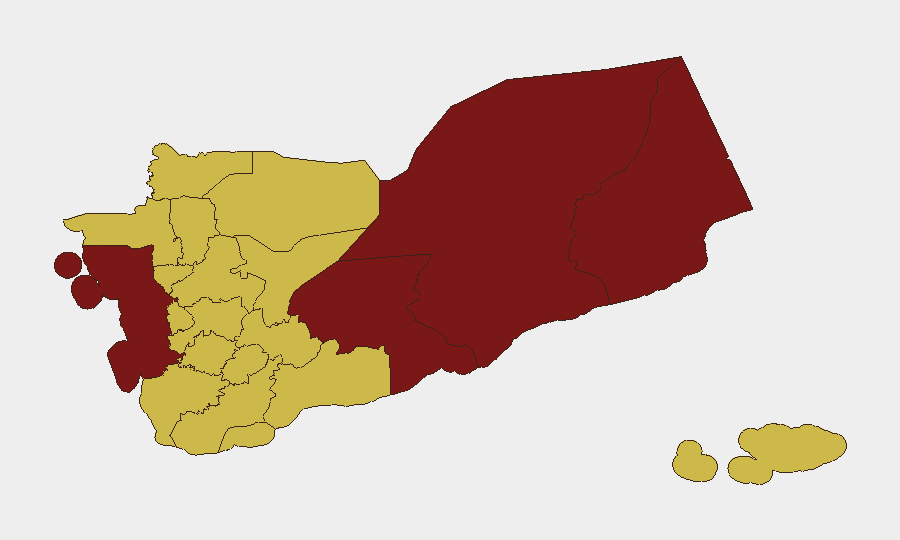
Amanat Al Asimah (risk 98.8) remains the dominant threat node, reflecting military concentration, political competition, and international presence in Sana'a. The eastern crescent—Hadramawt (88.6), Al Mahrah (86.4), and Shabwah (84.2)—presents the second-order risk cluster, driven by port infrastructure exposure, maritime activity, and fragmented security control. Al Hudaydah (84.9) poses significant risk related to Red Sea chokepoint dynamics and Houthi operational capacity. Mid-tier zones (Ta'izz, Sa'dah, Hajjah, 'Amran, Sana'a rural) at 68–70 remain destabilized but show marginally lower intensity than the top tier.
Organizations with personnel or assets in Amanat Al Asimah, Hadramawt, or maritime-facing zones (Al Hudaydah, Al Mahrah) face elevated exposure to military contact, administrative disruption, and maritime interdiction.
How GeoBit Would Assist
AOI Monitoring & Early Warning with persistent focus on Amanat Al Asimah, port zones (Mukalla, Aden), and Red Sea maritime approaches would provide alert-threshold notification of military escalation, civilian-affecting incidents, or maritime blockade changes. Battle Mapping & Force Structure tracking enables real-time assessment of military posture shifts and conventional-weapons deployment. Multi-language OSINT & Telegram/X monitoring combined with sentiment & temporal analysis supports rapid corroboration and assessment of public statements, leadership rhetoric, and actor intent signals—critical for duty-of-care decision-making when event feeds outpace web verification.
7-Day Outlook
No imminent de-escalation is evident; maritime rhetoric and military activity suggest sustained or incrementally elevated operational tempo. Humanitarian conditions will likely worsen, increasing NGO/UN access friction. Organizations should plan for continued volatility in Amanat Al Asimah and eastern ports; Red Sea maritime risks warrant heightened compliance oversight for shipping and supply-chain routes.
Highest-Risk Areas — Ranked
| # | State / Region | Risk |
|---|---|---|
| 1 | Amanat Al Asimah | 98.8 |
| 2 | Hadramaut Governorate | 88.6 |
| 3 | Al Mahrah Governorate | 86.4 |
| 4 | Al Hudaydah Governorate | 84.9 |
| 5 | Shabwah Governorate | 84.2 |
| 6 | Ta'izz Governorate | 69.5 |
| 7 | Sa'dah Governorate | 68.8 |
| 8 | Hajjah Governorate | 68.8 |
| 9 | Al Mahwit Governorate | 68.8 |
| 10 | 'Amran Governorate | 68.8 |
| 11 | Sana'a Governorate | 68.8 |
| 12 | Raymah Governorate | 68.8 |
Sources
Previous Daily Briefs
A new Yemen brief is written every day — each with its own risk map and downloadable CSV. Here's the last week; use the calendar to go further back.
📅 Browse every day by calendar →
Highlighted days have a brief. Tap a day for that day's map & analysis, or “csv” for that day's dataset ($5).