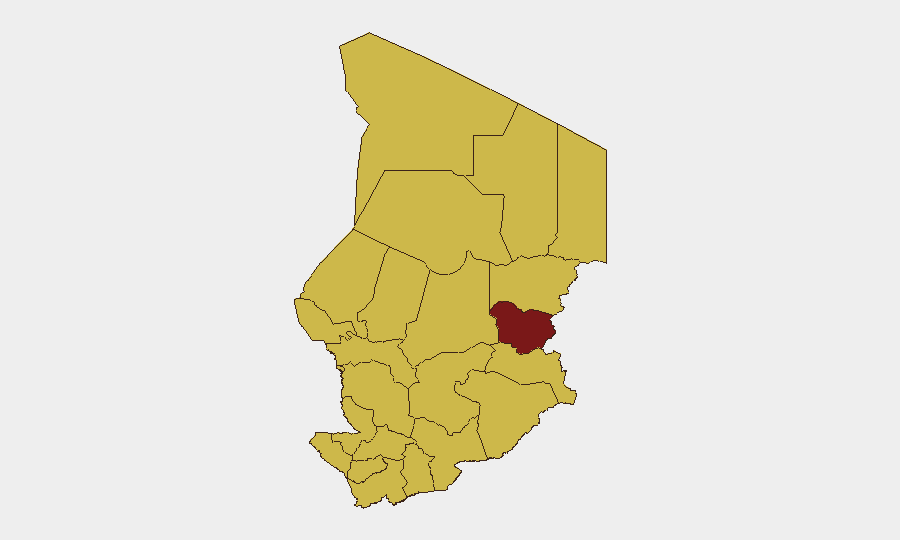
Situation Summary
Chad remains a complex operating environment with composite threat ranking of 97 (18th globally), driven primarily by cross-border spillover, non-state armed group activity in the Lake Chad Basin, and ongoing displacement from Sudan. No major, widely reported new attacks, protests, or infrastructure incidents have surfaced on major news wires or monitored social channels in the last 24–48 hours. Elevated risk persists in eastern border zones and the Lake Chad Basin; organizations with personnel or assets in-country should maintain heightened vigilance and real-time situational awareness.
Key Developments
No major, time-stamped security incidents confirmed within Chad in the last 24–48 hours with sufficient cross-source corroboration (news + social intelligence) to meet reporting standards. Open-source monitoring has identified:
- Ongoing Darfur refugee influx in eastern Chad (25 June context): continued flow of Sudanese civilians into eastern Chad border areas, compounding pre-existing humanitarian and security pressures in Ouaddaï and neighboring regions; no discrete new attack reported but underscores sustained cross-border volatility.
- Sudan–Chad border volatility (indirect): drone activity and fighting reported around Tina (Sudanese side, 25 June) underscore risk of further spillover into Chadian territory, particularly in border-adjacent zones.
- Hepatitis E activity noted in recent event signals; public health advisory status unclear but may affect humanitarian and commercial operations.
Note: Smaller local incidents may go unreported on major wires. Organizations relying on this brief should cross-reference with internal field reporting and privileged threat intelligence.
Highest-Risk Areas
Ouaddaï (97.8) is substantially more acute than all other regions and warrants priority focus: it is the primary reception zone for Sudanese refugees and hosts significant non-state armed group activity. The remaining 10 high-risk regions cluster around 67.8 composite risk, reflecting Lake Chad Basin instability (Lac, Kanem, Sila, Wadi Fira, Ennedi-Ouest, East Ennedi, Tibesti) and broader displacement pressures (N'Djamena, Chari-Baguirmi, Hadjer-Lamis, Salamat). Risk drivers include violent extremism, banditry, refugee-hosting strain, and limited state capacity in remote areas. N'Djamena (capital, ranked 9th at 67.8) carries elevated risk despite being the administrative center, reflecting both concentration of security forces and potential for political instability or protest.
How GeoBit Would Assist
Security and duty-of-care teams should employ AOI Monitoring & Early Warning (persistent watch on Ouaddaï, Lac, and border zones with real-time alerting), Intel Sweep and multi-language OSINT (continuous scanning of regional news, X/Twitter, and Telegram for emerging incidents), and GIS & Spatial Analysis to map risk hotspots against staffing/asset locations. Conflict battle mapping and non-state actor network analysis provide context on armed group disposition and likely flashpoints; routing & network analysis supports contingency planning for personnel movement in high-risk corridors.
7-Day Outlook
Cross-border pressure from Sudan is expected to remain elevated, with potential for localized security incidents in eastern and northern border zones. Refugee flows and humanitarian needs will likely continue to strain regional stability. Organizations should assume no significant near-term de-escalation and maintain restrictive movement protocols, staff rotation planning, and robust communication with local partners and security services.
Highest-Risk Areas — Ranked
| # | State / Region | Risk |
|---|---|---|
| 1 | Ouaddaï | 97.8 |
| 2 | Ennedi-Ouest | 67.8 |
| 3 | Wadi Fira | 67.8 |
| 4 | Sila | 67.8 |
| 5 | Salamat | 67.8 |
| 6 | East Ennedi | 67.8 |
| 7 | Kanem | 67.8 |
| 8 | Lac | 67.8 |
| 9 | N'Djamena | 67.8 |
| 10 | Hadjer-Lamis | 67.8 |
| 11 | Chari-Baguirmi | 67.8 |
| 12 | Tibesti | 67.8 |
Sources
Previous Daily Briefs
A new Chad brief is written every day — each with its own risk map and downloadable CSV. Here's the last week; use the calendar to go further back.
📅 Browse every day by calendar →
Highlighted days have a brief. Tap a day for that day's map & analysis, or “csv” for that day's dataset ($5).