Situation Summary
Cuba faces acute infrastructure instability following a nationwide grid collapse on 6 July 2026, leaving an estimated 10 million people without power and triggering cascading failures in telecommunications, water supply, and fuel distribution. Concurrent diplomatic escalation—including U.S. administrative sanctions and reduced bilateral relations announced 7 July—has compounded operational uncertainty for international personnel and assets. The combination of critical infrastructure vulnerability, communication blackouts, and heightened political friction elevates duty-of-care risk for organizations with staff or operations on the island.
Key Developments
- Nationwide power grid collapse – island-wide (7 July, 0600–1200 UTC reported). Cuba's national electrical system failed completely, plunging approximately 10 million residents into darkness. The blackout affected Havana, provincial capitals, and rural areas simultaneously, disabling grid-dependent critical services.
- Fuel shortage cited as primary cause – national (7 July). Official and media reporting attribute the grid failure to dangerously depleted fuel reserves, with authorities acknowledging insufficient supply to sustain generating capacity. Fuel depletion also constrains restoration speed and elevates risk of prolonged outages.
- Partial, uneven power restoration – Havana and major urban centers (late 6 July into 7 July). Electricity began returning to sections of Havana and key infrastructure sites on the evening of 6 July; however, restoration remains fragile, with reports of renewed localized blackouts and no timeline for full island recovery.
- Telecom and internet outages – Havana, national (6–7 July). Cellular and broadband services collapsed coinciding with the blackout. U.S. Embassy Havana issued a security alert noting this as the seventh nationwide power outage in recent periods and warning of "increasingly unstable" grid conditions affecting consular and emergency communications.
- Water supply crisis exacerbated – national (concurrent with blackout, 6–7 July). Reporting indicates nearly 3 million Cubans already face chronic daily water shortages; power loss to pumping and treatment facilities has intensified acute supply failures. Water insecurity elevates public-health and unrest risk.
- U.S. diplomatic escalation – announced 7 July. Secretary of State reduced relations with Cuba, announced administrative sanctions, and issued public statements of disapproval. The administration simultaneously reduced diplomatic posture, signaling heightened bilateral tension and potential policy shifts affecting travel, commerce, and expatriate operations.
- Transport and hotel service disruptions – Havana and tourist zones (6–7 July). Blackout and fuel shortages have disabled public transit and degraded hospitality operations. U.S. Embassy advisory cited elevated travel risk due to infrastructure failure affecting movement and accommodation.
- Investigation reports involving foreign travelers – noted in event signals (7 July). Authorities have launched investigations touching on traveler conduct; exact scope and subjects remain under clarification, but signal elevated security scrutiny of foreign nationals.
Highest-Risk Areas
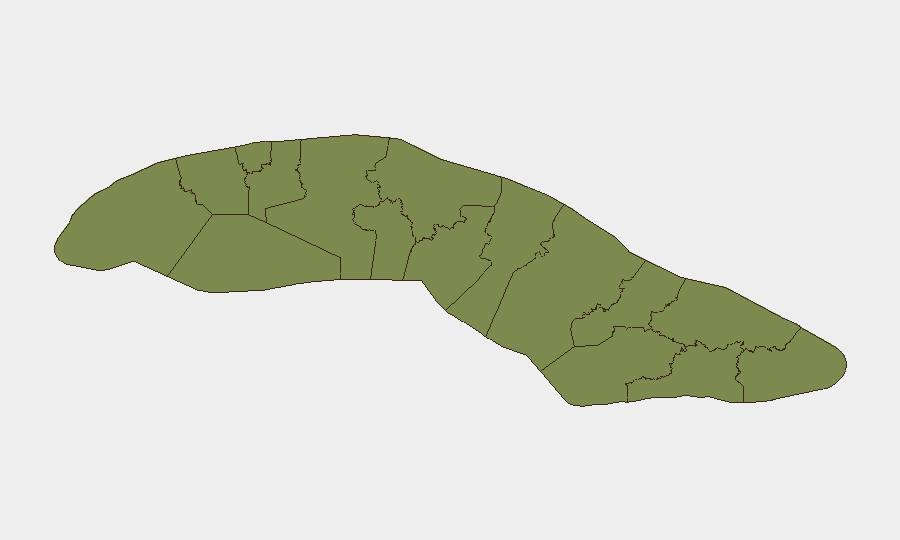
Sancti Spiritus and Havana dominate the sub-national ranking (composite risk 33.5 and 32.6 respectively), driving Cuba's overall threat profile. Havana's dual exposure—as the capital, diplomatic hub, and primary residence/workplace for international personnel—combines infrastructure collapse risk, political volatility, and operational disruption. Sancti Spiritus's elevated score reflects both direct instability signals and its role as a logistics and transport node; fuel and power constraints there constrain inter-provincial movement. All other provinces cluster at 3.5–4.4, indicating dispersed but lower-intensity risk across the island.
How GeoBit Would Assist
Intel Sweep and OSINT fusion provide real-time tracking of grid status, fuel supply updates, and official/unofficial reports on restoration timelines. AOI Monitoring with alerting on Havana, Sancti Spiritus, and key infrastructure sites enables early warning of renewed outages or civil unrest. Routing & Network Analysis helps security teams plan alternative travel corridors and communication redundancy if primary networks remain compromised. Sentiment & entity extraction across X, Telegram, and local media surfaces emerging public-order or labor risks during prolonged deprivation.
7-Day Outlook
Grid restoration is expected to progress unevenly over the next 5–7 days, with full island recovery unlikely before mid-July given fuel constraints. Prolonged water and power scarcity, combined with political friction and travel disruptions, will sustain elevated risk for expatriate operations and international business continuity through at least 14 July. Monitoring for secondary risks—labor actions, localized civil unrest, or further diplomatic moves—remains essential.
Highest-Risk Areas — Ranked
| # | State / Region | Risk |
|---|---|---|
| 1 | Sancti Spiritus | 33.5 |
| 2 | Havana | 32.6 |
| 3 | Matanzas | 4.4 |
| 4 | Mayabeque | 4.1 |
| 5 | Isle of Youth | 4.1 |
| 6 | Camagüey | 4.1 |
| 7 | Granma | 4.1 |
| 8 | Pinar del Rio | 3.5 |
| 9 | Artemisa | 3.5 |
| 10 | Cienfuegos | 3.5 |
| 11 | Villa Clara | 3.5 |
| 12 | Ciego de Avila | 3.5 |
Sources
Previous Daily Briefs
A new Cuba brief is written every day — each with its own risk map and downloadable CSV. Here's the last week; use the calendar to go further back.
📅 Browse every day by calendar →
Highlighted days have a brief. Tap a day for that day's map & analysis, or “csv” for that day's dataset ($5).
Atlas — our AI intelligence desk — emails them this snapshot personally. Nothing else, no list.