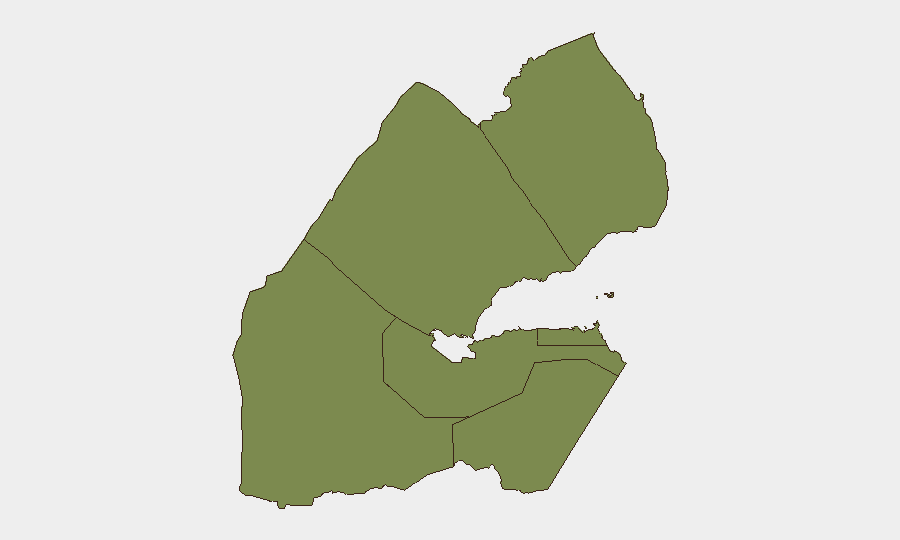
Situation Summary
Djibouti is in a quiet operational period with no confirmed security incidents, civil unrest, infrastructure disruptions, or crime spikes reported in the last 24–48 hours. Regional diplomatic signals over the past 72 hours—including Iran reducing relations with Djibouti, US rejection statements, and Saudi statements—reflect broader Red Sea and Horn of Africa tensions rather than domestic instability. The national composite threat score of 27 reflects baseline exposure to regional conflict spillover rather than active in-country security events.
Key Developments
- Nationwide, 27–29 July 2026 – No verified attacks, clashes, demonstrations, or infrastructure failures in any of Djibouti's six administrative regions. Open-source security monitoring reports an operationally calm environment with no travel-disrupting events (port shutdowns, airport incidents, curfews).
- Policy coordination, 27 July 2026 – Activation of an inter-ministerial task force to manage economic and supply-chain exposure to Middle East tensions; no reported operational disruption or unrest linked to this measure.
- Diplomatic signals, 26–27 July 2026 – Iran announced reduced relations with Djibouti; US and Saudi Arabia issued public statements on regional matters. These reflect geopolitical positioning rather than triggers for domestic security incidents.
- Baseline regional exposure – All six administrative regions maintain uniform, low-to-moderate risk profiles (composite score 1.3 each). No geographic concentration of new incidents; threat scores reflect persistent Red Sea/Horn of Africa instability rather than recent domestic events.
Highest-Risk Areas
All six administrative regions—Dikhil, Arta, Ali Sabieh, Tadjourah, Obock, and Djibouti city—carry identical composite risk scores (1.3), indicating that geographic differentiation of threat is minimal at present. Risk is driven by Djibouti's position at the intersection of Red Sea maritime tensions, Somali regional instability, and competing geopolitical interests (US, Saudi, Iranian, and Chinese military presence) rather than by localized domestic instability. Border areas (particularly Ali Sabieh and Obock, which adjoin Somalia and Eritrea) maintain baseline exposure to cross-border activity and smuggling networks historically endemic to the region, but no current flare-up has been detected.
How GeoBit Would Assist
Corporate security teams should deploy AOI (Area-of-Interest) Monitoring & Early Warning on strategic assets, ports, and key infrastructure to detect any shift from the current calm baseline. Maritime & Aviation tracking integrated with economic & trade intelligence will provide advance notice of supply-chain or port disruptions tied to Red Sea tensions. OSINT fusion (news, social-media sentiment, local source networks via multi-language search and Telegram/X monitoring) enables rapid detection of grassroots unrest or protest activity before they escalate, allowing duty-of-care teams to adjust personnel movements ahead of any deterioration.
7-Day Outlook
Djibouti is expected to remain operationally stable over the next 7 days absent a major shock in the Red Sea or Horn of Africa region. Diplomatic tensions (Iran–US–Saudi positioning) will continue, but their translation into Djibouti-specific security incidents remains low-probability given the current absence of domestic triggers. Continued monitoring of maritime incidents in the Bab al-Mandeb and economic impact messaging from regional actors will be the primary early-warning indicators for any shift in the threat trajectory.
Highest-Risk Areas — Ranked
| # | State / Region | Risk |
|---|---|---|
| 1 | Dikhil | 1.3 |
| 2 | Arta | 1.3 |
| 3 | Ali Sabieh | 1.3 |
| 4 | Tadjourah | 1.3 |
| 5 | Obock | 1.3 |
| 6 | Djibouti | 1.3 |
Sources
Previous Daily Briefs
A new Djibouti brief is written every day — each with its own risk map and downloadable CSV. Here's the last week; use the calendar to go further back.
📅 Browse every day by calendar →
Highlighted days have a brief. Tap a day for that day's map & analysis, or “csv” for that day's dataset ($5).
Atlas — our AI intelligence desk — emails them this snapshot personally. Nothing else, no list.