Situation Summary
Ecuador remains under a newly declared 60-day state of emergency across 10 provinces and three municipalities, initiated 2026-06-17 to counter organized crime and gang violence. The national security posture has escalated significantly, with approximately 13,000 military personnel deployed into drug-trafficking corridors as of 2026-06-19, and the government has recently opened the door to foreign military deployments with immunity. Gang violence—particularly in coastal and border regions—remains the primary driver of Ecuador's #34 global threat ranking (composite score 61, 107 tracked events). The trajectory indicates sustained high pressure on criminal networks but elevated risk of security-force operations affecting civilian populations and business continuity in affected provinces.
Key Developments
- Guayaquil, Guayas Province | 2026-06-18 — Suspected gang leader Carlos Alberto Suástegui Villanueva was fatally shot in a planned operation outside airport arrivals; two teenagers were detained and a bystander injured, signaling coordinated law-enforcement action in the country's primary commercial hub.
- National deployment | 2026-06-19 — Approximately 13,000 soldiers deployed into drug-trafficking corridors with reinforcements arriving in Guayaquil and assigned to Guayas, Manabí, El Oro, and Los Ríos provinces, indicating sustained military mobilization in high-crime areas.
- State of emergency declaration | 2026-06-17–2026-06-18 — President Daniel Noboa declared a new 60-day state of emergency across 10 provinces and three municipalities, part of the broader organized-crime response and expected to enable heightened security-force authority and potential restrictions on movement and gatherings.
- Eloy Alfaro, Esmeraldas Province | 2026-06-17 — Army detained seven individuals allegedly linked to the Oliver Sinisterra group near the Colombian border during the wider crackdown, reflecting operations in northern border regions.
- Foreign military immunity policy | 2026-06-19 — Ecuador opened the door to foreign military deployments with immunity, signaling international cooperation in counter-narcotics and counter-gang operations.
- Travel-advisory updates | 2026-06-18–2026-06-20 — Foreign travel advisories warned of newly activated state-of-emergency protocols, noting that security forces may conduct raids and restrict gatherings in affected provinces.
Highest-Risk Areas
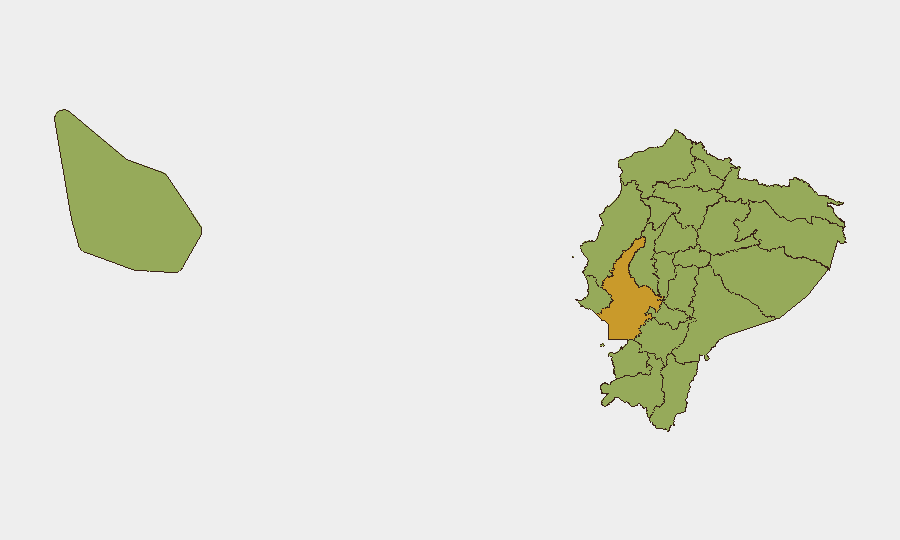
Guayas Province (risk 72.8) dominates the risk landscape, driven by gang violence, trafficking infrastructure, and the concentration of commercial activity in Guayaquil. Pastaza Province (57.5) follows, though with sparser population density; border provinces including Carchi (45.9), Sucumbíos (42.8), Orellana (42.8), and Esmeraldas (42.8) remain elevated due to proximity to Colombia and trafficking networks. Pichincha Province (43.8), which includes the capital Quito, shows moderate but sustained risk. The state-of-emergency declaration and military deployment directly target these regions, meaning security-force operations and potential civilian friction are likely to persist over the next 60 days.
How GeoBit Would Assist
AOI Monitoring & Early Warning enables real-time alerting on developments in declared emergency zones, tracking raid patterns, checkpoint activity, and incident clustering. Intel Sweep and OSINT Fusion (X/Twitter, Telegram, YouTube OSINT, multi-language search, entity extraction) provide continuous detection of gang communications, military movements, and sentiment shifts that precede escalation. GIS & Spatial Analysis and Routing & Network Analysis help security teams identify secure movement corridors, alternative supply-chain routes, and safe areas within high-risk provinces, while Conflict & Military tracking monitors force deployment and potential friction points.
7-Day Outlook
Military and police operations will intensify across emergency zones through late June, with heightened checkpoint activity, raids, and potential street-level clashes expected in Guayaquil and provincial cities. Civilian friction with security forces is probable; businesses and personnel should expect temporary movement restrictions and operational disruptions. No imminent major policy reversal is anticipated; the state of emergency and foreign military cooperation framework are likely to hold through at least early July.
Highest-Risk Areas — Ranked
| # | State / Region | Risk |
|---|---|---|
| 1 | Guayas Province | 72.8 |
| 2 | Pastaza Province | 57.5 |
| 3 | Carchi Province | 45.9 |
| 4 | Pichincha Province | 43.8 |
| 5 | Azuay Province | 43 |
| 6 | Sucumbíos Province | 42.8 |
| 7 | Orellana Province | 42.8 |
| 8 | Manabí Province | 42.8 |
| 9 | Galápagos | 42.8 |
| 10 | Esmeraldas Province | 42.8 |
| 11 | Imbabura Province | 42.8 |
| 12 | Santo Domingo de los Tsáchilas Province | 42.8 |
Sources
Previous Daily Briefs
A new Ecuador brief is written every day — each with its own risk map and downloadable CSV. Here's the last week; use the calendar to go further back.
📅 Browse every day by calendar →
Highlighted days have a brief. Tap a day for that day's map & analysis, or “csv” for that day's dataset ($5).