Situation Summary
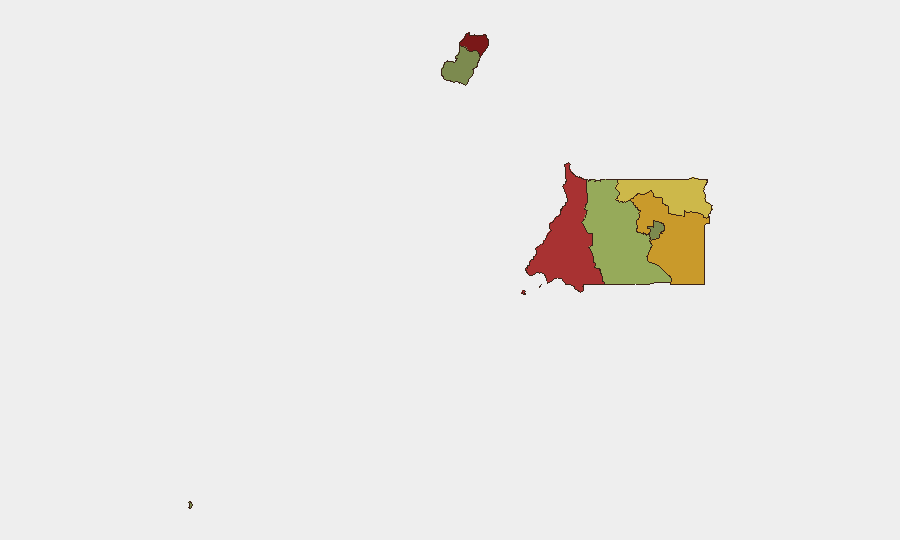
Equatorial Guinea remains in a stable but restrictive operating environment with no acute security incidents or civil unrest reported in the last 24–48 hours. The national threat composite remains low (score 7), though sub-national risk concentration in the northern provinces—Bioko Norte (risk 85) and Litoral Province (risk 78)—reflects chronic crime, strict controls on assembly, and sporadic violence rather than active conflict or political instability. Entry controls linked to Ebola in neighboring Uganda and the DRC remain in force; continental land borders have been closed since mid-December 2025. The risk picture is one of persistent structural vulnerabilities—chiefly crime in urban centers and movement restrictions—rather than sudden deterioration.
Key Developments
- No verifiable, dated security incidents identified in Equatorial Guinea over 2026-07-31 to 2026-08-02. Open-source monitoring (news, government advisories, social media, regional media) has not surfaced any cross-confirmed discrete events (protests, violence, serious crime, infrastructure disruption) meeting intelligence standards (specific date, location, multi-source confirmation) within the 24–48-hour window.
- Ebola-related quarantine controls remain active (imposed 18 July 2026): 21-day quarantine enforced for arrivals from Uganda and DRC Ebola-affected zones; continues to affect inbound travel and access.
- Continental land-border closure persists (since 15 December 2025): Authorities maintain indefinite closure of Río Muni land borders; only air and maritime entry points operational, subject to disruption.
- Chronic crime trend in Malabo and Bata: Multiple recent advisories highlight ongoing elevated robberies, assaults, nighttime insecurity, taxi-related risks, and police extortion at roadblocks; no specific incident-level event dated to last 48 hours, but pattern reflects elevated street-level risk.
Highest-Risk Areas
Bioko Norte and Litoral Province dominate sub-national risk (scores 85 and 78, respectively), driven by a combination of crime concentration in the capital Malabo and port city Bata, limited state capacity, permissive conditions for informal-sector violence, and restricted movement controls. Wele-Nzas Province (risk 72) and Kié-Ntem Province (risk 68) on the continental mainland reflect cross-border friction, ongoing land-border closure, and lower institutional oversight. Centro Sur and Bioko Sur present moderate risk; Djibloho and Annobón Province remain peripheral to current threat dynamics. Personnel and assets in the northern urban centers face the highest operational friction from crime and administrative restrictions.
How GeoBit Would Assist
Security teams with personnel or assets in Equatorial Guinea should deploy AOI Monitoring & Early Warning on Malabo, Bata, and border zones to detect emerging protest activity, crime-pattern changes, or official movement restrictions before they affect operations. Intel Sweep and multi-language OSINT (Spanish, French, English, Portuguese regional sources) combined with sentiment & temporal analysis provide early signals of regime stability shifts or civil-unrest precursors. Routing & Network Analysis supports contingency planning around the active continental land-border closure and Ebola-related quarantine protocols to optimize alternative travel and supply chains.
7-Day Outlook
No acute security deterioration is anticipated in the next seven days; the operating environment is expected to remain stable but restrictive. Continued vigilance on crime trends in Malabo and Bata, and monitoring of any change to border-closure or health-entry policies, remains essential for duty-of-care compliance. Any widening of the Ebola response zone or sudden shift in assembly controls would warrant rapid re-assessment.
Highest-Risk Areas — Ranked
| # | State / Region | Risk |
|---|---|---|
| 1 | Bioko Norte | 85 |
| 2 | Litoral Province | 78 |
| 3 | Wele-Nzas Province | 72 |
| 4 | Kié-Ntem Province | 68 |
| 5 | Centro Sur Province | 45 |
| 6 | Bioko Sur | 38 |
| 7 | Djibloho | 15 |
| 8 | Annobón Province | 8 |
Sources
Previous Daily Briefs
A new Equatorial Guinea brief is written every day — each with its own risk map and downloadable CSV. Here's the last week; use the calendar to go further back.
📅 Browse every day by calendar →
Highlighted days have a brief. Tap a day for that day's map & analysis, or “csv” for that day's dataset ($5).
Atlas — our AI intelligence desk — emails them this snapshot personally. Nothing else, no list.