Situation Summary
Fiji's security environment remains stable, with no verified major incidents, civil unrest, or conflict-related disruptions reported in the last 24–48 hours. Underlying political tension around constitutional review processes is being monitored but has not yet materialized into operational security events. Seismic activity (four earthquakes ranging 4.2–5.1 magnitude in the past week) poses ongoing natural-hazard risk; volcanic ash from Vanuatu caused documented Fiji Airways flight cancellations on 28 July, now resolved. The composite threat score of 3 reflects low current risk, though sub-national disparities—particularly in Western and Central divisions—warrant continued differentiated monitoring.
Key Developments
- Countrywide – 27–29 July 2026 – Open-source monitoring and regional security wires report zero verified security incidents, protests, or infrastructure damage nationwide over the latest 24–48-hour window. Political rhetoric around constitutional matters remains under watch but has not produced civil unrest or violence.
- Nadi & national aviation – 28 July 2026 (resolved) – Fiji Airways suspended several regional and domestic flights due to volcanic ash ingress from Vanuatu; service resumed by end of reporting period. This is a transport/infrastructure disruption rather than a security incident.
- Fiji region – seismic activity (ongoing, not acute) – Four earthquakes (M 4.2–5.1) recorded south of Fiji Islands and near Levuka over the past week. No tsunami warnings or structural damage reported; activity remains within normal Pacific seismic patterns.
- Western & Suva divisions – 27–29 July 2026 – Monitoring of higher-risk areas (composite scores 85 and 72 respectively) confirms stable baseline; no new incidents, security operations disruptions, or personnel safety events identified in the latest reporting cycle.
Highest-Risk Areas
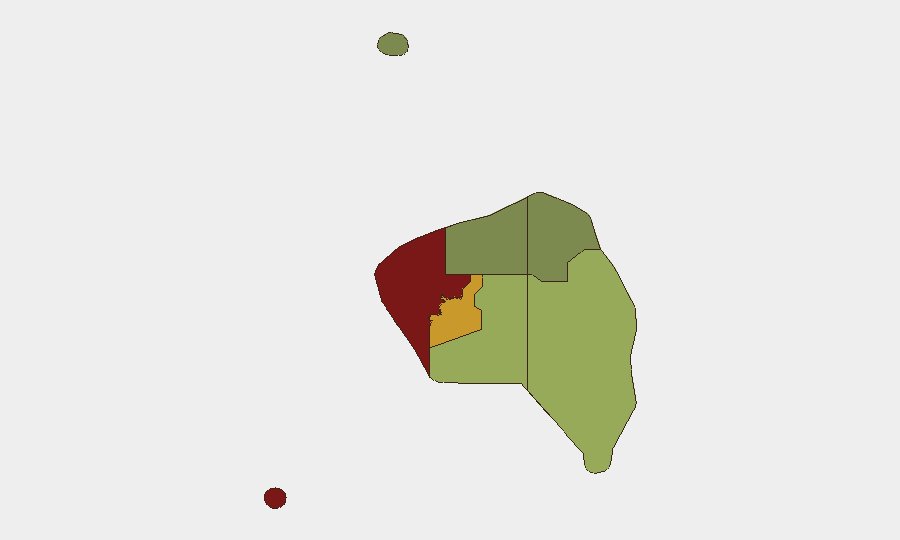
Western Division (risk score 85) and Central Division (72) together account for the country's elevated composite risk profile; both exceed the national average substantially. Western Division's higher score likely reflects concentration of economic activity, port infrastructure, and historically documented crime patterns, while Central Division's score suggests political sensitivity and governance-related factors. Eastern, Northern, and Rotuma divisions present significantly lower risk (45, 38, and 12 respectively). For personnel and asset-protection planning, Western and Central divisions should remain the primary focus for incident monitoring, route planning, and duty-of-care protocols; lower-risk regions permit proportionally lighter security overhead.
How GeoBit Would Assist
A corporate security team operating in or transiting Fiji would deploy AOI Monitoring & Early Warning to track Western and Central divisions for emerging civil unrest, crime spikes, or political flashpoints with automated alerting. Intel Sweep and multi-language OSINT (news wires, social media, regional briefs) provide real-time baseline tracking to detect deviations from current stability. Routing & Network Analysis supports alternative journey and supply-chain planning to avoid higher-risk sub-national corridors, while Satellite & Imagery Analysis can validate infrastructure or port disruptions (e.g., volcanic ash or weather impacts on aviation and maritime operations). These capabilities together enable duty-of-care teams to maintain situational awareness and adjust staffing, travel, and asset positioning dynamically.
7-Day Outlook
No major security escalation is anticipated in the coming week absent new political or natural-hazard triggers. Constitutional review processes will remain a passive risk vector; seismic activity should continue within normal parameters. Teams should maintain current posture while monitoring for any resurgence of civil-unrest signals in Western and Central divisions, particularly around political announcements or gatherings.
Highest-Risk Areas — Ranked
| # | State / Region | Risk |
|---|---|---|
| 1 | Western | 85 |
| 2 | Central | 72 |
| 3 | Eastern | 45 |
| 4 | Northern | 38 |
| 5 | Rotuma | 12 |
Sources
Previous Daily Briefs
A new Fiji brief is written every day — each with its own risk map and downloadable CSV. Here's the last week; use the calendar to go further back.
📅 Browse every day by calendar →
Highlighted days have a brief. Tap a day for that day's map & analysis, or “csv” for that day's dataset ($5).
Atlas — our AI intelligence desk — emails them this snapshot personally. Nothing else, no list.