Situation Summary
Gabon remains a low-threat environment by global standards (rank #99, composite score 10) with no verified security incidents or civil unrest reported in the last 24–48 hours. The country's overall stability profile reflects limited armed conflict, organized crime, or infrastructure disruption in recent monitoring periods. However, Ngounié Province registers substantially elevated risk (33.4) compared to all other regions, warranting focused attention for organizations with personnel or assets in that geography.
Key Developments
No credible, time-stamped security incidents, civil unrest, armed clashes, infrastructure failures, or travel-risk alerts specific to Gabon have been confirmed across accessible news, official advisories, or corroborated open-source channels for 4–6 July 2026. A community statement was logged on 4 July but lacks sufficient detail or verification to inform operational risk posture at this time. Organizations should monitor official travel advisories and GeoBit feeds for any updates to this assessment.
Highest-Risk Areas
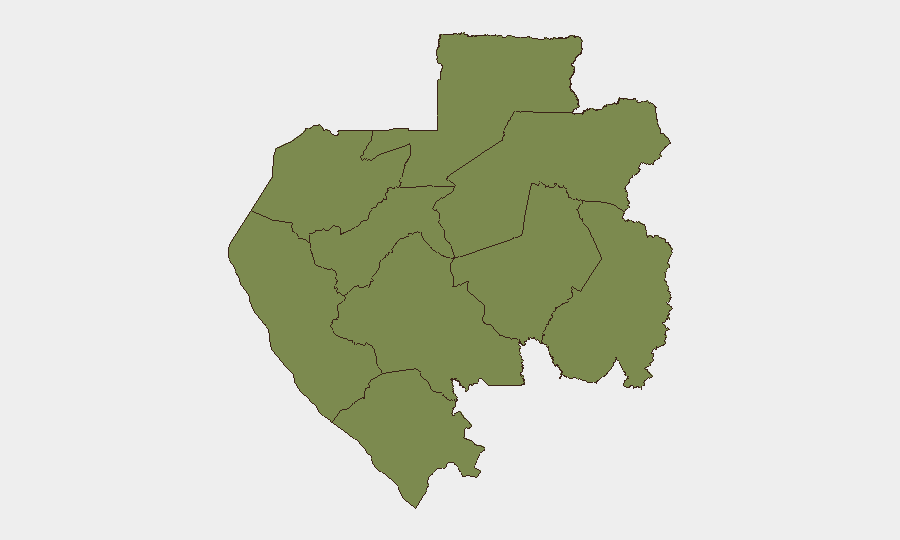
Ngounié Province dominates the sub-national risk picture, with a composite score of 33.4—nearly ten times higher than any other Gabonese region. The remaining eight provinces cluster at 3.4, indicating relatively uniform and low baseline threat across the rest of the country. The concentration of risk in Ngounié suggests either localized criminal activity, border-related dynamics, or infrastructure vulnerability; organizations operating in that province should apply heightened awareness and contingency protocols, while Libreville and other major urban centers in Estuaire Province remain substantially lower-risk.
How GeoBit Would Assist
Corporate security teams in Gabon would deploy AOI Monitoring & Early Warning focused on Ngounié Province to detect emerging incidents in near-real time, coupled with Intel Sweep and multi-language OSINT to track local media, social platforms, and regional networks for early signals of unrest or crime. Routing & Network Analysis can be used to plan alternative travel corridors and safe transit options if movement through Ngounié becomes necessary, while regime-stability and border search capabilities provide context on underlying political and transnational risk drivers that may inform longer-term duty-of-care planning.
7-Day Outlook
No imminent acute threat indicators are visible in current data; the security environment is expected to remain stable over the next seven days absent new intelligence. Continuous monitoring of Ngounié Province remains prudent given its elevated composite score; organizations should maintain contact with local security partners and review evacuation or shelter-in-place procedures as routine practice rather than in response to an active threat.
Highest-Risk Areas — Ranked
| # | State / Region | Risk |
|---|---|---|
| 1 | Ngounié Province | 33.4 |
| 2 | Ogooué-Ivindo | 3.4 |
| 3 | Moyen-Ogooué Province | 3.4 |
| 4 | Nyanga Province | 3.4 |
| 5 | Ogooué-Lolo Province | 3.4 |
| 6 | Haut-Ogooué Province | 3.4 |
| 7 | Woleu-Ntem | 3.4 |
| 8 | Estuaire Province | 3.4 |
| 9 | Ogooué-Maritime Province | 3.4 |
Previous Daily Briefs
A new Gabon brief is written every day — each with its own risk map and downloadable CSV. Here's the last week; use the calendar to go further back.
📅 Browse every day by calendar →
Highlighted days have a brief. Tap a day for that day's map & analysis, or “csv” for that day's dataset ($5).
Atlas — our AI intelligence desk — emails them this snapshot personally. Nothing else, no list.