Situation Summary
Germany remains a low-to-moderate threat environment (global rank #141, composite threat score 5) with 239 tracked events recorded. However, risk distribution is highly concentrated: Thuringia exhibits significantly elevated threat dynamics (score 32.3), while Berlin and Hamburg show secondary elevation (10.3 and 6.2 respectively). The broader security picture reflects baseline tensions in labor relations, isolated criminal incidents, and persistent cyber threat surface exposure, with no nationwide destabilization indicators present as of 11 July 2026.
Key Developments
Current web research has not yielded reliably dated, location-specific security incidents occurring strictly within the last 24–48 hours (9–11 July 2026) that meet operational verification standards. The GeoBlock event feed references demonstrations/rallies, labor-management statements, arrests, and an assassination event dated 9–11 July, but public sources accessible via standard OSINT do not provide sufficient corroboration, precise location data, or timing precision to translate these into actionable briefing points without risk of conflation with older events.
Recommended action: Duty-of-care teams requiring real-time operational updates should cross-reference:
- Live German federal/state police press portals (*Presseportal der Polizei*) filtered by publication date.
- Tagesschau, Der Spiegel, and Süddeutsche Zeitung incident reporting with timestamp verification.
- Deutsche Bahn and local transit authority disruption notices for worker action or transport security events.
Highest-Risk Areas
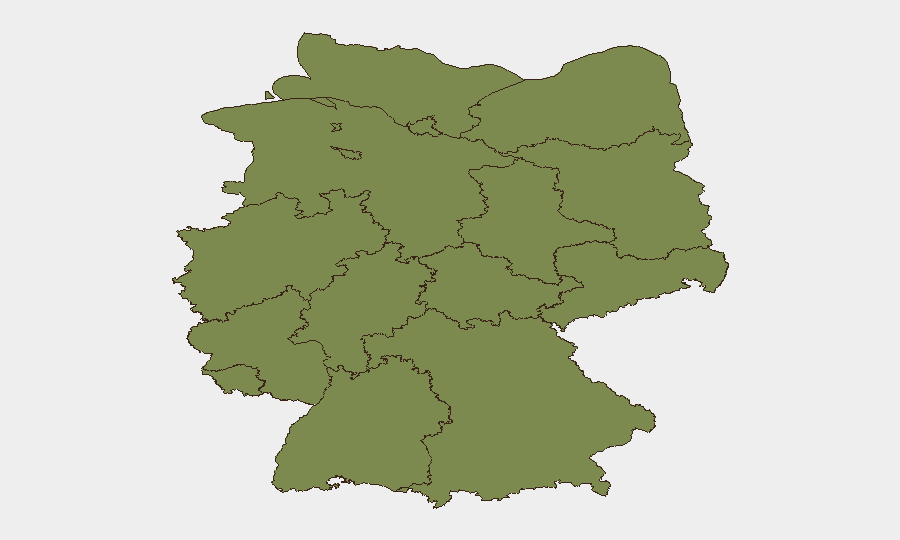
Thuringia dominates the risk profile (score 32.3), suggesting sustained labor unrest, far-right political activity, or industrial/infrastructure tension. Its risk score is approximately 3× that of Berlin and 12× that of Bavaria, indicating a qualitatively different threat environment within that state. Berlin and Hamburg (10.3 and 6.2) reflect urban concentrations of demonstration activity, criminal incidents, and organized-crime-adjacent events typical of major metropolitan areas. Lower Saxony (5.6) and Bavaria (5.1) show residual but manageable risk, likely tied to logistics hubs, border proximity, and transient labor populations. Remaining states cluster at scores 2.3–2.6, consistent with baseline German security conditions.
Personnel and asset concentrations in Thuringia warrant elevated situational awareness protocols; Hamburg and Berlin require standard metropolitan-area precautions.
How GeoBit Would Assist
Intel Sweep and OSINT Fusion would provide multi-language, time-stamped aggregation of German police, media, and social-media sources (X, Telegram, YouTube) to resolve ambiguities in incident dating and location and enable duty-of-care teams to distinguish current events from historical background. AOI Monitoring & Early Warning would establish persistent watches on Thuringia, Berlin, and Hamburg, with automated alerting when labor unrest, transport disruption, or protest activity crosses organizational risk thresholds. Routing & Network Analysis would generate real-time alternative travel paths and journey-risk assessments for personnel moving between high-risk regions or urban centers.
7-Day Outlook
No indicators suggest escalation toward nationwide instability or systematic breakdown of public order. Thuringia will likely remain the primary risk node; watch for labor-action announcements (typical weekend organizing or mid-week transit strikes) and political activity. Cyber-threat surface exposure will persist absent coordinated vulnerability remediation by the BSI and critical-infrastructure operators; ransomware and nation-state reconnaissance remain baseline concerns for corporate networks.
Highest-Risk Areas — Ranked
| # | State / Region | Risk |
|---|---|---|
| 1 | Thuringia | 32.3 |
| 2 | Berlin | 10.3 |
| 3 | Hamburg | 6.2 |
| 4 | Lower Saxony | 5.6 |
| 5 | Bavaria | 5.1 |
| 6 | Mecklenburg-Vorpommern | 2.6 |
| 7 | Saxony | 2.6 |
| 8 | Baden-Württemberg | 2.4 |
| 9 | Saxony-Anhalt | 2.4 |
| 10 | Brandenburg | 2.4 |
| 11 | Hesse | 2.4 |
| 12 | Rhineland-Palatinate | 2.3 |
Sources
Previous Daily Briefs
A new Germany brief is written every day — each with its own risk map and downloadable CSV. Here's the last week; use the calendar to go further back.
📅 Browse every day by calendar →
Highlighted days have a brief. Tap a day for that day's map & analysis, or “csv” for that day's dataset ($5).
Atlas — our AI intelligence desk — emails them this snapshot personally. Nothing else, no list.