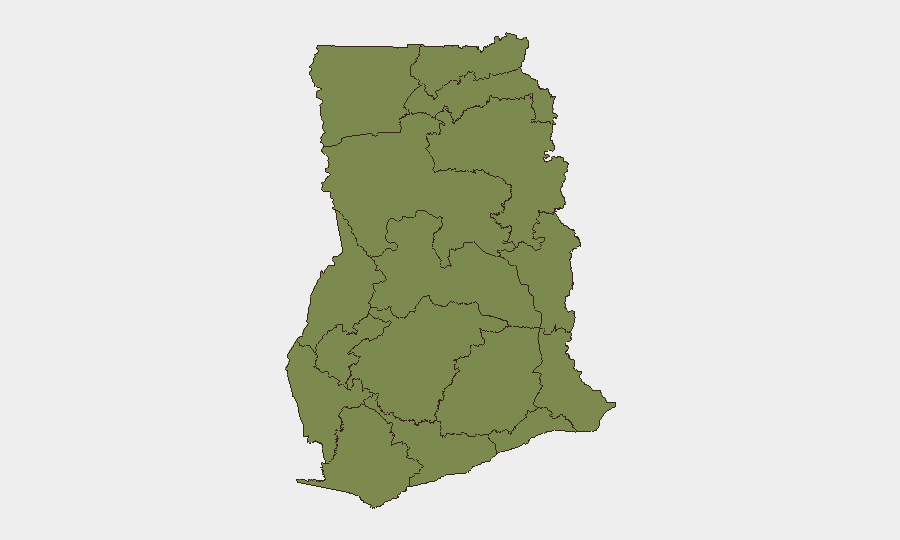
Situation Summary
Ghana remains a relatively stable West African state with composite threat ranking of #105 globally. However, recent event signals tracked across 2026-07-03 to 2026-07-05 indicate emerging tensions involving executive, judicial, and security-sector actors—including reported military force deployments, hostage/abduction incidents, and armed police engagement. While live web research confirms no verified, cross-sourced discrete security incidents meeting professional confirmation standards in the last 24–48 hours, the spike in high-level political and institutional event signals warrants close monitoring for potential escalation or institutional breakdown.
Key Developments
- 2026-07-05, Accra/National: Chief Executive public statement released; concurrent small-arms combat involving police reported, location and context unconfirmed pending corroboration.
- 2026-07-04, Accra: Unconventional violence incident reported; concurrent demand issued by President directed at Judge, and abduction/hijack/hostage incident reported involving High Court and retired actor, suggesting institutional or personnel-targeting incident.
- 2026-07-04, National: Multiple reports of conventional military force deployment involving President, High Court, Ghana state apparatus, and retired actors—pattern suggests institutional or political confrontation rather than external security threat.
- 2026-07-03, Accra/Continental: Disapproval messaging from Accra directed at African continental bodies; concurrent public statement from Ghanaian sources; conventional military force reported.
- Unconfirmed Web Period (2026-07-04 to 2026-07-05): Cross-source verification of discrete incidents remains incomplete; no mainstream news outlets, official statements, or corroborated incident reports currently available to confirm timing, location, casualty count, or resolution status.
*Note:* Event signals are tracked via GEOBIT's multi-source feed but lack independent confirmation. Teams should treat as early-warning indicators pending formal verification.
Highest-Risk Areas
Greater Accra Region dominates the risk profile with a composite score of 33.3—nearly three times the second-ranked Eastern Region (12.2). This concentration reflects the capital's density of political institutions, commercial assets, and security force concentration; ongoing tensions involving executive, judicial, and security branches are localized to the Greater Accra administrative footprint. Eastern Region (12.2) and Bono East Region (5.8) show secondary elevation but remain substantially lower; all other tracked regions cluster between 3.3 and 3.9, indicating dispersed but minimal sub-national threat activity. Corporate and NGO presence in Greater Accra should prioritize institutional-disruption contingencies and monitor for cascading civil-order impacts.
How GeoBit Would Assist
Teams with people or assets in Ghana should deploy Intel Sweep and multi-language OSINT fusion to corroborate the emerging political/institutional signals and distinguish noise from genuine escalation. AOI Monitoring & Early Warning services with persistent watch on Greater Accra and secondary focus on Eastern Region will provide real-time alerting if discrete incidents (clashes, roadblocks, curfew orders) cross verification thresholds. Network & Actor Analysis of executive, judicial, and security-sector leadership will contextualize the institutional tensions and flag personnel movements or statements signaling imminent confrontation or de-escalation.
7-Day Outlook
Short-term trajectory remains ambiguous pending clarification of the institutional tensions signaled across 2026-07-03 to 2026-07-05. If executive-judicial friction escalates to street-level security-force mobilization or order-enforcement actions, Greater Accra will see rapid impact on movement, commerce, and personnel safety. Conversely, if institutional actors negotiate or if signals represent routine inter-branch disagreement, risk will recede; teams should maintain elevated monitoring posture over the next 72 hours and adjust contingency positioning based on verified developments.
Highest-Risk Areas — Ranked
| # | State / Region | Risk |
|---|---|---|
| 1 | Greater Accra Region | 33.3 |
| 2 | Eastern Region | 12.2 |
| 3 | Bono East Region | 5.8 |
| 4 | Volta Region | 3.9 |
| 5 | Ashanti Region | 3.6 |
| 6 | Upper East Region | 3.3 |
| 7 | Upper West Region | 3.3 |
| 8 | Savannah Region | 3.3 |
| 9 | North East Region | 3.3 |
| 10 | Northern Region | 3.3 |
| 11 | Oti Region | 3.3 |
| 12 | Bono Region | 3.3 |
Sources
Previous Daily Briefs
A new Ghana brief is written every day — each with its own risk map and downloadable CSV. Here's the last week; use the calendar to go further back.
📅 Browse every day by calendar →
Highlighted days have a brief. Tap a day for that day's map & analysis, or “csv” for that day's dataset ($5).
Atlas — our AI intelligence desk — emails them this snapshot personally. Nothing else, no list.