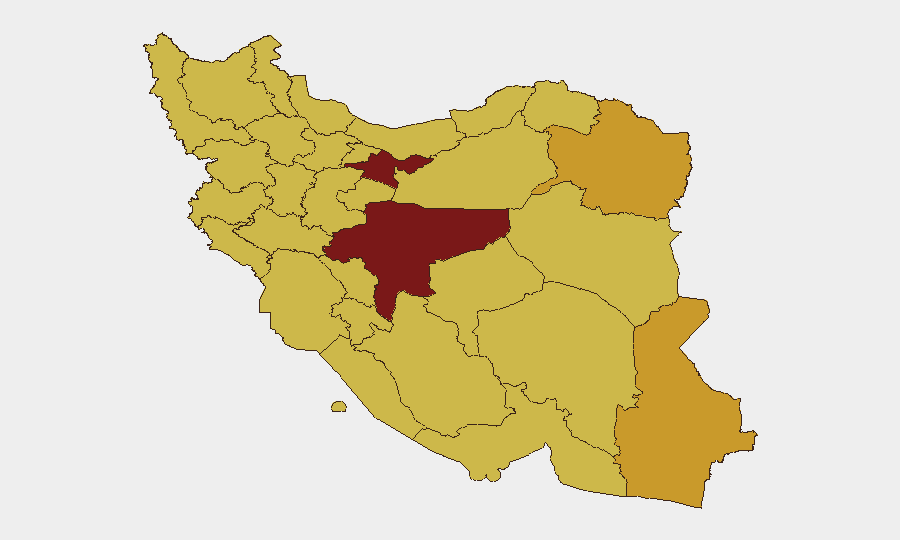
Situation Summary
Iran remains GeoBit's highest-ranked global threat (composite score 100), driven by 1,095 tracked events and sustained tension following a formal US–Iran ceasefire agreement signed 15 June 2026. While the deal framework targets de-escalation and reopening of the Strait of Hormuz, internal political fracture over nuclear concessions, hard-line warnings of severe response to any resumed US strikes, and volatile event signals (physical assault, conventional military mobilization, and public dissent on 14–16 June) indicate implementation risk remains acute. The security environment is transitional but fragile, contingent on ceasefire enforcement and sanctions-relief timing.
Key Developments
- Tehran & Washington – 15 June 2026 – US and Iran signed formal agreement to end active hostilities and reopen Strait of Hormuz; deal links sanctions relief and economic benefits to nuclear verification and cessation of Iranian funding for regional armed groups. Full text remains unconfirmed by both parties.
- Strait of Hormuz & Gulf shipping lanes – 15–16 June 2026 – US and regional media report plans to restore normal maritime traffic through critical energy corridor; shipping-risk assessments for tankers and commercial vessels shifting downward pending ceasefire and maritime-security implementation in coming days.
- Tehran – 15–16 June 2026 – Iran's Khatam al‑Anbiya Central Headquarters issued warning that any resumed US strikes on Iran or oil infrastructure would trigger "more severe" Iranian response; messaging frames Hormuz as "either for everyone or for no one," signaling continued escalation risk if deal falters.
- Tehran – 15–16 June 2026 – Iranian and regional media (Mehr News, social platforms) reporting internal debate over 14 draft memorandum points; domestic commentary questions whether nuclear concessions and limits on regional armed-group funding compromise Iran's strategic position.
- Baghdad – 15 June 2026 – Iraq's Foreign Ministry publicly welcomed expected Hormuz reopening, citing dependency on waterway for Iraqi oil exports and revenue; indicates regional governments mobilizing for resumption of large-scale energy shipments.
- Nationwide – 14–16 June 2026 – Event signals track physical assault, conventional military-force activity, demonstrator disapproval, and inter-governmental demands; no credible reports of major new domestic terror attacks or infrastructure sabotage, but political volatility and hard-line messaging remain high.
Highest-Risk Areas
Tehran Province (risk 100) dominates the threat landscape as seat of government, nuclear negotiations, and command-and-control for military response; Isfahan (87) and Razavi Khorasan (72.7) follow as industrial and strategic-military hubs. Border provinces—Sistan and Baluchestan (71), Hormozgan (70.3), and Kurdistan (70.1)—carry elevated risk due to cross-border militant activity, smuggling networks, and proximity to disputed maritime zones. Hormozgan's proximity to the Strait and oil infrastructure makes it critical to monitor for any breakdown in ceasefire implementation or retaliatory action.
How GeoBit Would Assist
Security teams should employ Intel Sweep and OSINT fusion (X/Twitter, Telegram, multi-language search, entity extraction, sentiment analysis) to track real-time shifts in Iranian official messaging, factional alignment, and hard-line warnings for early signs of deal collapse. AOI Monitoring & Early Warning on Tehran, Isfahan, and Hormozgan—coupled with Maritime & Aviation tracking of Strait traffic and Regime-stability search—provides persistent watch on ceasefire compliance and domestic political fracture. Conflict & Military (force structure, mobilization tracking) and Economic & Trade modules enable rapid detection of sanctions-relief delays or military repositioning that would trigger escalation.
7-Day Outlook
The deal framework faces its critical first week, with full memorandum text release and initial sanctions-relief measures likely to trigger renewed domestic political backlash in Iran and test US commitment to enforcement. Risk of deal rupture remains significant if either side perceives the other as non-compliant; any new US military activity or delay in sanctions relief could activate hard-line response threats and reignite regional conflict. Monitoring of ceasefire violations, maritime incidents in the Strait, and factional messaging within Iranian state apparatus is essential to detect early warning of breakdown.
Highest-Risk Areas — Ranked
| # | State / Region | Risk |
|---|---|---|
| 1 | Tehran Province | 100 |
| 2 | Isfahan Province | 87 |
| 3 | Razavi Khorasan | 72.7 |
| 4 | Sistan and Baluchestan Province | 71 |
| 5 | Hormozgan Province | 70.3 |
| 6 | Fars Province | 70.1 |
| 7 | Yazd Province | 70.1 |
| 8 | Kurdistan Province | 70.1 |
| 9 | North Khorasan Province | 70 |
| 10 | Ilam Province | 70 |
| 11 | Chaharmahal and Bakhtiyari Province | 70 |
| 12 | Khuzestan Province | 70 |
Sources
Previous Daily Briefs
A new Iran brief is written every day — each with its own risk map and downloadable CSV. Here's the last week; use the calendar to go further back.
📅 Browse every day by calendar →
Highlighted days have a brief. Tap a day for that day's map & analysis, or “csv” for that day's dataset ($5).