Situation Summary
Iraq remains a high-risk operating environment, ranked #19 globally (composite score 72), with insurgency as the primary driver. The country is experiencing a critical transition: Prime Minister al-Zaidi has initiated a security leadership overhaul aimed at consolidating state control over armed factions, while simultaneously Iraqi territory is being exploited by Iran's IRGC to stage cross-border drone attacks against Gulf neighbors—a violation of Iraqi sovereignty that has triggered government condemnation and pledges of joint regional investigation. These concurrent pressures—internal power consolidation and external state-actor exploitation—create both destabilizing uncertainty and potential for rapid security escalation.
Key Developments
- Baghdad, 19 June: Prime Minister Ali al-Zaidi executed a surprise reshuffle of top security leadership, removing NSS Chief Abdul Karim al-Basri and National Security Adviser Qasim al-Araji, replacing them with Bassem al-Badri and Qasim al-Aboudi respectively. The moves follow recent talks with a senior U.S. envoy and are framed as part of efforts to disarm armed factions outside state control and strengthen foreign investment security.
- Basra & Samawa desert areas, disclosed 19 June (activity April–May): Iraqi security sources disclosed that Iran's IRGC has established covert Iraqi cells operating independently of existing militias, launching at least seven cross-border drone attacks from remote southern desert locations against targets in Kuwait, Saudi Arabia, and the UAE.
- Baghdad, 19 June: In response to the IRGC cell disclosures, Prime Minister Zaidi publicly condemned two recent cross-border drone attacks as "criminal acts" and committed to joint investigation with Gulf states, signaling potential forthcoming security operations in southern desert areas.
- Erbil Governorate, 17 June: A Kurdistan Democratic Party of Iran (KDPI) camp near Koy Sanjaq was struck by an explosive drone, sustaining structural damage with no reported casualties. The incident reflects the broader pattern of drone activity targeting opposition and energy-related sites in the Kurdistan Region.
- Erbil–Baghdad coordination, confirmed through 18 June: Federal Iraqi authorities and the Kurdistan Regional Government confirmed joint security plans to protect oil companies and energy infrastructure in the Kurdistan Region, involving Iraqi Army Chief of Staff Lt. Gen. Abdulamir Yarallah and KRG leadership.
- U.S. Embassy, Baghdad, 18–19 June: The U.S. Embassy maintains elevated security posture and continued public warnings about Iran-aligned militia and drone/missile threats, urging U.S. citizens to maintain heightened awareness and enroll in the Smart Traveler Enrollment Program (STEP).
Highest-Risk Areas
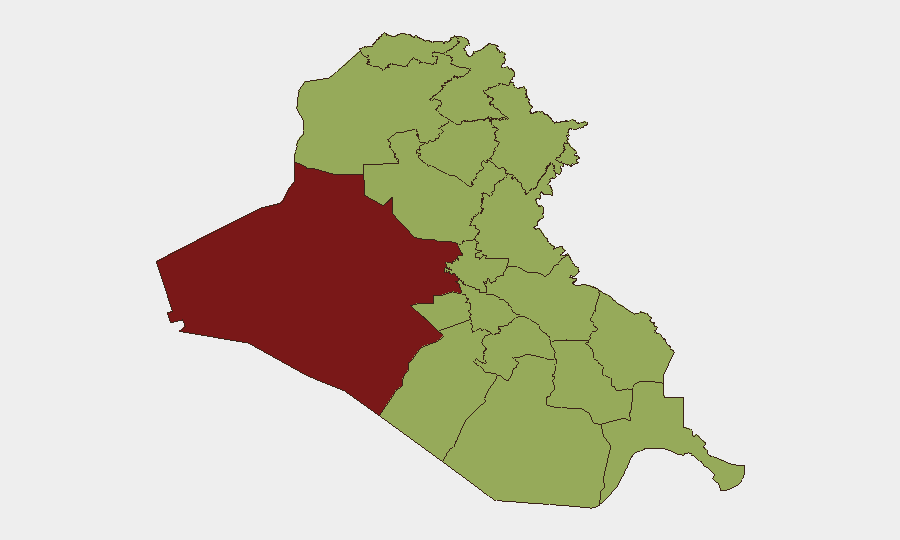
Al-Anbar Governorate (80.2) remains the critical flashpoint, driven by residual insurgent cells and porous western borders. Baghdad (59.7) faces compounded risk from the ongoing security leadership transition, potential militia backlash to disarmament efforts, and historical vulnerability to targeted attacks. The southern governorates—particularly Dhi Qar (52.9) and al-Basra (52.9)—have emerged as operational zones for Iranian IRGC cells, creating risk of cross-border escalation and potential Iraqi security force operations to eliminate these cells. The Kurdistan Region (Erbil, 58.4) faces persistent drone threat from Iranian state and proxy actors targeting opposition sites and energy infrastructure.
How GeoBit Would Assist
Security teams would deploy AOI (Area-of-Interest) Monitoring with persistent alerting on southern desert zones (Basra, Samawa), Baghdad security facilities, and Erbil energy infrastructure to detect operational activity and drone movements in near–real time. Network & Actor Analysis combined with OSINT feeds would track the newly disclosed IRGC cell structure, militia repositioning, and political alignments within the reshaped security leadership. Intel Sweep and multi-language OSINT would provide early warning of disarmament resistance, retaliatory militia signaling, and cross-border attack planning.
7-Day Outlook
The security leadership reshuffle will likely trigger short-term friction within armed factions and potential compliance delays; conversely, U.S.–Iraqi coordination is expected to intensify. Iraqi security operations against IRGC cells in the south are probable within 7–14 days, carrying risk of escalation with Iran-backed militias. Baghdad and energy sites in Erbil remain highest-probability targets for retaliation.
Highest-Risk Areas — Ranked
| # | State / Region | Risk |
|---|---|---|
| 1 | Al-Anbar Governorate | 80.2 |
| 2 | Baghdad Governorate | 59.7 |
| 3 | Erbil Governorate | 58.4 |
| 4 | Dhi Qar Governorate | 52.9 |
| 5 | Al-Basra Governorate | 52.9 |
| 6 | Babil Governorate | 50.2 |
| 7 | Wasit Governorate | 50.2 |
| 8 | Al-Qadisiyah Governorate | 50.2 |
| 9 | Al-Muthanna Governorate | 50.2 |
| 10 | Maysan Governorate | 50.2 |
| 11 | Al-Najaf Governorate | 50.2 |
| 12 | Saladin Governorate | 50.2 |
Sources
Previous Daily Briefs
A new Iraq brief is written every day — each with its own risk map and downloadable CSV. Here's the last week; use the calendar to go further back.
📅 Browse every day by calendar →
Highlighted days have a brief. Tap a day for that day's map & analysis, or “csv” for that day's dataset ($5).