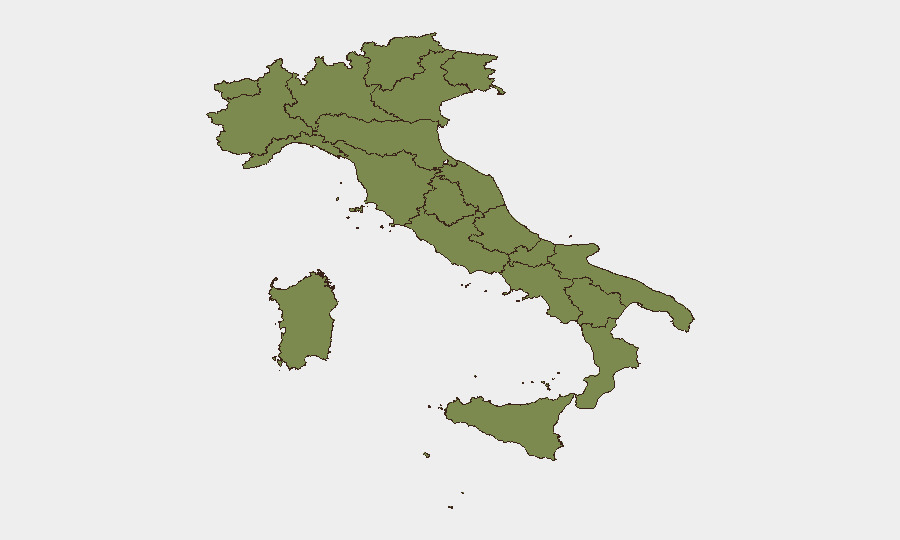
Situation Summary
Italy remains a moderate-risk jurisdiction (global rank #94) with a composite threat score of 9 across 457 tracked events. The most significant active concern is residual protest activity and heightened institutional sensitivity following the death of Abderrahim Fakir under police restraint in early July, which triggered civil unrest in Bologna and renewed scrutiny of police conduct nationwide. Diplomatic tensions with Russia have also escalated following reciprocal expulsion of military attachés. Overall, the security environment shows no major new incidents in the last 24–48 hours, but underlying tensions around policing, migration, and organized-crime activity in southern regions remain persistent.
Key Developments
- Bologna, Emilia-Romagna (20–21 July) – Police clashes with protesters demonstrating over Fakir's death resulted in 56–64 injured officers, use of tear gas and water cannon, and vehicles set alight. This remains the most recent major civil-unrest event, though ~4 days old relative to this brief.
- Rome (21 July) – Prime Minister Meloni publicly condemned Bologna protesters while confirming investigation into Fakir's death, signaling ongoing political sensitivity around police accountability and use-of-force procedures.
- Rome / Moscow (mid-July) – Russia expelled an Italian military attaché and collaborator in retaliation for Italy's earlier expulsion of two Russian military attachés on espionage allegations, reflecting heightened intelligence and diplomatic tension.
- Senate, Rome (22 July) – M5S senators occupied government benches and physically confronted FdI colleagues over the Delmastro chat-records case, illustrating institutional friction over government conduct and transparency.
- Nationwide (date unconfirmed as 23–24 July) – Italian police arrested over 500 individuals across 44 provinces in a youth-crime operation and identified nearly 1,000 social-media accounts promoting hatred and violence; execution timing within the last 48 hours cannot be reliably confirmed from available reporting.
- No verified major security incidents (23–24 July) – Open-source reporting does not document fresh large-scale civil unrest, terror attacks, or critical-infrastructure disruptions over the last 24–48 hours.
Highest-Risk Areas
Sicily (32.6), Lazio (21.5), and Lombardy (19.2) drive the national risk ranking, reflecting organized-crime activity, property crime, and street-level violence concentrated in the south and major metropolitan hubs. Sicily's elevated score reflects persistent Mafia-related and drug-trafficking operations; Lazio's reflects Rome's institutional-instability signals and petty-crime density; Lombardy's reflects Milan's scale and migrant-related tension. Emilia-Romagna (7.2), though substantially lower, carries heightened near-term protest risk due to Bologna's recent unrest and its position as a politically active region.
How GeoBit Would Assist
A corporate security team operating in Italy would deploy AOI Monitoring & Early Warning to maintain persistent watch on Sicily, Rome, and Milan, with alert thresholds for protest, crime, and diplomatic incidents. Intel Sweep and multi-language OSINT (including X/Telegram sentiment analysis) would track emerging civil-unrest narratives, police conduct debates, and organized-crime developments in near-real time. Network & Actor Analysis would map organized-crime and youth-gang structures in high-risk regions, and Routing & Network Analysis would enable rapid alternative-journey planning if protests or transport disruption occur. These capabilities together provide predictive warning and operational flexibility ahead of scheduled travel or asset movement.
7-Day Outlook
Protest risk remains elevated in Bologna and potentially other northern cities through late July as the Fakir case investigation unfolds; further police operations or court developments could trigger renewed demonstrations. Organized-crime activity and petty street crime in Sicily and Lazio will likely continue at baseline levels. Diplomatic tension with Russia is unlikely to escalate into direct Italy-based security incidents but may affect governmental and defense-sector operations.
Highest-Risk Areas — Ranked
| # | State / Region | Risk |
|---|---|---|
| 1 | Sicily | 32.6 |
| 2 | Lazio | 21.5 |
| 3 | Lombardy | 19.2 |
| 4 | Emilia-Romagna | 7.2 |
| 5 | Marche | 5.3 |
| 6 | Tuscany | 3.8 |
| 7 | Sardinia | 3.6 |
| 8 | Trentino – Alto Adige/Südtirol | 3.3 |
| 9 | Veneto | 3.3 |
| 10 | Piedmont | 3.3 |
| 11 | Apulia | 3.1 |
| 12 | Abruzzo | 2.8 |
Sources
Previous Daily Briefs
A new Italy brief is written every day — each with its own risk map and downloadable CSV. Here's the last week; use the calendar to go further back.
📅 Browse every day by calendar →
Highlighted days have a brief. Tap a day for that day's map & analysis, or “csv” for that day's dataset ($5).
Atlas — our AI intelligence desk — emails them this snapshot personally. Nothing else, no list.