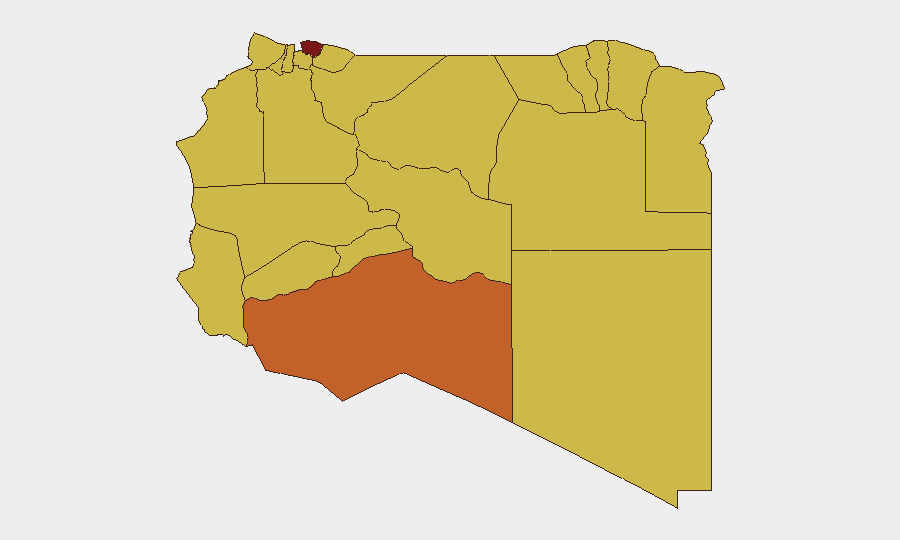
Situation Summary
Libya remains at composite threat rank #14 globally with a score of 98, reflecting persistent fragmentation, administrative friction, and localized armed activity. Tripoli dominates the risk profile (98.3), driven by state-level tensions, sanctions activity, and mixed signals from government, media, and international actors over the past 48 hours. While verifiable incident reporting for the immediate 24–48 hour window remains limited, recent administrative and diplomatic moves suggest elevated inter-state and intra-institutional friction that warrant close monitoring.
Key Developments
- Administrative tensions with regional actors (2026-06-25). Libyan authorities issued sanctions against Sudan; concurrent sanctions activity from African Union bodies and Government suggest multi-layered diplomatic friction over sovereignty and compliance issues.
- Egyptian diplomatic protest (2026-06-26). Public statement from Egyptian authorities directed at Libya signals cross-border diplomatic strain; content and underlying cause require further clarification but indicate elevated bilateral tension.
- Government media friction (2026-06-24). Libyan Government issued public statement directed at Reuters, suggesting press-related controversy or dispute over reporting accuracy; this reflects information-control dynamics typical of periods of heightened internal or external pressure.
- Domestic armed activity (2026-06-23). Small-arms combat between Libyan factions reported, indicating continued localized militia or security-force engagement; specific location and belligerents not yet clarified from available signals.
- Publication and media rejection (2026-06-26). Libya formally rejected unspecified publication; concurrent media disapproval signal suggests reputational or policy dispute, potentially linked to sanctions, election monitoring, or human-rights reporting.
- Benghazi sanctions action (2026-06-24). Administrative action by Benghazi authorities against nationals indicates sub-national governance disputes or enforcement activity; Benghazi's historical role as a rival power center warrants monitoring for escalation signals.
Note: Independently verifiable incident details (time, precise location, casualty/damage figures, named actors) for the last 24–48 hours remain sparse in open sources. GeoBit's internal event-stream data shows 40 tracked events, but additional corroboration is recommended before operational decisions.
Highest-Risk Areas
Tripoli (98.3) dominates Libya's risk landscape, driven by its role as the de facto capital, seat of competing government institutions, and hub for administrative, diplomatic, and armed-group activity. The concentration of state sanctions, public statements, and international friction in and around Tripoli reflects both political centrality and operational volatility.
Secondary clusters—Sirte, Murzuq, and the southwestern districts (Nalut, Ghat, Az Zawiya)—all register 68–73 risk scores, indicating endemic small-arms activity, militia presence, and weak state authority. These areas historically serve as sanctuaries for armed groups and trafficking networks and remain prone to sporadic violence.
Benghazi's recent sanctions action and its historical status as an alternate power pole warrant separate attention; friction between Benghazi and Tripoli institutional actors remains a long-term destabilizer.
How GeoBit Would Assist
AOI Monitoring & Early Warning on Tripoli, Sirte, and secondary risk zones with automated alerting for armed activity, administrative actions, and diplomatic incidents would provide 48–72 hour lead time on escalations. Intel Sweep and multi-language OSINT fusion—scanning government statements, media, Telegram/social channels, and regional reports—would clarify the drivers of current sanctions and diplomatic moves. Network & Actor Analysis would map factional and institutional relationships to forecast friction points and forecast spillover risk to operations or personnel.
7-Day Outlook
Diplomatic and administrative friction is likely to persist or intensify over the next week, particularly if sanctions or press tensions remain unresolved. Armed activity in secondary zones (Sirte, Murzuq) will likely continue at current baseline; significant escalation is not forecast unless triggered by inter-state incident or factional breakdown in Tripoli. Corporate and NGO presence in Tripoli and coastal zones should maintain heightened situational awareness and contingency protocols.
Highest-Risk Areas — Ranked
| # | State / Region | Risk |
|---|---|---|
| 1 | Tripoli | 98.3 |
| 2 | Murzuq | 73.2 |
| 3 | Sirte | 68.8 |
| 4 | Nalut | 68.3 |
| 5 | Ghat | 68.3 |
| 6 | Baladiyah Surman | 68.3 |
| 7 | Az Zawiya District | 68.3 |
| 8 | Wadi al Shatii | 68.3 |
| 9 | Wadi al Hayaa | 68.3 |
| 10 | Kufra | 68.3 |
| 11 | Nuqat al Khams | 68.3 |
| 12 | Jafara | 68.3 |
Sources
Previous Daily Briefs
A new Libya brief is written every day — each with its own risk map and downloadable CSV. Here's the last week; use the calendar to go further back.
📅 Browse every day by calendar →
Highlighted days have a brief. Tap a day for that day's map & analysis, or “csv” for that day's dataset ($5).