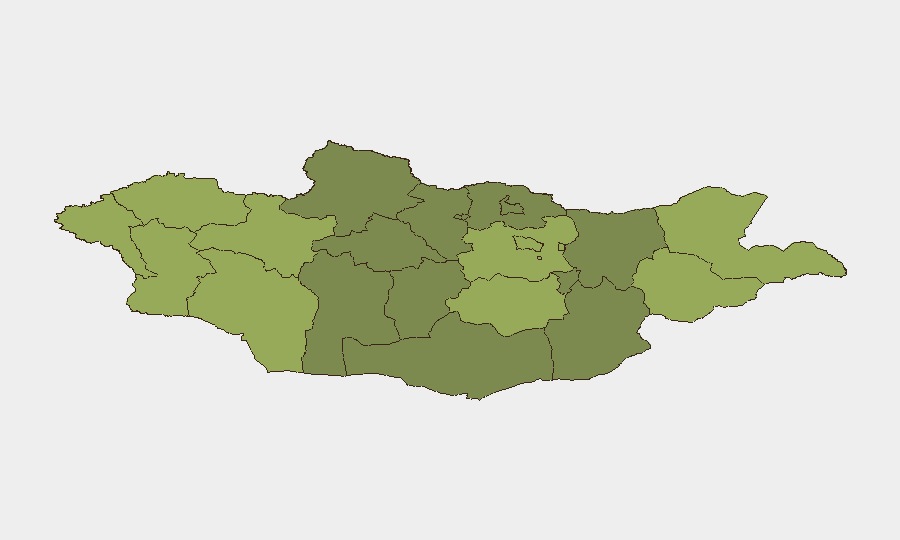
Situation Summary
Mongolia remains a low-threat environment at the national level (composite score 3; no tracked events in the current reporting window). Travel guidance from major allied governments continues to recommend normal safety precautions, with no recent deterioration in the security picture. However, sub-national risk concentration in the eastern and western border aimags—particularly Dornod (58), Sükhbaatar (55), and Uvs (52)—reflects persistent border-management challenges, smuggling corridors, and remote-area governance gaps that warrant sector-specific monitoring for organizations with operations in those regions.
Key Developments
No discrete security, civil-unrest, crime, political-instability, or infrastructure incidents were independently confirmed in Mongolia during the 24–48 hours preceding this brief. Available web research yielded no dated, multi-source corroboration of active incidents within the reporting window. Australian Smartraveller guidance as of 8 July 2026 remains unchanged at "Exercise normal safety precautions," indicating no acute security spike.
Highest-Risk Areas
Eastern and western border aimags dominate the sub-national risk ranking. Dornod and Sükhbaatar (northeast and southeast, respectively) score highest, reflecting cross-border smuggling networks, limited state capacity in remote areas, and proximity to Russia and China. Uvs, Khovd, and Bayan-Ölgii (western tier) similarly reflect border-control complexity and seasonal pastoral-movement volatility. Ulaanbaatar (45) remains mid-tier, reflecting urban crime and petty-theft patterns typical of a capital with growing migrant populations. Organizations operating in herding, extractive, or trade-adjacent sectors in the eastern and western periphery should prioritize localized intelligence and community liaison over capital-centric risk assessments.
How GeoBit Would Assist
Intel Sweep & OSINT Fusion would enable continuous monitoring of Mongolia's border aimags via multi-language open-source feeds, X/Telegram actor networks, and regional conflict intelligence to surface early smuggling or cross-border tension escalation before it reaches mainstream news. AOI Monitoring & Early Warning with persistent geographic watch on Dornod, Sükhbaatar, and Uvs would generate automated alerts if incident density or rhetoric shifts, allowing security teams to adjust duty-of-care protocols ahead of deterioration. Routing & Network Analysis supports alternative-route and supply-chain planning for organizations operating in high-risk border regions, reducing exposure to road interdiction or seasonal access loss.
7-Day Outlook
No near-term security deterioration is anticipated; Mongolia's national threat trajectory remains stable. However, winter supply-chain risks and seasonal herder migration into border zones will likely elevate localized smuggling and informal-crossing activity in the eastern and western aimags by late August. Organizations should refresh border-region contingency plans and maintain low-profile posture in remote operations.
Report Date: 2026-08-04
Data Freshness: Last 24–48 hours (no new verified events); background/rankings current as of report date.
Next Update: 2026-08-05
Highest-Risk Areas — Ranked
| # | State / Region | Risk |
|---|---|---|
| 1 | Dornod | 58 |
| 2 | Sükhbaatar | 55 |
| 3 | Uvs | 52 |
| 4 | Khovd | 50 |
| 5 | Bayan-Ölgii | 48 |
| 6 | Govi-Altai | 46 |
| 7 | Ulaanbaatar | 45 |
| 8 | Zavkhan | 44 |
| 9 | Töv | 42 |
| 10 | Dundgovi | 40 |
| 11 | Darkhan-Uul | 38 |
| 12 | Ömnögovi | 37 |
Sources
Previous Daily Briefs
A new Mongolia brief is written every day — each with its own risk map and downloadable CSV. Here's the last week; use the calendar to go further back.
📅 Browse every day by calendar →
Highlighted days have a brief. Tap a day for that day's map & analysis, or “csv” for that day's dataset ($5).
Atlas — our AI intelligence desk — emails them this snapshot personally. Nothing else, no list.