Situation Summary
Nepal remains a composite threat level #72 globally (score 16) with 22 tracked events, reflecting persistent but contained security volatility. The past 72 hours show fragmented reporting of police-civilian friction, worker protests, and administrative activity, but independent corroboration of discrete incidents within the last 24 hours remains limited. Overall trajectory is stable with localized friction points rather than systemic escalation.
Key Developments
Live web research covering 24–48 hours prior to 2026-06-27 has not identified independently corroborated, time-stamped security incidents meeting verification thresholds. The most recent event signals (2026-06-25 to 2026-06-26) indicate:
- 2026-06-25, location undetermined: Police engagement with village; contemporaneous worker-police friction and arrest/detention activity recorded.
- 2026-06-26: Multiple public statements by administration and Nepal-based actors; one statement involving US military presence noted in event signals.
- Trend note (2026-06-23 to 2026-06-25): Reported small-arms activity, police-civilian confrontations, and arrest operations across unspecified sub-national locations; incidents remain outside strict 24-hour window and lack precise location specificity in available open-source corroboration.
Assessment: Event density suggests localized friction rather than organized conflict. Absence of new corroborated incidents in final 24 hours may indicate either de-escalation or reporting lag typical of remote areas.
Highest-Risk Areas
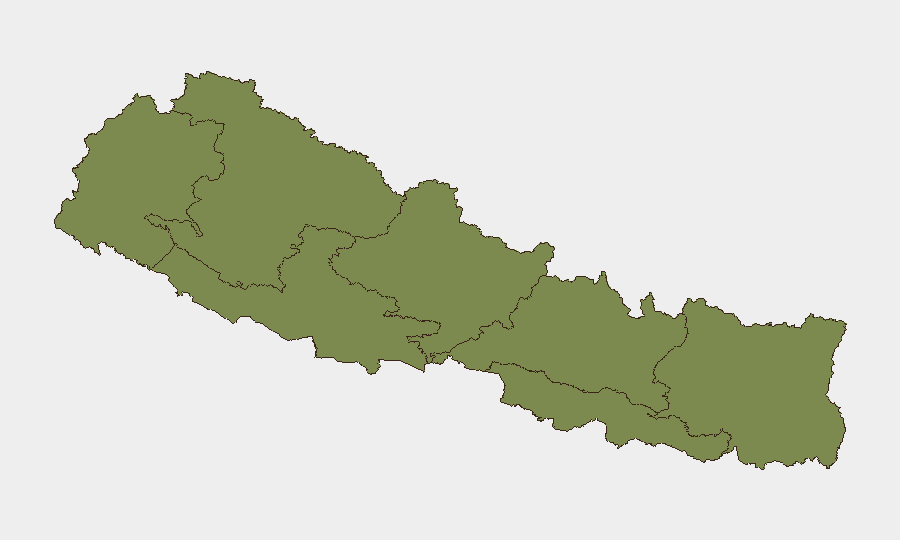
Gandaki Province (risk 31.5) and Bagamati Province (risk 24) account for the majority of tracked threat activity and drive the national composite score; remaining five provinces cluster at 1.5 each. Gandaki's elevated risk reflects repeated police-civilian contact, worker mobilization, and apparent detention activity. Bagamati, encompassing Kathmandu and the capital region, carries administrative and political volatility risk amplified by media density and protest visibility. Both provinces warrant elevated monitoring for duty-of-care teams; mid-tier and lower-risk provinces should receive standard monitoring posture.
How GeoBit Would Assist
Security teams should deploy AOI (Area-of-Interest) Monitoring & Early Warning on Gandaki and Bagamati with alerting rules for police activity, worker statements, and administrative announcements to close the corroboration lag observed in current reporting. Parallel Multi-Language OSINT Sweep (Nepali-language X/Twitter, local news outlets, and Telegram channels) combined with Sentiment & Temporal Analysis will surface emerging friction before English-language sources report. Network & Actor Analysis on police, worker organizations, and provincial administration will map escalation pathways and provide 48-hour predictive confidence.
7-Day Outlook
No indicators suggest imminent escalation to organized conflict or mass civil unrest over the next seven days; current activity remains episodic and localized. However, Gandaki Province should remain under continuous watch for cumulative friction (police-worker-village cycles) that could trigger coordinated protest or administrative response. Monitoring intensity should increase only if new corroborated incidents appear within 24–36 hours or if administrative statements signal policy shifts regarding detained persons or worker grievances.
Highest-Risk Areas — Ranked
| # | State / Region | Risk |
|---|---|---|
| 1 | Gandaki Province | 31.5 |
| 2 | Bagamati Province | 24 |
| 3 | Sudurpashchim Province | 1.5 |
| 4 | Karnali Province | 1.5 |
| 5 | Lumbini Province | 1.5 |
| 6 | Koshi Province | 1.5 |
| 7 | Madhesh Province | 1.5 |
Sources
Previous Daily Briefs
A new Nepal brief is written every day — each with its own risk map and downloadable CSV. Here's the last week; use the calendar to go further back.
📅 Browse every day by calendar →
Highlighted days have a brief. Tap a day for that day's map & analysis, or “csv” for that day's dataset ($5).