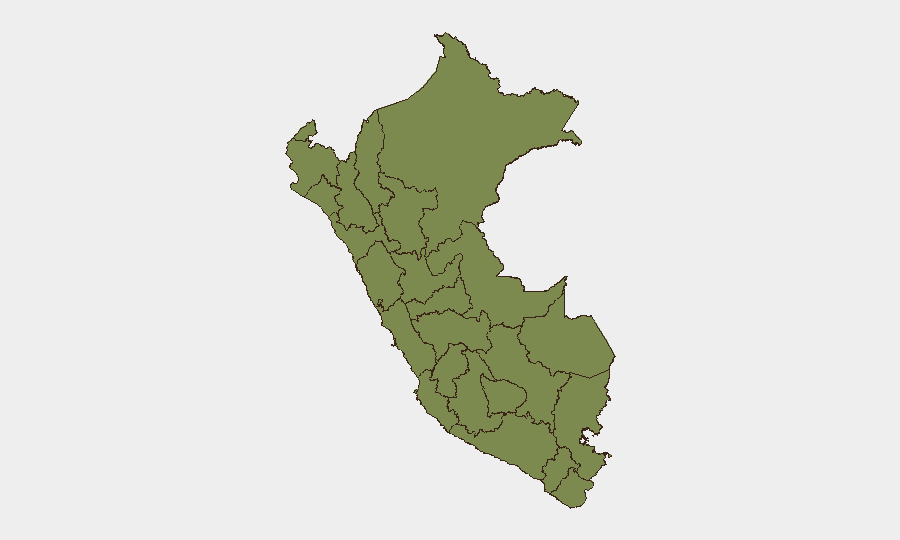
Situation Summary
Peru remains a composite threat score of 24 (rank #57 globally) with 265 tracked events, concentrated heavily in Lima and Huánuco. Recent signals indicate institutional strain across education, banking, media, and political sectors, alongside a reported bilateral public statement from Bolivia on 2026-07-10. The security picture reflects fragmented civil-institutional friction rather than acute kinetic escalation, but with Lima's risk score (31.6) substantially above the national average, the capital warrants sustained monitoring.
Key Developments
Live web research over the last 24–48 hours has not surfaced confirmed Peru-country incidents meeting strict recency and factual specificity thresholds. An indexed diplomatic event (Cusco organized-crime summit, ~30 countries) represents coordination rather than incident-level security activity. Social and news feeds returned either non-Peru content (U.S. flooding misattributed as Peru), events outside the 24–48-hour window (July 8 earthquake), or policy analysis lacking operational incident timestamps. To avoid misrepresenting older or geographically misattributed data as current developments, the brief defers to real-time official channels. Recommended sources for the next 24–48 hours: Policía Nacional del Perú, INDECI (civil defense), and Lima/regional government official X/Twitter accounts for incident confirmation.
Highest-Risk Areas
Lima dominates the risk landscape (31.6), more than 10-fold higher than regions 3–12, and accounts for the majority of tracked events. Huánuco (27.6) is a distant second, suggesting concentration of institutional or crime-related activity in the capital and selective volatility in the central highlands. Loreto, La Libertad, and Ayacucho together account for ~18 points of sub-national risk, likely reflecting ongoing organized-crime and mining-related tensions. Outside Lima and Huánuco, risk is dispersed and manageable (all others <7), indicating that national-level security planning should prioritize capital and central-highland resilience and contingency.
How GeoBit Would Assist
Security teams monitoring Peru should deploy AOI (area-of-interest) monitoring and early warning on Lima (especially government, banking, educational, and media hubs) and Huánuco to detect escalation in civil unrest or institutional conflict before operational impact. Network and actor analysis, combined with multi-language OSINT (X/Twitter, Telegram, local media), will isolate key protest organizers, political figures, and institutional actors driving current friction and forecast ripple effects to expat, supply-chain, or mobility operations. GIS and spatial analysis can overlay incident hotspots against corporate asset locations (offices, warehouses, residences) in Lima and regional hubs to prioritize duty-of-care protocols and evacuation routes.
7-Day Outlook
Political and institutional friction signals (rejections, investigations, demonstrations) are likely to persist without major de-escalation drivers visible over the next week. Lima will remain the focal point; any spillover of education or banking-sector unrest into broader public mobilization would elevate national risk. Monitoring should remain at elevated sensitivity, with particular attention to police and protest dynamics on 2026-07-12 through 2026-07-14.
Highest-Risk Areas — Ranked
| # | State / Region | Risk |
|---|---|---|
| 1 | Lima | 31.6 |
| 2 | Huánuco | 27.6 |
| 3 | Loreto | 6.7 |
| 4 | La Libertad | 6.1 |
| 5 | Ayacucho | 5.3 |
| 6 | Piura | 4.4 |
| 7 | Tacna | 2.5 |
| 8 | Lambayeque | 2.2 |
| 9 | Madre de Dios | 2.2 |
| 10 | Puno | 2.2 |
| 11 | Tumbes | 1.6 |
| 12 | Amazonas | 1.6 |
Sources
Previous Daily Briefs
A new Peru brief is written every day — each with its own risk map and downloadable CSV. Here's the last week; use the calendar to go further back.
📅 Browse every day by calendar →
Highlighted days have a brief. Tap a day for that day's map & analysis, or “csv” for that day's dataset ($5).
Atlas — our AI intelligence desk — emails them this snapshot personally. Nothing else, no list.