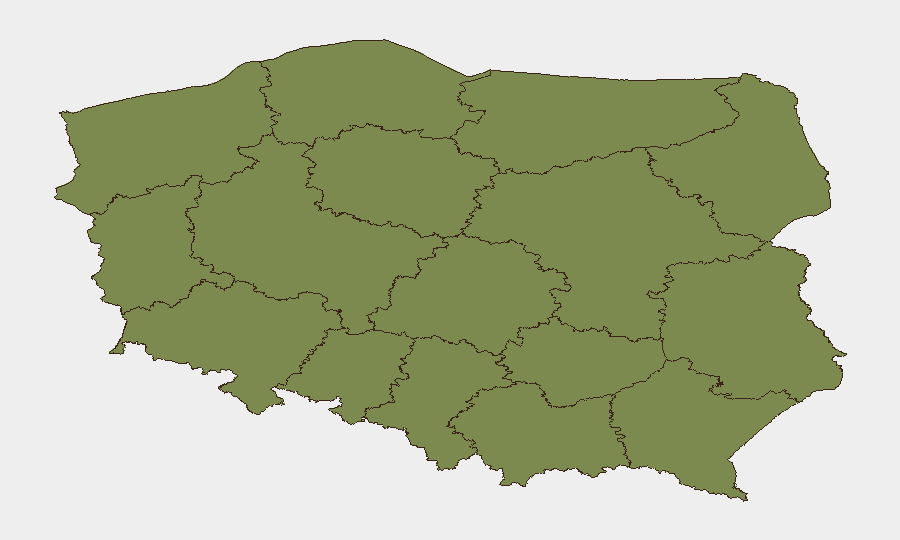
Situation Summary
Poland remains at composite threat level 7 globally (#116), with a stable overall security picture characterized by routine crime and border management rather than acute instability. The dominant risk driver is Masovian Voivodeship (Warsaw region, score 31.4), reflecting concentrated state and commercial activity and associated vulnerabilities. Hybrid and cyber threats from Russian-attributed actors remain the primary strategic concern, underpinned by ongoing Operation Horizon infrastructure protection efforts since late 2025. No major civil unrest, infrastructure failures, or political violence have been documented in the past 24–48 hours.
Key Developments
- Polish–Belarusian border (eastern Poland), 20 July 2026: Ministry of Interior and Administration extended restrictions on international protection applications for a further 60 days, citing continued border-crossing attempts from Belarus. Border Guard reports 100% effectiveness in preventing forced crossings in H1 2026.
- Nationwide critical infrastructure, ongoing: Operation Horizon, a 10,000-soldier deployment for strategic infrastructure protection launched in late 2025, remains active. Cyber threat posture elevated: cyberattacks on energy sector doubled year-on-year (2025 vs. 2024), predominantly attributed to Russian services.
- Poland (general), 20–22 July 2026: European Commission, Polish government, and Ukrainian officials issued public statements on unspecified topics; companies released associated statements. Precise content and locations not yet corroborated in available open-source reporting.
- Warsaw area, 22 July 2026: Conventional military aircraft activity reported near Warsaw; a federal judge initiated strike/boycott action on 22 July. Details remain limited; neither event has been corroborated as indicating acute security risk to civilian populations or corporate assets.
- Travel environment confirmation, 20–22 July 2026: Spain's Foreign Ministry describes Poland as operating at "complete normality" with routine crime (theft, vehicle break-ins) as the primary advisory concern. Standard precautions remain appropriate for urban travel.
Highest-Risk Areas
Masovian Voivodeship (Warsaw metropolitan region, score 31.4) accounts for the overwhelming majority of tracked risk, reflecting Poland's capital and political–commercial hub status; cyber, hybrid-threat, and state-level targeting are disproportionately concentrated there. Łódź Voivodeship (score 18.0) is a secondary concern, though substantially lower in absolute terms. The remaining ten voivodeships cluster at score 1.4, indicating either baseline or minimal tracked events. Risk in the eastern and border regions (Warmian-Masurian, Subcarpathian, Podlaskie, Lublin) reflects ongoing border security operations and migration-pressure environments rather than acute political violence or crime surge.
How GeoBit Would Assist
Intel Sweep and OSINT fusion on Polish government, Ukrainian, and EU statements (20–22 July) would clarify the substance and risk implications of recent public communications and corporate responses. AOI Monitoring & Early Warning on Masovian Voivodeship, critical infrastructure nodes (energy, transport), and the Polish–Belarusian border corridor would provide persistent, real-time alerting on escalation, cyber incidents, or localized unrest affecting staff or supply chains. Conflict & Military tracking and satellite imagery analysis would contextualize the reported military activity near Warsaw and ongoing Operation Horizon posture, enabling duty-of-care teams to assess impact on movement and logistics.
7-Day Outlook
No significant escalation is forecast in the immediate term. Border controls and hybrid-threat defenses are expected to remain at current elevated but managed levels. Security teams should maintain routine vigilance on cyber threats to energy and financial infrastructure (particularly in Masovian Voivodeship) and continue monitoring clarification of recent official statements for any policy or operational changes affecting corporate operations or travel.
Highest-Risk Areas — Ranked
| # | State / Region | Risk |
|---|---|---|
| 1 | Masovian Voivodeship | 31.4 |
| 2 | Łódź Voivodeship | 18 |
| 3 | Warmian-Masurian Voivodeship | 1.4 |
| 4 | Subcarpathian Voivodeship | 1.4 |
| 5 | Podlaskie Voivodeship | 1.4 |
| 6 | Lublin Voivodeship | 1.4 |
| 7 | West Pomeranian Voivodeship | 1.4 |
| 8 | Lubusz Voivodeship | 1.4 |
| 9 | Lower Silesian Voivodeship | 1.4 |
| 10 | Pomeranian Voivodeship | 1.4 |
| 11 | Kuyavian-Pomeranian Voivodeship | 1.4 |
| 12 | Greater Poland Voivodeship | 1.4 |
Sources
Previous Daily Briefs
A new Poland brief is written every day — each with its own risk map and downloadable CSV. Here's the last week; use the calendar to go further back.
📅 Browse every day by calendar →
Highlighted days have a brief. Tap a day for that day's map & analysis, or “csv” for that day's dataset ($5).
Atlas — our AI intelligence desk — emails them this snapshot personally. Nothing else, no list.