Situation Summary
Somalia remains at #10 global threat ranking (composite score 100), driven primarily by active Al-Shabaab insurgency and heightened state fragility. The country is experiencing concurrent security pressures: intensified militant activity in western Mogadishu approaches, ongoing maritime piracy with 44 hostages detained in regional waters, a nascent political crisis around press detention in Puntland, and a critical strategic risk posed by imminent AU mission withdrawal and loss of U.S. logistical support. Current trajectory shows deteriorating capacity for counter-insurgency operations and increasing likelihood of territorial gains by non-state actors over the medium term.
Key Developments
- Garowe, Puntland (9 July 2026) – Journalists protested the detention of reporter Suways Jama Mahmoud, held in Garowe prison since 2 July without court appearance, violating Puntland legal protections. Indicates political pressure and press-freedom erosion in the autonomous region.
- Elasha Biyaha & Ma'aane, west of Mogadishu (recent nights through 10 July 2026) – Al-Shabaab armed patrols observed conducting door-to-door questioning in these suburbs 10–15 km west of the capital after dark, signaling consolidation of militant presence and civilian intimidation operations.
- Ma'aane, west of Mogadishu (days prior to 10 July 2026) – Roadside IED detonated against security forces; latest in a series of explosions targeting government convoys on western Mogadishu approaches, elevating risk for military and civilian vehicular movement in the corridor.
- Somali waters / Red Sea and Gulf of Aden (reported 6 July 2026) – International Maritime Organization warned of 44 seafarers remaining hostage aboard three vessels following pirate attacks in April–May 2026; 24 attempted or successful piracy/armed robbery incidents recorded over preceding three months, indicating sustained maritime threat.
- National security transition (reported this week) – U.S. decision to end logistical support for African Union peacekeepers signals imminent AU drawdown; Somali officials and analysts warn of potential security vacuum as national forces remain inadequate, likely to benefit Al-Shabaab.
Highest-Risk Areas
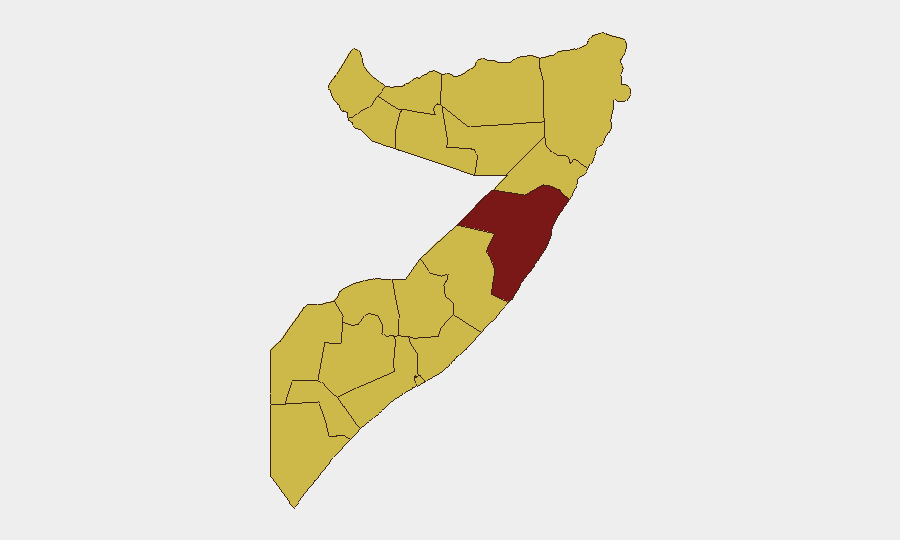
Mudug (risk 100) is the single highest-risk state, likely reflecting sustained Al-Shabaab operational presence and territorial control. A secondary tier of ten regions (Awdal, Woqooyi Galbeed, Gedo, Bakool, Bay, Middle Juba, Lower Shabelle, Sahil, Togdheer, Hiiraan, Middle Shebelle) all score 70, indicating widespread but differentiated insurgent and criminal activity across rural and semi-urban zones. The capital region and western approaches (reflected in Mudug dominance) concentrate both militant operations and government counter-response, creating flashpoints for IED and combat activity. Southern and central agricultural zones remain vulnerable to militant recruitment, taxation, and IED emplacement.
How GeoBit Would Assist
Teams with personnel or assets in Somalia should employ AOI Monitoring & Early Warning to track militant movement and IED activity in high-risk corridors around Mogadishu and other urban centers, with alerting on security-force engagements. Maritime & Aviation tracking combined with piracy-specific OSINT and network analysis enables real-time awareness of vessel positions and pirate-group activity in the Red Sea and Gulf of Aden, critical for supply chains and personnel movement. Conflict mapping and force-structure intelligence, alongside regime-stability assessment, will help anticipate the security vacuum likely to open as AU forces withdraw, enabling timely adjustment of duty-of-care postures.
7-Day Outlook
Al-Shabaab intimidation operations and IED activity in western Mogadishu are likely to persist or intensify as militant cells test security-force response and consolidate civilian control. Maritime piracy will remain elevated given the proven hostage-taking model and absence of credible deterrent capacity. The AU withdrawal timeline will become clearer within 7–14 days; any acceleration in drawdown announcements or visible force reductions will trigger secondary insurgent mobilization in peripheral regions.
Highest-Risk Areas — Ranked
| # | State / Region | Risk |
|---|---|---|
| 1 | Mudug | 100 |
| 2 | Awdal | 70 |
| 3 | Woqooyi Galbeed | 70 |
| 4 | Gedo | 70 |
| 5 | Bakool | 70 |
| 6 | Bay | 70 |
| 7 | Middle Juba | 70 |
| 8 | Lower Shabelle | 70 |
| 9 | Sahil | 70 |
| 10 | Togdheer | 70 |
| 11 | Hiiraan | 70 |
| 12 | Middle Shebelle | 70 |
Sources
Previous Daily Briefs
A new Somalia brief is written every day — each with its own risk map and downloadable CSV. Here's the last week; use the calendar to go further back.
📅 Browse every day by calendar →
Highlighted days have a brief. Tap a day for that day's map & analysis, or “csv” for that day's dataset ($5).
Atlas — our AI intelligence desk — emails them this snapshot personally. Nothing else, no list.