Situation Summary
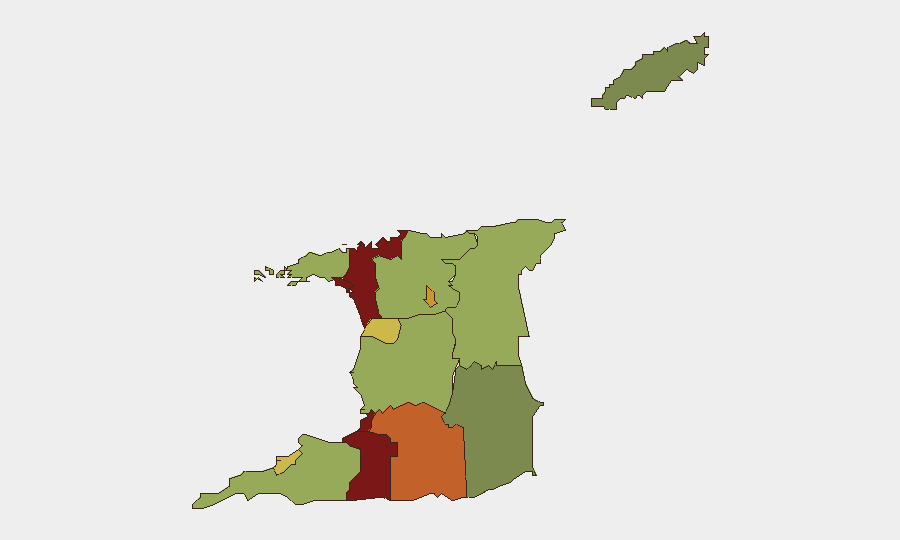
Trinidad and Tobago remains a moderate-risk jurisdiction (ranked #70 globally) with persistent but contained urban crime concentrated in northern and central population centers. Recent law enforcement operations and the extended State of Emergency have contributed to a reported 16–18% reduction in homicides and serious crime year-to-date versus 2024, though organised crime networks, drug trafficking, and gang-related violence remain endemic in specific high-density districts. The security environment is characterised by targeted state intervention, detention orders, and active manhunts rather than widespread instability, but risk concentration in four zones (San Juan-Laventille, Port of Spain, Penal-Debe, San Fernando) remains acute.
Key Developments
- Arima Immigration Detention Centre escape (18–19 July): Eight Venezuelan nationals remain at large following a violent jailbreak in which detainees assaulted officers and forced open a gate; one has been recaptured in Wallerfield, but an active manhunt continues. Public warnings against harbouring fugitives issued.
- State of Emergency extension announced (23 July): Government disclosed plans to extend the current State of Emergency by three months to sustain emergency police powers, Preventive Detention Orders, and anti-organised-crime operations.
- Additional Preventive Detention Orders (8–13 July, disclosed 22–23 July): Ten individuals placed under detention orders by Homeland Security Minister under Emergency Powers Regulations 2026, linked to armed robbery, shooting, and home invasion networks.
- La Romaine anti-crime sweeps (19–20 July): TTPS conducted intelligence-led searches under Regulation 12 of Emergency Powers; one firearm, ammunition, and three persons (ages 35, 47, 46) arrested; seizures taken to San Fernando Police Station.
- Cannabis cultivation dismantled (21 July): Police destroyed approximately 5,000 mature cannabis plants (≈TT$5 million) in La Lune Forest, Moruga, including irrigation equipment, as part of ongoing drug-suppression operations.
- Homicide and serious-crime reduction confirmed (to 20 July): Southern Division reported 7% drop in serious crime and 16% decrease in homicides (26 versus 31 in same 2024 period), attributed to targeted operations and detention orders affecting Gasparillo, Barrackpore, and Princes Town.
Highest-Risk Areas
San Juan-Laventille (risk 95), Port of Spain (88), Penal-Debe (82), and San Fernando (80) account for the majority of active organised crime, gang activity, and violent crime in Trinidad and Tobago. These four zones are hubs for drug trafficking networks, armed robbery crews, and home-invasion cells; San Juan-Laventille and Port of Spain additionally serve as redistribution points and command nodes for multi-island criminal operations. Secondary risk zones (Princes Town, Arima, Chaguanas) remain significant but show moderate improvement under enhanced police presence. Corporate and expatriate concentrations in Port of Spain and Diego Martin require elevated awareness despite the latter's lower composite risk score.
How GeoBit Would Assist
Security teams should employ AOI (Area-of-Interest) Monitoring & Early Warning on the top four risk zones to track police operations, detention announcements, and incident clusters in real time. Intel Sweep and multi-language OSINT fusion (X/Twitter, Telegram, local news sources) provide 24–48-hour advance signal of gang activity, drug seizures, and escape events. Network & Actor Analysis correlated with detention-order disclosures and arrest patterns helps identify emerging organised crime cell composition and trafficking routes, informing duty-of-care assessments for personnel and asset movement.
7-Day Outlook
The extended State of Emergency and intensified detention operations are expected to sustain downward pressure on homicide rates in southern and central divisions through August, though gang retaliation and consolidation of rival networks may spike localised violence in San Juan-Laventille and Port of Spain. The ongoing Arima escape manhunt and recapture efforts will remain a focus of police activity. Personnel and asset movements in the highest-risk zones should continue to observe heightened situational awareness and avoid high-traffic crime corridors during hours of darkness.
Highest-Risk Areas — Ranked
| # | State / Region | Risk |
|---|---|---|
| 1 | San Juan-Laventille | 95 |
| 2 | Port of Spain | 88 |
| 3 | Penal-Debe | 82 |
| 4 | San Fernando | 80 |
| 5 | Princes Town | 75 |
| 6 | Arima | 72 |
| 7 | Chaguanas | 68 |
| 8 | Point Fortin | 65 |
| 9 | Diego Martin | 58 |
| 10 | Siparia | 55 |
| 11 | Couva-Tabaquite-Talparo | 52 |
| 12 | Sangre Grande | 48 |
Sources
Previous Daily Briefs
A new Trinidad and Tobago brief is written every day — each with its own risk map and downloadable CSV. Here's the last week; use the calendar to go further back.
📅 Browse every day by calendar →
Highlighted days have a brief. Tap a day for that day's map & analysis, or “csv” for that day's dataset ($5).
Atlas — our AI intelligence desk — emails them this snapshot personally. Nothing else, no list.