Situation Summary
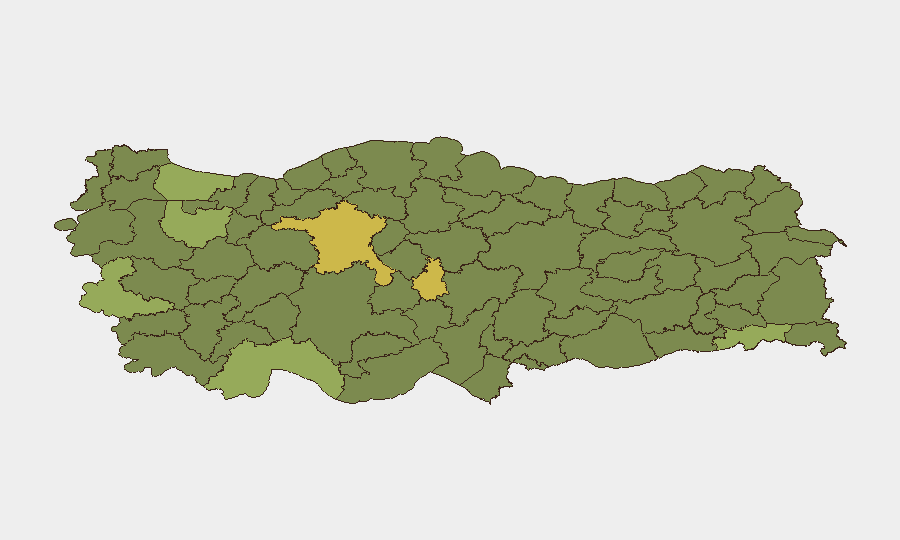
Turkey remains at elevated threat level (#37 globally, composite score 56) with a mixed but concerning security posture following the conclusion of the NATO summit in Ankara on July 14–15. While no major attacks occurred during the summit itself despite heavy deployment of 56,000 security personnel, concurrent political instability—including a police raid on opposition CHP headquarters using tear gas—and documented arrests of journalists signal underlying governance tensions. Near-term risk is driven by localized armed activity, political friction, and speech-related enforcement rather than coordinated terrorist operations, but the sub-national picture is highly stratified, with Nevşehir (69.3) and Ankara (65.8) posing notably higher exposure than national average.
Key Developments
- Ankara (CHP headquarters), July 14–15: Police stormed opposition party headquarters and deployed tear gas to enforce a court ruling reinstating former leader Kılıçdaroğlu; physical resistance reported and allegations of unauthorized enforcement personnel raised political instability concerns.
- Şırnak (Gündoğdu neighborhood), early morning July 14: A 14-year-old boy who posted a farewell video on Snapchat triggered an overnight search by 89 police officers; located alive in an abandoned building by 06:00, signaling acute self-harm and youth vulnerability risk in the region.
- Istanbul (Airport area), within last 48–72 hours: Stand-up comedian Deniz Göktaş arrested following YouTube performance; faces probes for insulting religious values and President Erdoğan, reflecting heightened sensitivity to speech-related charges.
- Ankara (citywide), July 7–15: NATO summit security posture remains elevated with movement restrictions and checkpoint activity ongoing; no major attacks or unrest recorded in final 24–48 hours of summit period.
- Journalists and civil society (nationwide), preceding and during NATO summit: Media-freedom groups document 11 journalists and media workers detained under vague pretexts in the lead-up to the summit; detentions continue to be cited as indicative of political pressure.
- Istanbul (travel advisory context, active as of June 3): Israel maintains "do not travel" warning for Turkey, classifying it as "very dangerous" for Israeli citizens, citing April 7, 2026 terrorist attack near Israeli Consulate; advisory remains in force and affects regional traveler demographics.
Highest-Risk Areas
Nevşehir and Ankara drive the country's sub-national risk profile, with composite scores of 69.3 and 65.8 respectively—substantially above Istanbul's 53.5 and the national average of 56. Nevşehir's elevation reflects ongoing localized armed activity and police operations; Ankara's score is amplified by the concentration of political institutions, ongoing governance disputes (CHP raid), security-force deployment, and documented detentions of journalists and civil-society figures. Istanbul, while lower in absolute terms, remains under elevated alert due to persistent terrorist targeting of Israeli/Jewish interests and recent arrests on speech charges. Mid-tier risk provinces (Şırnak, 41.3; Bursa, 40; Antalya, 40) warrant monitoring for armed incidents and police operations but do not yet present the institutional or political instability seen in the capital.
How GeoBit Would Assist
Security teams should deploy persistent AOI monitoring on Ankara, Nevşehir, and Istanbul to generate early alerts on police operations, gatherings, and armed activity; use OSINT fusion (X/Telegram, YouTube intelligence, multi-language search) to track journalist detentions, civil-unrest indicators, and speech-related enforcement; and apply entity and actor network analysis to map political opposition movements and security-force deployment patterns. Routing & network analysis tools support safe movement planning for personnel in Ankara during ongoing checkpoint activity and political tension.
7-Day Outlook
Political friction between government and opposition is likely to persist or escalate as court-ordered CHP leadership changes are enforced; speech-related enforcement and media scrutiny are expected to remain elevated. Armed incidents in Nevşehir and localized security operations should be anticipated, though the conclusion of the NATO summit may marginally reduce Ankara's immediate concentration risk. No broad-based conflict or terrorist campaign surge is signaled, but fragmented and localized instability will remain the baseline operational environment.
Highest-Risk Areas — Ranked
| # | State / Region | Risk |
|---|---|---|
| 1 | Nevşehir | 69.3 |
| 2 | Ankara | 65.8 |
| 3 | Istanbul | 53.5 |
| 4 | Izmir | 44.3 |
| 5 | Şırnak | 41.3 |
| 6 | Bursa | 40 |
| 7 | Antalya | 40 |
| 8 | Şanlıurfa | 39.8 |
| 9 | Trabzon | 39.8 |
| 10 | Gaziantep | 39.5 |
| 11 | Malatya | 39.5 |
| 12 | Siirt | 39.5 |
Sources
Previous Daily Briefs
A new Turkey brief is written every day — each with its own risk map and downloadable CSV. Here's the last week; use the calendar to go further back.
📅 Browse every day by calendar →
Highlighted days have a brief. Tap a day for that day's map & analysis, or “csv” for that day's dataset ($5).
Atlas — our AI intelligence desk — emails them this snapshot personally. Nothing else, no list.