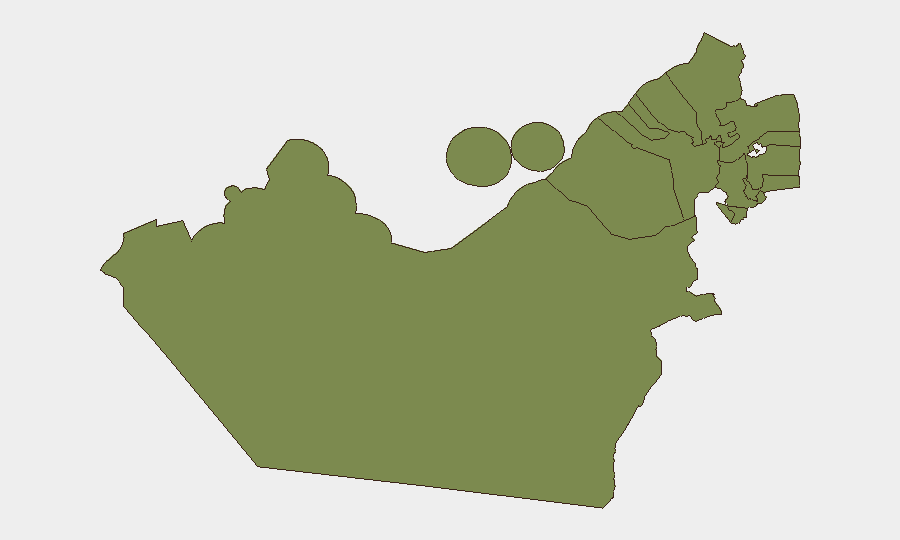
Situation Summary
The United Arab Emirates remains a stable, low-threat operating environment with a composite threat score of 12 (rank #101 globally) and no verified attacks, civil unrest, or major crime incidents reported in the past 24–48 hours. A nationwide civil defense missile-warning alert issued on June 27 was followed immediately by an all-clear message; authorities reported no impacts or damage and the trigger remains unclassified. Regional tensions—including recent Iranian attacks on Bahrain and Kuwait—are prompting elevated diplomatic activity and de-escalation messaging from UAE federal authorities, but these events occur outside UAE territory and do not currently affect domestic security conditions.
Key Developments
- Nationwide, UAE – June 27, 2026 (Friday, ~18:00–19:00 UTC)
Civil defense authorities issued a mobile phone missile-warning alert to all residents, followed within minutes by an "all clear" notification. No damage, impacts, or casualties were reported; the cause and classification of the alert have not been publicly disclosed by authorities.
- Dubai & UAE-wide – Night of June 27–28, 2026
Open-source monitoring and local situation reports document no major security incidents, infrastructure disruptions, civil unrest, or unusual crime across Dubai or other emirates during this period. Road conditions were normal and police/RTA advisories remained routine; the security environment is characterized as calm and quiet.
- Abu Dhabi (federal level) – June 28, 2026
The UAE Ministry of Foreign Affairs issued formal statements condemning renewed Iranian ballistic missile and unmanned aerial vehicle attacks on Bahrain and Kuwait, reaffirming support for those nations' sovereignty and regional stability.
- Abu Dhabi (federal level) – June 28, 2026
UAE officials reiterated commitment to dialogue, de-escalation, and regional stability amid ongoing Iran–US diplomatic negotiations and Iranian military operations in the broader Persian Gulf. No domestic security incidents were reported within UAE territory.
Highest-Risk Areas
Dubai drives the overwhelming majority of tracked risk (score 31.4), reflecting its status as a major international financial, tourism, and logistics hub with correspondingly higher event density and exposure. Abu Dhabi Emirate (6.1) and Fujairah (5.5) register secondary risk primarily from administrative/federal activity and maritime/border proximity, respectively. The remaining emirates (Ras al-Khaimah, Sharjah, Ajman, Umm al-Quwain) carry minimal composite scores and remain functionally low-risk. Risk concentration in Dubai reflects operational footprint and international connectivity rather than instability; the UAE's overall threat environment remains below global median.
How GeoBit Would Assist
Security teams monitoring UAE operations should employ Intel Sweep and global event feeds paired with multi-language OSINT (X/Twitter, Telegram, open broadcasts) and sentiment analysis to detect early signals of civil or security shifts before they escalate. AOI Monitoring & Early Warning configured for Dubai, Abu Dhabi, and the Strait of Hormuz corridor would provide persistent surveillance of geopolitical developments and maritime/aviation incidents that could affect supply chains or travel. Network & Actor Analysis focused on federal government, security services, and regional diplomatic channels would flag shifts in UAE threat posture or escalation signaling tied to Iran–Gulf tensions.
7-Day Outlook
The UAE is forecast to remain stable with no material increase in domestic security risk over the next seven days. Regional tensions (Iran–US, Iran–Gulf states) will likely sustain elevated diplomatic messaging and potential missile/drone alert drills, but these are unlikely to translate into UAE-territory incidents absent a major escalation in the Strait of Hormuz or Iranian targeting doctrine. Routine travel, business, and operational security postures remain appropriate for the UAE; no lockdown, evacuation, or travel restrictions are anticipated.
Highest-Risk Areas — Ranked
| # | State / Region | Risk |
|---|---|---|
| 1 | Dubai | 31.4 |
| 2 | Abu Dhabi Emirate | 6.1 |
| 3 | Fujairah Emirate | 5.5 |
| 4 | Ras al-Khaimah | 2 |
| 5 | Sharjah Emirate | 1.4 |
| 6 | Ajman Emirate | 1.4 |
| 7 | Umm al-Quwain | 1.4 |
Sources
Previous Daily Briefs
A new United Arab Emirates brief is written every day — each with its own risk map and downloadable CSV. Here's the last week; use the calendar to go further back.
📅 Browse every day by calendar →
Highlighted days have a brief. Tap a day for that day's map & analysis, or “csv” for that day's dataset ($5).