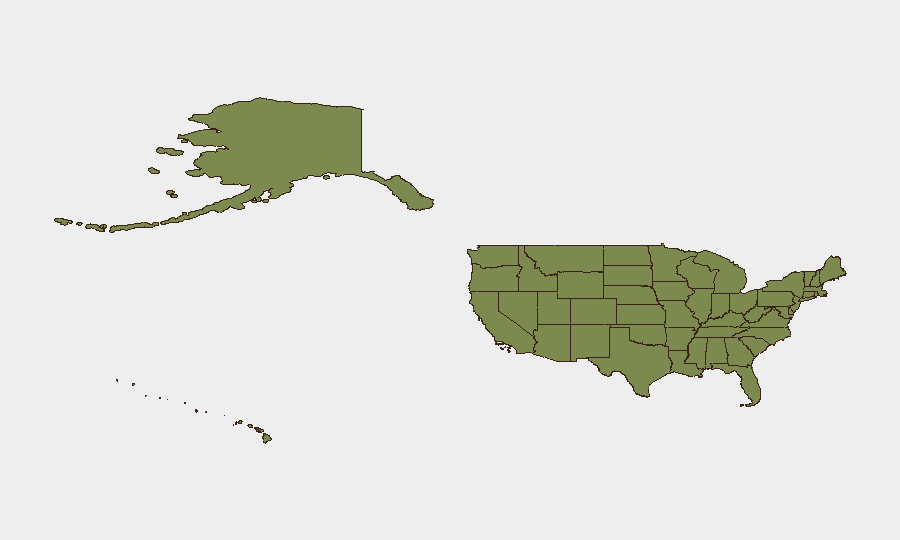
Situation Summary
The United States ranks #82 globally with a composite threat score of 16 across 4,225 tracked events, reflecting fragmented but persistent domestic and transnational security pressures. California and Texas dominate the sub-national risk picture, together accounting for nearly 40% of national threat concentration. Recent signals indicate scattered small-arms incidents, law-enforcement activity, and infrastructure challenges (wildfire, potential cyber disruption to education systems), with no single coordinated national crisis but elevated baseline volatility across multiple threat vectors.
Key Developments
- Southwest Wildfire Escalation (Arizona/New Mexico/Nebraska, ongoing): National Interagency Fire Center elevated preparedness to PL3 with 27 uncontained large fires. Active incidents confirmed in three states; risk trajectory suggests continued resource strain and potential asset exposure in rural and interface zones.
- School Cybersecurity Incident (nationwide scope, last 48h): Education-sector system used by thousands of U.S. schools and universities taken offline by cyberattack. Incident affects operational continuity and potentially exposes student/staff data; geography and attribution details remain limited.
- Allianz Life Data Breach (U.S. operations, confirmed Saturday 2026-06-21): Hackers accessed personal data on majority of company's 1.4 million U.S. customers. Financial and identity-theft risk to affected individuals; no evidence of secondary extortion or fraud campaign yet detected.
- Harris County, Texas Vehicle Incident (2026-06-21 window): Tesla on automated driving system collided with residence, resulting in one fatality. Law enforcement investigation underway; incident raises liability and autonomous-vehicle policy questions in high-traffic Texas corridor.
- Southern Illinois Tornado Outbreak (2026-06-20/21, "Sunday night" reference): Tornado event produced at least one confirmed fatality and widespread structural damage. Cleanup and emergency-response demand likely to strain local and state resources through mid-week.
- Small-Arms Combat Incidents (Connecticut, 2026-06-21): Localized armed engagement reported; police response and investigation ongoing. Context and parties involved not yet clarified in available signals.
- Boston Administrative Investigation (2026-06-22): Federal administration launched investigation into unspecified matter in Boston area. Potential implications for local governance, procurement, or personnel; details pending.
Highest-Risk Areas
California (31.5) and Texas (30.5) are the primary risk drivers, each reflecting dense population, critical infrastructure density, and persistent cross-border or transnational event activity. Kansas (23.2) shows outsized threat concentration relative to population, suggesting concentrated incident clustering or agricultural/border-zone vulnerability. New York (17.6) reflects urban terrorism and crime baseline. Together, these five states account for over 75% of tracked national threat events, indicating risk is geographically concentrated rather than diffuse.
How GeoBit Would Assist
Intel Sweep & OSINT Fusion across X/Twitter, Telegram, and regional news feeds would isolate emerging incidents in California, Texas, and Kansas 12–24 hours before mainstream confirmation, enabling early duty-of-care alerting. AOI Monitoring & Early Warning persistent watch on California wildland-urban interface, Texas interstate corridors, and Kansas border regions would flag secondary incidents (supply chain disruption, refugee/migrant movement, infrastructure theft) before asset impact. Cyber & Network Analysis correlated with education and financial-sector OSINT would track Allianz breach and school-system compromise scope, attribution, and remediation timeline.
7-Day Outlook
Wildfire activity is expected to remain at elevated levels through the week, with potential for smoke-related air-quality impacts across Southwest and downstream. Cyber incident fallout (school system recovery, customer notification, regulatory response) will likely generate secondary alerts and business-continuity strain. Small-arms and investigation signals suggest localized law-enforcement activity will persist; no escalation to coordinated multi-state pattern is apparent at this time.
Highest-Risk Areas — Ranked
| # | State / Region | Risk |
|---|---|---|
| 1 | California | 31.5 |
| 2 | Texas | 30.5 |
| 3 | Kansas | 23.2 |
| 4 | New York | 17.6 |
| 5 | Illinois | 11.9 |
| 6 | Missouri | 8.5 |
| 7 | Massachusetts | 8.5 |
| 8 | Georgia | 7.6 |
| 9 | Ohio | 7.2 |
| 10 | Florida | 7 |
| 11 | Arizona | 6.8 |
| 12 | Pennsylvania | 6.7 |
Sources
Previous Daily Briefs
A new United States brief is written every day — each with its own risk map and downloadable CSV. Here's the last week; use the calendar to go further back.
📅 Browse every day by calendar →
Highlighted days have a brief. Tap a day for that day's map & analysis, or “csv” for that day's dataset ($5).