Situation Summary
Uruguay maintains its position as one of the world's lowest-risk jurisdictions (global rank #185, composite threat score 3/100) with no credible reports of significant security incidents, civil unrest, crime spikes, or infrastructure disruption in the past 24–48 hours. Recent political and diplomatic signals—including statements from government, congressional, and international actors (US Treasury, Spain, presidential office) alongside a drug-trafficking arrest on 26 June—indicate routine governance and law-enforcement activity rather than systemic instability. The overall security environment remains stable and predictable for corporate operations and personnel.
Key Developments
- 26 June, Uruguay (nationwide): A drug-trafficking arrest was processed by national authorities; no details on location, scale, or operational impact are currently available from open sources.
- 25 June, Canada–Uruguay (off-site, Brussels): A customs mutual assistance agreement was signed to strengthen bilateral cooperation against smuggling and illicit trade—a policy development with no immediate domestic security implication.
- 27–28 June (multi-party): Public statements from US Treasury, Spanish government, and Uruguayan executive/legislative bodies were recorded in event feeds; open-source research does not disclose specific incident triggers or escalation—diplomatic and routine policy discourse appears most likely.
- No verified crime, protest, or unrest activity in open media or social platforms for the period 27–28 June; football-related coverage (World Cup matches) and customs policy dominate search results.
Highest-Risk Areas
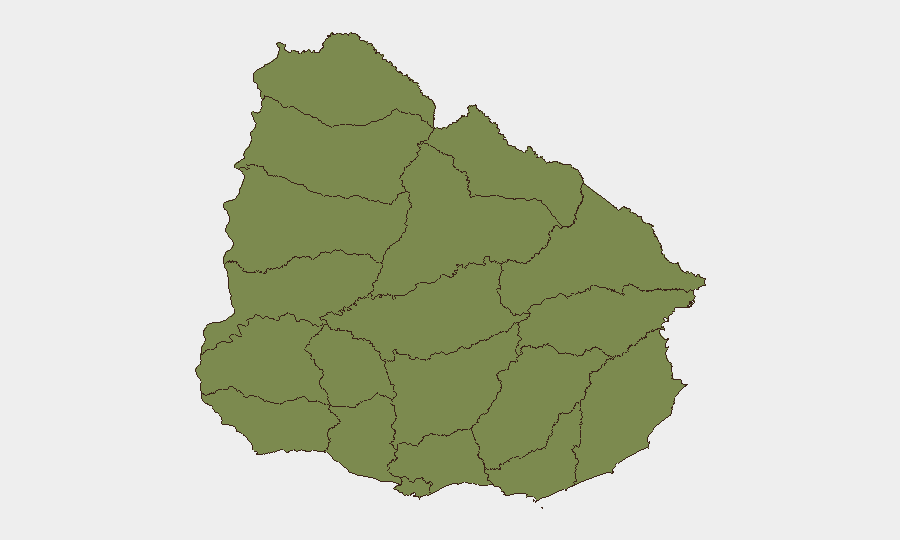
Durazno department stands out sharply, with a composite risk score of 31.9—more than double the next-highest region (Colonia, 14.7). This concentration warrants focused monitoring for drug-trafficking, organized crime, or border-related activity. Colonia, positioned on the Río de la Plata and western border corridor, also presents elevated risk typical of smuggling and contraband transit zones. Río Negro (6.2) and a cluster of northern border departments (Artigas, Salto, Paysandú, Rivera, Tacuarembó) each register low individual scores but merit routine surveillance given proximity to Argentina and Brazil; central and southern departments show minimal differentiated risk. Corporate teams with operations or personnel in Durazno should prioritize local-area intelligence updates and liaison with port/customs authorities.
How GeoBit Would Assist
Security teams should deploy persistent Area-of-Interest (AOI) Monitoring & Early Warning on Durazno and Colonia to detect emerging crime, trafficking, or protest activity before escalation. Intel Sweep and multi-language OSINT Fusion (social platforms, local news, police communications) will provide real-time situational awareness and distinguish routine arrests from organized threats. Network & Actor Analysis linked to the 26 June arrest can map criminal organization structure and supply-chain risk if duty-of-care teams manage supply-chain or logistics exposure in high-risk zones.
7-Day Outlook
No acute security crisis is anticipated in the near term. Routine diplomatic activity and law-enforcement operations will likely continue; the recent customs accord and inter-agency statements do not signal destabilization. Corporate security posture should remain standard for a low-risk jurisdiction, with regular AOI monitoring and liaison with local authorities in Durazno and Colonia to maintain early warning of any uptick in organized crime or trafficking.
Highest-Risk Areas — Ranked
| # | State / Region | Risk |
|---|---|---|
| 1 | Durazno | 31.9 |
| 2 | Colonia | 14.7 |
| 3 | Río Negro | 6.2 |
| 4 | Artigas | 1.9 |
| 5 | Salto | 1.9 |
| 6 | Paysandú | 1.9 |
| 7 | Rivera | 1.9 |
| 8 | Tacuarembó | 1.9 |
| 9 | Soriano | 1.9 |
| 10 | Flores | 1.9 |
| 11 | San José | 1.9 |
| 12 | Florida | 1.9 |
Sources
Previous Daily Briefs
A new Uruguay brief is written every day — each with its own risk map and downloadable CSV. Here's the last week; use the calendar to go further back.
📅 Browse every day by calendar →
Highlighted days have a brief. Tap a day for that day's map & analysis, or “csv” for that day's dataset ($5).