Situation Summary
Antigua and Barbuda remains in a stable, low-threat security environment with no verified acute incidents in the last 24–48 hours. Open-source monitoring across news, social media, and official advisories confirms the absence of active civil unrest, major crime spikes, infrastructure failures, or travel disruptions during the current reporting window. The U.S. State Department maintains a Level 1 advisory (exercise normal precautions), and no recent change in risk posture has been flagged by regional or international sources. The security baseline reflects broader Caribbean patterns of sporadic violent crime offset by robust tourism-sector stability and routine law-enforcement operations.
Key Developments
No verified security, conflict, or civil-unrest incidents have been time-stamped to August 1–2, 2026. Multi-source monitoring of local police releases, news portals, social feeds, and travel advisories detected no discrete events meeting the 24–48-hour criteria. The most recent corroborated incident—a shooting in Bellevue Estate, St. John's on July 27—falls outside this window; the victim was reported in stable condition following emergency treatment, and police investigations are ongoing.
*Context (older than 24–48 hours):* Exercise Stronghold, a planned three-day security drill in parts of St. John's testing emergency-response readiness ahead of the Commonwealth Heads of Government Meeting, concluded July 7 with no incidents. Authorities completed cybersecurity-capacity building through a UK-signed MoU in late July, a non-incident, structural upgrade to cyber-resilience frameworks.
Highest-Risk Areas
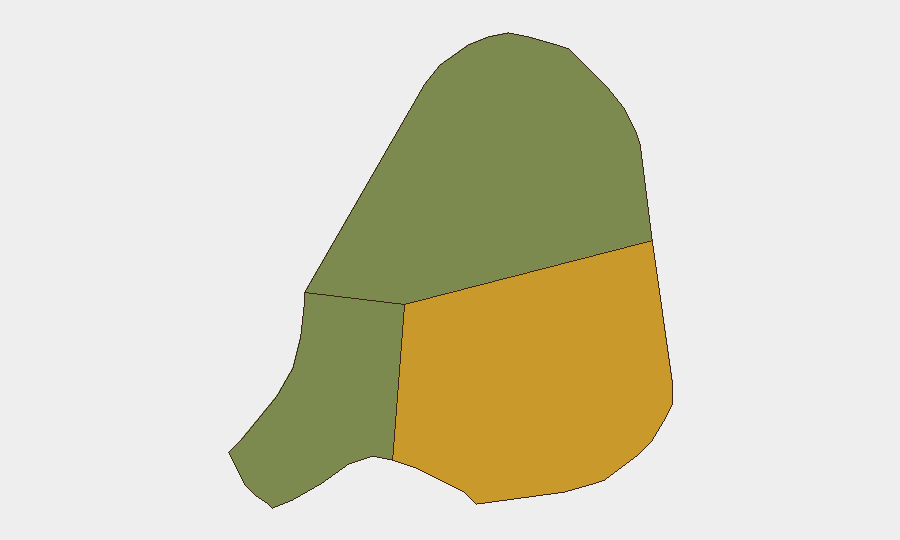
Antigua (composite risk score 72) accounts for the majority of tracked risk within the dual-island state, driven by St. John's and surrounding urban zones where violent crime—including murder, armed robbery, and sexual assault—occurs at elevated baseline rates relative to Barbuda and Redonda. These incidents are predominantly intra-community in nature and do not systematically target foreign nationals or corporate assets, but routine situational awareness in urban commercial and residential districts remains warranted. Barbuda (risk 18) and Redonda (risk 8) present minimal acute risk; their lower scores reflect sparse population, limited infrastructure concentration, and absence of recent security events.
How GeoBit Would Assist
Security and risk teams managing personnel or assets in Antigua and Barbuda should employ AOI Monitoring & Early Warning on high-density urban zones (St. John's CBD, port facilities, tourism corridors) to detect emerging crime patterns or civil-unrest indicators in near-real time. Multi-language OSINT (news, social media, and local-source feeds) combined with sentiment & temporal analysis will flag localized disturbances, labor disputes, or infrastructure outages before they impact operations. Entity extraction and network analysis can map crime-actor patterns and inform briefing-cycle updates on persistent baseline risks.
7-Day Outlook
No acute threat escalation is forecast over the near term; the environment is expected to remain stable barring unexpected external shocks (major natural disaster, regional spillover from unrelated Caribbean incidents). Routine monitoring should continue, with particular attention to the post-CHOGM period (scheduled for late 2026) to assess whether heightened security measures persist or normalize.
Highest-Risk Areas — Ranked
| # | State / Region | Risk |
|---|---|---|
| 1 | Antigua | 72 |
| 2 | Barbuda | 18 |
| 3 | Redonda | 8 |
Sources
Previous Daily Briefs
A new Antigua and Barbuda brief is written every day — each with its own risk map and downloadable CSV. Here's the last week; use the calendar to go further back.
📅 Browse every day by calendar →
Highlighted days have a brief. Tap a day for that day's map & analysis, or “csv” for that day's dataset ($5).
Atlas — our AI intelligence desk — emails them this snapshot personally. Nothing else, no list.