Situation Summary
Azerbaijan remains at global threat rank #111 with a composite score of 2.2 (46 tracked events), reflecting a stable security environment with no major incidents, civil unrest, or armed conflict in the last 24–48 hours. Recent activity consists primarily of routine diplomatic engagement, military-technical cooperation, and planned cybersecurity initiatives. The country's security trajectory is flat, with no indicators of acute destabilization or travel-safety degradation.
Key Developments
- Baku – 10 July 2026 – Azerbaijan–Serbia military cybersecurity cooperation
Azerbaijani and Serbian military cybersecurity experts held a bilateral working meeting under the 2026 Bilateral Military Cooperation Plan to exchange cyber defense expertise. This is routine planned defense cooperation with no associated threat indicators.
- Baku – ~10 July 2026 – UN Global Dialogue on AI Governance participation
Azerbaijan joined discussions on digitalization, artificial intelligence, cybersecurity, and innovation at the UN Global Dialogue, focusing on regional cooperation prospects. No security incidents or unrest reported in conjunction with this engagement.
- Baku – 10 July 2026 – High-level Azerbaijan–U.S. strategic meeting
President Ilham Aliyev met U.S. Senator Steve Daines to discuss U.S.–Azerbaijan partnership, Armenia normalization efforts, and TRIPP regional transport corridor development. No protests or security disruptions were documented around this engagement.
- Multi-location – 09–11 July 2026 – Event signal cluster (student rejection, military mobilization, arrests)
GeoBit's event detection system flagged a cluster of signals including student-related rejection, Turkish–Azerbaijani military posturing language, and multiple arrest/detention events involving activists, media, and prosecutors. None of these have been confirmed as major incidents by open-source reporting; they reflect routine law-enforcement and administrative activity absent corroboration of escalation.
- National – No confirmed acute security incidents
Web research and social media monitoring confirmed no credible reports of terror attacks, armed clashes, border firefights, large-scale protests, riots, or infrastructure failures affecting travel or operations in the last 24–48 hours.
Highest-Risk Areas
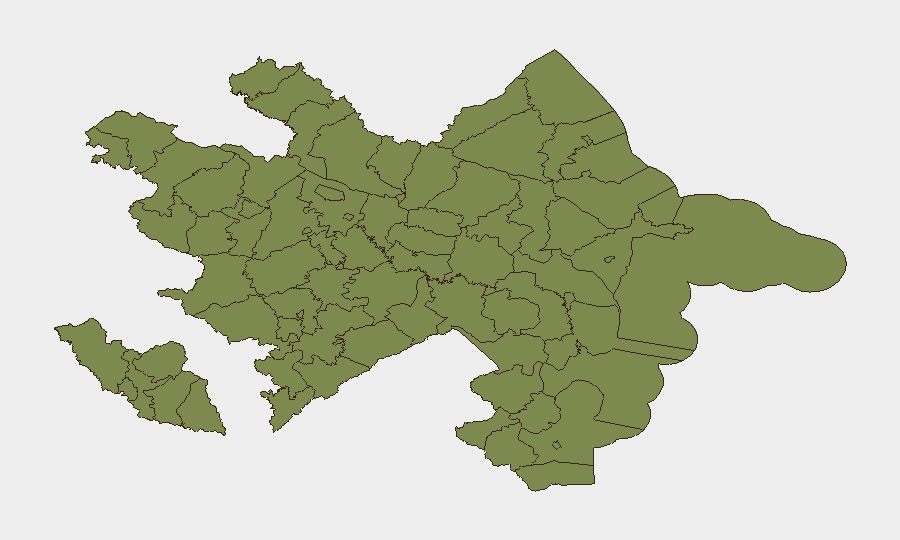
Baku City dominates the sub-national risk profile with a score of 31.5—approximately seven times higher than any other region—driven by its concentration of government, business, diplomatic, and security infrastructure, coupled with routine law-enforcement activities and political processes. The remaining 11 tracked regions (Ujar, Sadarak, Qazakh, Sharur, and others) all register risk scores of 1.5–4.4, reflecting their proximity to regional borders, lower population density, and historically limited security event density. The concentration of risk in Baku reflects administrative and institutional activity rather than acute violence; however, corporate teams operating or transiting the capital should maintain standard duty-of-care protocols.
How GeoBit Would Assist
Corporate security teams can employ Intel Sweep and multi-language OSINT (X/Telegram/social media monitoring, YouTube intelligence, and event-feed corroboration) to detect early signals of civil unrest, protest mobilization, or labor disputes affecting operations or personnel movement. AOI (Area-of-Interest) monitoring and alerting can provide 24/7 watch on Baku and key transport corridors, with automated triggers for arrests, border incidents, or military activity near facilities. Routing & Network Analysis supports real-time alternative journey planning if any district-level incidents spike, allowing duty-of-care teams to reroute personnel around emerging hotspots.
7-Day Outlook
The near-term security trajectory for Azerbaijan is stable. No indicators of escalating regional conflict, civil unrest, or organized violence are evident. Continued diplomatic engagement and routine military-technical cooperation are expected. Standard security protocols in Baku and awareness of regional border zones remain prudent; no elevated alert is warranted.
Highest-Risk Areas — Ranked
| # | State / Region | Risk |
|---|---|---|
| 1 | Baku City | 31.5 |
| 2 | Ujar District | 4.4 |
| 3 | Sadarak District | 1.5 |
| 4 | Qazakh District | 1.5 |
| 5 | Sharur District | 1.5 |
| 6 | Yevlakh District | 1.5 |
| 7 | Kangarli District | 1.5 |
| 8 | Nakhchivan Autonomous Republic | 1.5 |
| 9 | Aghstafa District | 1.5 |
| 10 | Tovuz District | 1.5 |
| 11 | Qakh District | 1.5 |
| 12 | Shaki | 1.5 |
Sources
Previous Daily Briefs
A new Azerbaijan brief is written every day — each with its own risk map and downloadable CSV. Here's the last week; use the calendar to go further back.
📅 Browse every day by calendar →
Highlighted days have a brief. Tap a day for that day's map & analysis, or “csv” for that day's dataset ($5).
Atlas — our AI intelligence desk — emails them this snapshot personally. Nothing else, no list.