Situation Summary
Bosnia and Herzegovina presents a stable near-term security environment with no acute incidents reported in the last 24–48 hours. The country's composite threat score of 7 reflects persistent but manageable chronic risks: organized crime, corruption, ethnopolitical tensions, and localized organized-crime activity remain baseline concerns. No material deterioration in the security posture or civil-unrest environment has been detected in mainstream reporting or open-source channels during the current brief cycle.
Key Developments
No independently corroborated security, conflict, civil unrest, crime, political instability, or infrastructure incidents meeting operational thresholds have been identified in Bosnia and Herzegovina during the last 24–48 hours. Regional news feeds (B92, Sarajevo-based outlets, international wires), social-media monitoring (X/Twitter), and local public broadcaster portals carry routine political and economic commentary but no new reportable security events in the specified window. Open-source OSINT does not surface time-stamped, multi-source-verified incidents of protests, clashes, major police actions, bomb threats, border incidents, or critical infrastructure disruption. The absence of reportable events reflects baseline operational stability rather than data gaps.
Highest-Risk Areas
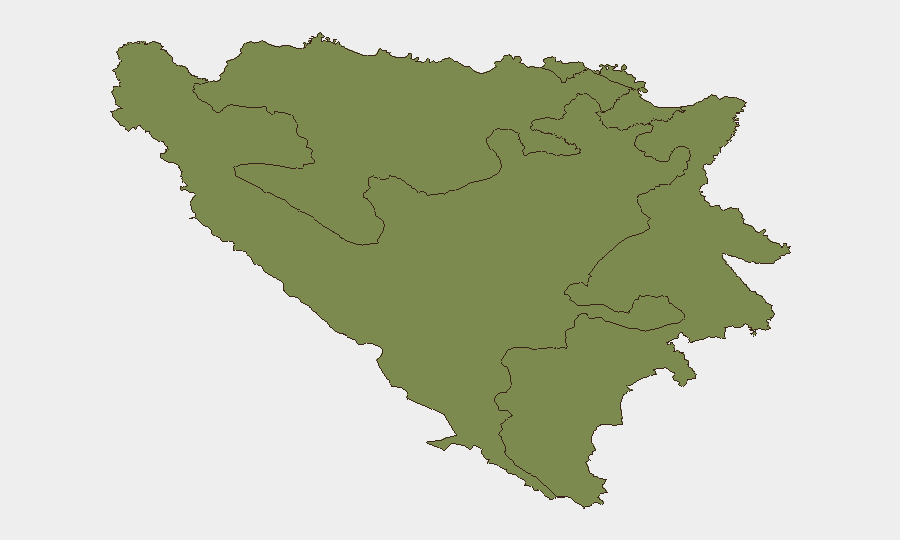
The Federation of Bosnia and Herzegovina dominates the sub-national risk profile (score 31.3), significantly outweighing Republika Srpska and Brčko District (both 1.3). Risk concentration in the Federation reflects a combination of ethnic-political fragmentation, organized-crime activity, and governance challenges in urban centers and transit corridors. Republika Srpska's lower ranking reflects relative institutional consolidation and lower incident frequency, though ethnopolitical sensitivities and organized-crime networks remain chronic factors across both entities. Duty-of-care teams should prioritize monitoring in the Federation, particularly in connection with political transitions, organized-crime activity, and inter-entity relations.
How GeoBit Would Assist
Intel Sweep and multi-language OSINT (Bosnian, Serbian, Croatian) provide baseline monitoring of regional news feeds, political actors, and organized-crime networks to detect early warning of escalation. Entity extraction and network & actor analysis enable identification of key political, security, and criminal stakeholders, supporting risk assessment for teams with assets or personnel in the Federation. AOI Monitoring & Early Warning with persistent area-of-interest watch on Federation population centers and border regions would generate alerts if civil unrest, political violence, or significant organized-crime incidents emerge, enabling rapid duty-of-care response.
7-Day Outlook
The security environment is expected to remain stable over the near term, with no indicators of acute political, conflict, or civil-unrest escalation. Baseline risks (organized crime, corruption, ethnopolitical friction) will persist as chronic management challenges. Monitor for any developments connected to entity-level political transitions, Sarajevo-based organized-crime activity, or cross-entity tensions, but no material spike in threat level is anticipated in the coming week absent external regional shock.
Highest-Risk Areas — Ranked
| # | State / Region | Risk |
|---|---|---|
| 1 | Federation of Bosnia and Herzegovina | 31.3 |
| 2 | Republika Srpska | 1.3 |
| 3 | Brčko District | 1.3 |
Previous Daily Briefs
A new Bosnia and Herzegovina brief is written every day — each with its own risk map and downloadable CSV. Here's the last week; use the calendar to go further back.
📅 Browse every day by calendar →
Highlighted days have a brief. Tap a day for that day's map & analysis, or “csv” for that day's dataset ($5).
Atlas — our AI intelligence desk — emails them this snapshot personally. Nothing else, no list.