Situation Summary
Brazil remains a moderate global security concern (rank #50, composite threat score 38) with 899 tracked events, characterized by persistent trafficking, organized crime activity, and localized violence rather than systemic instability. The last 48 hours show intensified federal law enforcement operations, significant seizures of contraband along key corridors, and continued border-region tensions tied to land disputes and Indigenous rights. Overall trajectory is stable at the national level, but sub-national volatility—particularly in São Paulo and Rio de Janeiro—remains elevated and operationally significant for corporate assets.
Key Developments
- São Paulo (state), 24 July – Federal Police intercepted a helicopter carrying 288 kg of coca paste from the Paraguay border, landing in the São Paulo region. Reflects sustained high-volume air-corridor trafficking but no direct civilian impact beyond increased policing presence.
- BR-277 highway, Santa Terezinha de Itaipu (Paraná), 22–23 July – Polícia Rodoviária Federal conducted a record rifle seizure during routine checkpoint enforcement on this critical east-west corridor, signaling active military-grade weapons movement and heightened inspection activity.
- National, 23–24 July – Coordinated federal security operations resulted in 18,855 arrests across Brazil involving over 17,000 agents. Corporate teams should expect increased checkpoint frequency and document checks on major routes and in urban centers.
- Canindé region (Ceará), night of 23 July – Bus carrying religious pilgrims crashed, killing multiple passengers and injuring at least 23. Highlights road-safety risk on secondary routes and potential short-term strain on local medical capacity.
- Amambai area (Mato Grosso do Sul), 23–24 July – Video-documented incident of ranch guards abusing an Indigenous man in a land-dispute context. Reflects ongoing tensions in border ranching zones with potential for localized unrest or retaliatory actions.
- National (border operations), 22–24 July – New Mercosur police cooperation agreement promulgated, enabling cross-border pursuit and joint operations. Expect increased joint patrols and identity verification in frontier zones (Paraguay, Argentina, Uruguay borders).
- National (energy policy), 24 July – Ethanol content in gasoline raised from 30% to 32% for 180 days to reduce fuel imports. May affect vehicle performance in some fleets and logistics costs; not a direct security threat but operationally relevant.
Highest-Risk Areas
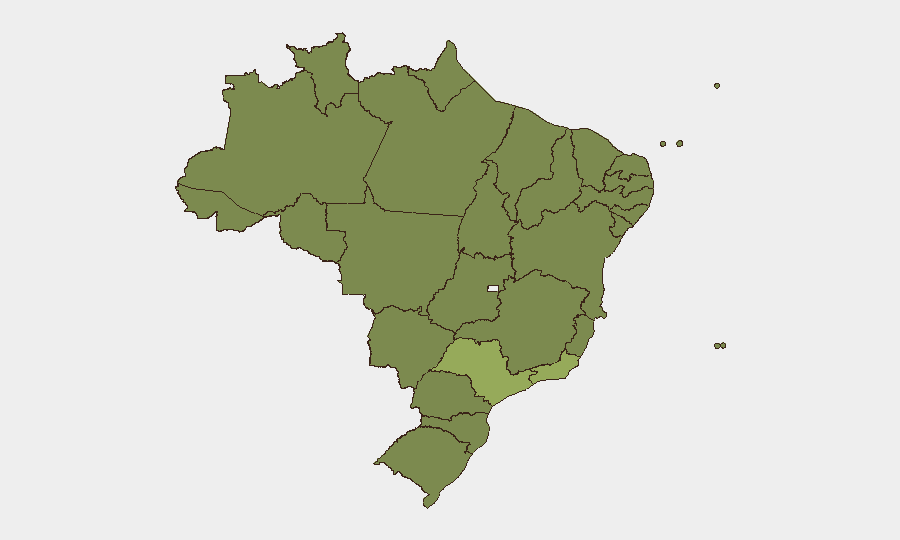
São Paulo (54.8) and Rio de Janeiro (41.0) dominate the risk profile, driven by trafficking volume, organized crime presence, and dense urban crime networks. Border and interior states—Mato Grosso do Sul (32.2), Minas Gerais (33.4), and Pernambuco (31.6)—carry secondary but significant risk linked to weapons smuggling, drug transit, and land-dispute violence. Ceará and Amazonas round the top tier, with internal displacement and trafficking-related instability. Corporate concentration in São Paulo and Rio means that these two states warrant dedicated monitoring and incident-response planning.
How GeoBit Would Assist
Real-time AOI Monitoring & Early Warning on São Paulo, Rio de Janeiro, and Paraná highways would flag checkpoint intensity, seizure patterns, and route disruptions. Routing & Network Analysis enables alternative journey planning around high-risk corridors and interdiction zones. OSINT fusion (X/Twitter, regional media, law enforcement feeds) combined with entity extraction and sentiment analysis tracks cartel activity, protest signals, and official enforcement tempo, allowing security teams to calibrate travel authorization and asset positioning before incidents escalate.
7-Day Outlook
Federal enforcement tempo is likely to remain elevated through the coming week, with sustained checkpoint operations on major corridors. Border-region tensions (Mato Grosso do Sul, Paraguay) may produce localized incidents but are unlikely to affect national stability. No systemic political or infrastructure disruption is imminent; risk remains granular and geographically concentrated.
Highest-Risk Areas — Ranked
| # | State / Region | Risk |
|---|---|---|
| 1 | São Paulo | 54.8 |
| 2 | Rio de Janeiro | 41 |
| 3 | Minas Gerais | 33.4 |
| 4 | Mato Grosso do Sul | 32.2 |
| 5 | Pernambuco | 31.6 |
| 6 | Goiás | 31.6 |
| 7 | Paraná | 28.9 |
| 8 | Amapá | 28.3 |
| 9 | Bahia | 28.3 |
| 10 | Ceará | 27.7 |
| 11 | Rondônia | 26.3 |
| 12 | Amazonas | 26 |
Sources
Previous Daily Briefs
A new Brazil brief is written every day — each with its own risk map and downloadable CSV. Here's the last week; use the calendar to go further back.
📅 Browse every day by calendar →
Highlighted days have a brief. Tap a day for that day's map & analysis, or “csv” for that day's dataset ($5).
Atlas — our AI intelligence desk — emails them this snapshot personally. Nothing else, no list.