Situation Summary
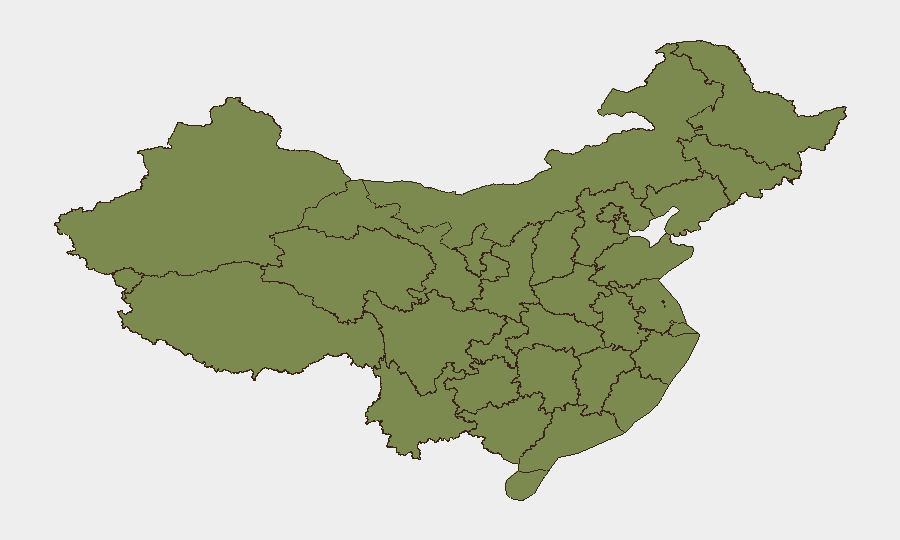
China's overall security posture remains stable (global rank #163, composite score 4), but diplomatic and sanctions pressure from the US, EU, and Turkey has intensified sharply over the past 72 hours. Sub-national risk remains heavily concentrated in Gansu (33.1), with a secondary cluster in Guangdong and Beijing. Event signals suggest a pattern of cross-border tension, administrative countermeasures, and isolated incidents rather than systemic instability.
Key Developments
- 2026-06-21 · US Admin Sanctions. Washington imposed new sanctions on China; China responded with countermeasures targeting 10 US companies, with export controls announced on 2026-06-22.
- 2026-06-22 · EU & Turkish Threats. Public statements and threat signals from the European Union and Turkey directed at China indicate coordinated diplomatic friction, likely tied to trade, technology, or regional security disputes.
- 2026-06-20 · Conventional Military Force Activity. China executed a military exercise or movement; concurrent reports of disapproval from South Korea suggest possible maritime or air-domain activity near contested waters.
- 2026-06-22 · Physical Assault Incident. A physical assault involving China and a high-level executive or official occurred; details remain limited pending corroboration.
- 2026-06-21 · Investigation Initiated. Chinese authorities opened an investigation into an unspecified matter; likely government or corporate in scope.
- 2026-06-20 · Domestic Political Signal. Voter disapproval of China's government or policies was publicly recorded, indicating minor domestic discontent.
Note: Event descriptions above reflect GeoBit signal classification only. Independent verification of exact incident scope and timing is recommended before operational decision-making.
Highest-Risk Areas
Gansu's outlier risk score (33.1) is not currently explained by public event signals and warrants dedicated AOI monitoring to identify underlying drivers—whether industrial, security-related, or demographic. Guangdong (14.1) and Beijing (11.2) reflect national capital and economic-hub exposure to sanctions, cyber operations, and diplomatic incidents. Hainan (9.3) correlates with military activity signals and cross-strait tensions. Corporate and government personnel in Beijing, Shanghai, and Guangdong should assume elevated exposure to sanctions compliance, visa delays, and regulatory enforcement.
How GeoBit Would Assist
Security teams should deploy Intel Sweep and multi-language OSINT fusion to corroborate the past 72 hours' signals and establish ground truth on military activity, sanctions scope, and the physical assault incident. AOI Monitoring & Early Warning on Gansu, the Taiwan Strait, and key ports (Guangdong, Shanghai) will detect escalation or new military mobilization before public disclosure. Network & Actor Analysis should track US and EU company exposure to Chinese countermeasures and identify derivative supply-chain or regulatory risk.
7-Day Outlook
Sanctions and counter-sanctions cycles typically take 10–21 days to cascade into operational impact (visa denials, asset freezes, supply disruption). The near-term risk is secondary—compliance friction, personnel mobility delays, and selective enforcement against foreign firms in China. Military activity in the Taiwan Strait and South China Sea should be monitored for frequency and scale; a sustained exercise or repositioning would signal heightened alert posture but not imminent kinetic escalation. Diplomatic channels remain active; risk of uncontrolled escalation is assessed as low over the next 7 days.
Highest-Risk Areas — Ranked
| # | State / Region | Risk |
|---|---|---|
| 1 | Gansu | 33.1 |
| 2 | Guangdong Province | 14.1 |
| 3 | Beijing | 11.2 |
| 4 | Hainan Province | 9.3 |
| 5 | Hubei | 5.5 |
| 6 | Tianjin | 4.9 |
| 7 | Guizhou | 4.8 |
| 8 | Fujian | 4.6 |
| 9 | Shanghai | 4 |
| 10 | Jiangsu | 3.7 |
| 11 | Yunnan | 3.6 |
| 12 | Guangxi | 3.4 |
Previous Daily Briefs
A new China brief is written every day — each with its own risk map and downloadable CSV. Here's the last week; use the calendar to go further back.
📅 Browse every day by calendar →
Highlighted days have a brief. Tap a day for that day's map & analysis, or “csv” for that day's dataset ($5).