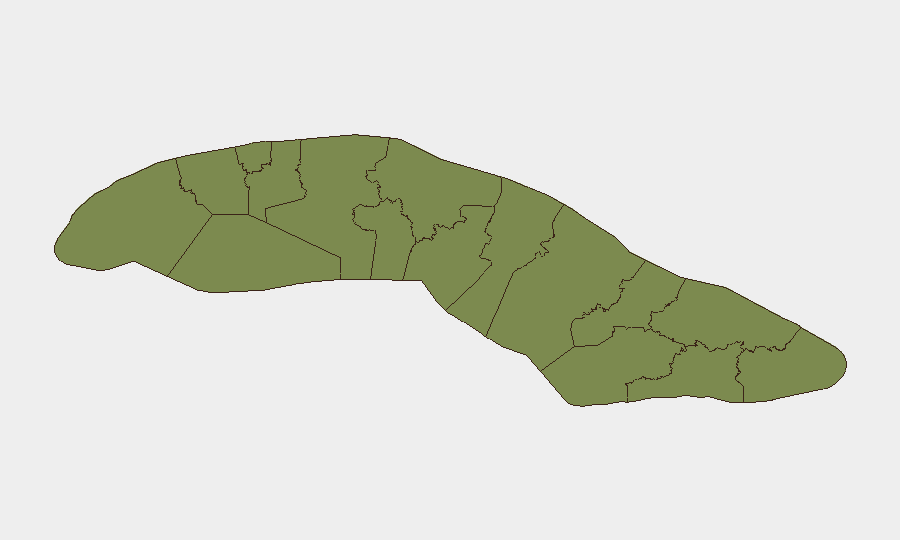
Situation Summary
Cuba's security environment remains stable at the national level (threat ranking #94 globally), but critical infrastructure failures are now the dominant near-term risk to corporate operations and personnel safety. A second nationwide electrical grid collapse in under one week, occurring July 10, has cascaded into communications outages and accelerated the already-severe daily power-cut cycle affecting the entire island. The combination of systemic grid instability, heightened political and diplomatic tensions (reflected in recent UN disapproval statements and presidential public statements dated July 9–11), and geographic concentration of risk in Sancti Spiritus and Havana creates a deteriorating duty-of-care environment for personnel and asset management.
Key Developments
- Nationwide grid collapse, July 10, 2026 — Cuba suffered its second complete electrical-grid failure in less than one week; Reuters reported the grid operator launched an investigation into root cause. Nearly two-thirds of the country was already without power before the full collapse occurred.
- Havana blackout and restoration delays, July 10 — The capital and most populated regions lost power; restoration efforts were ongoing as of reporting, with no confirmed timeline for full system recovery.
- Cascading telecom disruption, July 10 — The blackout triggered cellphone and internet outages across the island, exacerbating existing daily service degradation and creating critical communication gaps for corporate operations.
- U.S. Embassy infrastructure warning, July 10 — The Embassy issued a security alert noting Cuba's electrical system is "increasingly unstable" with regular scheduled and unscheduled outages, materially raising travel and operational risk.
- Diplomatic tension signals, July 9–11 — Public statements from the President, Cuban officials, and foreign actors (Chinese disapproval, UN disapproval of Cuba, Cuban disapproval of the U.S.) and an arrest/detention incident involving the President were flagged in event feeds, indicating elevated political volatility.
- Authorities investigation notice, July 11 — Authorities announced investigation into the grid collapse, though specifics on scope and timeline remain unclear.
Highest-Risk Areas
Sancti Spiritus (composite risk 34) and Havana (31.1) dominate the sub-national ranking and should be the focus of corporate risk prioritization. Havana's rank reflects both its population density and status as the capital, where infrastructure failure, political activity, and diplomatic presence converge; Sancti Spiritus's significantly higher score suggests either acute localized instability, industrial/resource sensitivity, or recent event concentration. Artemisa (10.6) and Santiago de Cuba (8.9) represent secondary concern zones. All other provinces rank below 7, indicating risk in Cuba is heavily concentrated in the central and western regions.
How GeoBit Would Assist
Security teams should deploy AOI Monitoring & Early Warning on Havana and Sancti Spiritus with alerting thresholds set for infrastructure, protest, and regime-stability signals. Parallel Intel Sweep and OSINT fusion (X/Twitter, Telegram, local news) on electrical-system repair timelines, supply-chain disruptions, and political rhetoric will provide 24–48 hour early warning of secondary cascades (fuel shortages, medical facility failures, civil unrest). Network & Actor Analysis on Cuban government repair coordination and foreign-actor involvement (e.g., Chinese technical support) will clarify recovery trajectory and potential diplomatic complications.
7-Day Outlook
The grid collapse is likely to persist as the primary driver of operational disruption for 5–7 days. Political volatility indicators (recent diplomatic statements, detention signals) should be monitored for spillover into street-level unrest or new restrictions on foreign personnel; however, no imminent security escalation is evident. Corporate personnel in Havana and Sancti Spiritus should expect prolonged power loss, intermittent communications, and potential supply constraints.
Highest-Risk Areas — Ranked
| # | State / Region | Risk |
|---|---|---|
| 1 | Sancti Spiritus | 34 |
| 2 | Havana | 31.1 |
| 3 | Artemisa | 10.6 |
| 4 | Santiago de Cuba | 8.9 |
| 5 | Ciego de Avila | 6.5 |
| 6 | Isle of Youth | 6.2 |
| 7 | Matanzas | 5.4 |
| 8 | Camagüey | 5.1 |
| 9 | Granma | 4.8 |
| 10 | Holguín | 4.8 |
| 11 | Pinar del Rio | 4.7 |
| 12 | Villa Clara | 4.3 |
Sources
Previous Daily Briefs
A new Cuba brief is written every day — each with its own risk map and downloadable CSV. Here's the last week; use the calendar to go further back.
📅 Browse every day by calendar →
Highlighted days have a brief. Tap a day for that day's map & analysis, or “csv” for that day's dataset ($5).
Atlas — our AI intelligence desk — emails them this snapshot personally. Nothing else, no list.