Situation Summary
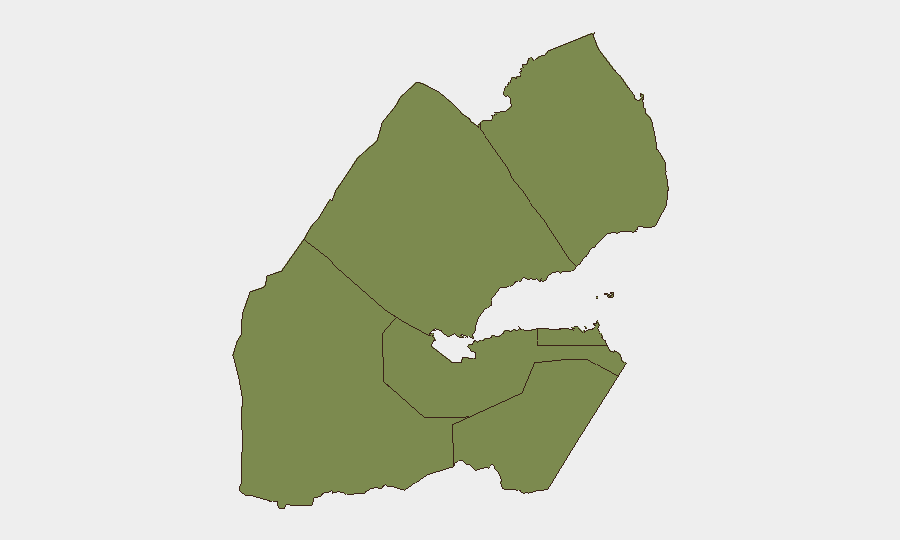
Djibouti remains calm at the countrywide level with no verified security incidents, civil unrest, armed attacks, or infrastructure disruption reported in the last 24–48 hours. However, the country faces elevated indirect threat exposure due to ongoing regional tensions involving Saudi Arabia, Iran, Egypt, and maritime actors in the Red Sea and adjacent waters. All six administrative regions carry uniform composite risk scores (1.3), indicating that threat vectors are primarily external rather than driven by localized instability.
Key Developments
- 2026-08-02 · Djibouti (countrywide) — No confirmed civil unrest, protests, clashes, or security incidents in the last 24–48 hours; port operations and transport networks reported as routine.
- 2026-08-02 · Red Sea / maritime approaches (regional, not in-country) — Ongoing conventional military posturing between Saudi Arabia and Iran, with tanker-threat signaling; no confirmed spillover incident inside Djibouti territory or waters during this reporting window.
- 2026-08-02 · Djibouti (national level) — Public statement and threat signaling events involving Djibouti, Saudi Arabia, and media outlets (Reuters); nature and escalatory intent of statements remain under assessment.
- 2026-08-01 · Djibouti (national level) — Saudi public statement directed at Djibouti; context and implications require further monitoring for policy or diplomatic shift.
- 2026-07-31 · Djibouti (national level) — Egyptian conventional military force activity signaled in relation to Djibouti; London-based force activity also noted; escalatory intent unclear and requires corroboration.
Highest-Risk Areas
All six administrative regions (Dikhil, Arta, Ali Sabieh, Tadjourah, Obock, and Djibouti) share identical composite risk scores, suggesting that threat drivers are national or external rather than sub-national. This pattern indicates that regional security depends primarily on geopolitical factors—specifically Saudi–Iran tensions, Red Sea maritime instability, and Egypt's regional posture—rather than on local governance, crime, or communal conflict. Port facilities, maritime chokepoints, and coastal areas warrant heightened attention given the concentration of military signaling in regional waters and tanker-threat rhetoric.
How GeoBit Would Assist
Security teams should employ Intel Sweep and X/Twitter OSINT to track real-time signaling from Saudi, Iranian, Egyptian, and UK defense ministries and naval commands for any escalatory moves toward Djibouti. Maritime & Aviation tracking combined with Satellite & Imagery analysis would provide visibility into force positioning and port activity, enabling early warning of any disruption to supply chains or personnel movement. AOI Monitoring & Early Warning anchored on Djibouti City, the Port of Djibouti, and key military installations would trigger alerts if activity patterns or threat indicators change materially from baseline.
7-Day Outlook
Regional military signaling is likely to continue as Saudi–Iran tensions persist; however, no evidence suggests imminent military action targeting Djibouti itself. The probability of indirect effects (port delays, shipping insurance cost, supply-chain rerouting) remains moderate. Duty-of-care teams should maintain heightened monitoring posture on embassy/diplomatic channels and maritime advisories while treating ground-level security in Djibouti as stable in the near term.
Highest-Risk Areas — Ranked
| # | State / Region | Risk |
|---|---|---|
| 1 | Dikhil | 1.3 |
| 2 | Arta | 1.3 |
| 3 | Ali Sabieh | 1.3 |
| 4 | Tadjourah | 1.3 |
| 5 | Obock | 1.3 |
| 6 | Djibouti | 1.3 |
Sources
Previous Daily Briefs
A new Djibouti brief is written every day — each with its own risk map and downloadable CSV. Here's the last week; use the calendar to go further back.
📅 Browse every day by calendar →
Highlighted days have a brief. Tap a day for that day's map & analysis, or “csv” for that day's dataset ($5).
Atlas — our AI intelligence desk — emails them this snapshot personally. Nothing else, no list.