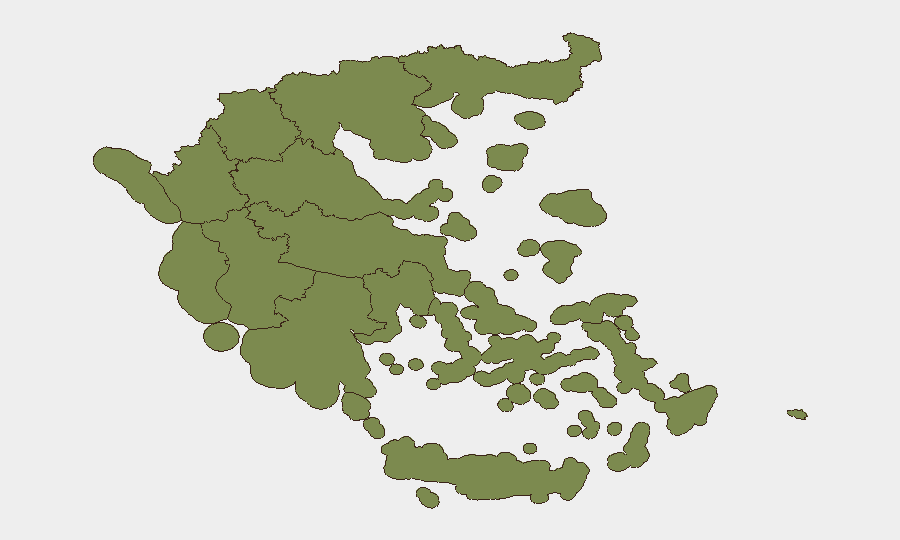
Situation Summary
Greece remains a low-to-moderate threat environment (global rank #142, composite score 5.0) but faces acute near-term security pressures concentrated in Central Greece and Athens. Political violence—including recent gas-canister bombings and shooting incidents—combined with ongoing counter-terrorism operations, infrastructure disruptions (wildfires, water shortages), and public-health alerts are creating compound operational risk for corporate presence. The threat landscape is primarily domestic and localized rather than systemic; trajectory is stable but volatile in targeted areas.
Key Developments
- Athens (Attica), 15 July 2026: Counter-terrorism police continue investigation and interrogation operations linked to the 1 July gas-canister bombings targeting New Democracy officials; network-mapping and extremist-affiliation checks remain active security priority in the capital.
- Athens (Attica), 14 July 2026: Greek police arrested an 89-year-old suspect in connection with two shooting incidents on 14 July that injured five people; investigation ongoing.
- Thessaloniki (Central Macedonia), 14 July 2026: Prosecutor filed homicide and terrorism-related charges against three suspects in the fatal arson/gas-canister attack that killed Vagia Nestora; counter-terrorism operations continue.
- Northern Greece (multi-location), 12–14 July 2026: Wildfires intensified across northern regions, triggering evacuations and sustained firefighting operations; infrastructure and transport-corridor disruptions remain uncontained.
- Thessaloniki Airport, 12 July 2026: Ryanair aircraft suffered rapid depressurization and emergency return after window panel partially dislodged en route to Memmingen; no fatalities, but aviation-safety concern and operational disruption noted.
- Poros Island (Saronic Gulf), 13–14 July 2026: Authorities declared three-month state of emergency due to severe water shortages; affects local residents and transient visitor populations.
- Central Greece (location unspecified), 13–14 July 2026: Health authorities reported salmonella outbreak affecting approximately 30 people; contaminated poultry suspected; ongoing food-safety monitoring may affect hospitality and catering operations.
Highest-Risk Areas
Central Greece (composite risk 31.5) dominates the threat profile, driven by concurrent wildfires, political violence, and public-health alerts. Attica (9.5), centered on Athens, remains the second-highest-risk region due to active counter-terrorism investigations, recent shooting incidents, and gas-canister bombings targeting political figures. Together, these two regions account for the vast majority of measured threat events and operational impact. Crete (6.2), while substantially lower-risk, warrants monitoring as a secondary concern given tourism density and infrastructure vulnerabilities.
How GeoBit Would Assist
Corporate security teams should employ AOI Monitoring & Early Warning on Athens and northern Greece to track real-time police/counter-terrorism operations, wildfire propagation, and infrastructure disruption. Intel Sweep and multi-language OSINT (X, Telegram, local news aggregation) enable continuous detection of emerging threats—political violence, health alerts, transport incidents—with temporal and sentiment analysis to distinguish operational noise from genuine escalation. Routing & Network Analysis tools support dynamic journey planning for personnel and supply chains, circumventing active wildfire zones and disrupted transport corridors while counter-terrorism sweeps remain in progress.
7-Day Outlook
Counter-terrorism investigations in Athens and Thessaloniki will likely sustain elevated police/security activity and potential transport delays through the week. Wildfire operations in northern Greece are expected to persist, with continued evacuation and infrastructure risk; water-shortage declarations on islands may expand. No indicators of rapid escalation, but operational friction and localized service disruptions should be factored into duty-of-care planning for 7–14 July.
Highest-Risk Areas — Ranked
| # | State / Region | Risk |
|---|---|---|
| 1 | Central Greece | 31.5 |
| 2 | Attica | 9.5 |
| 3 | Crete | 6.2 |
| 4 | Western Greece | 4.6 |
| 5 | South Aegean | 2.1 |
| 6 | Northern Aegean | 1.9 |
| 7 | Ioanian Islands | 1.9 |
| 8 | Thessaly | 1.7 |
| 9 | Western Macedonia | 1.5 |
| 10 | Central Macedonia | 1.5 |
| 11 | Eastern Macedonia and Thrace | 1.5 |
| 12 | Peloponnese Region | 1.5 |
Sources
Previous Daily Briefs
A new Greece brief is written every day — each with its own risk map and downloadable CSV. Here's the last week; use the calendar to go further back.
📅 Browse every day by calendar →
Highlighted days have a brief. Tap a day for that day's map & analysis, or “csv” for that day's dataset ($5).
Atlas — our AI intelligence desk — emails them this snapshot personally. Nothing else, no list.