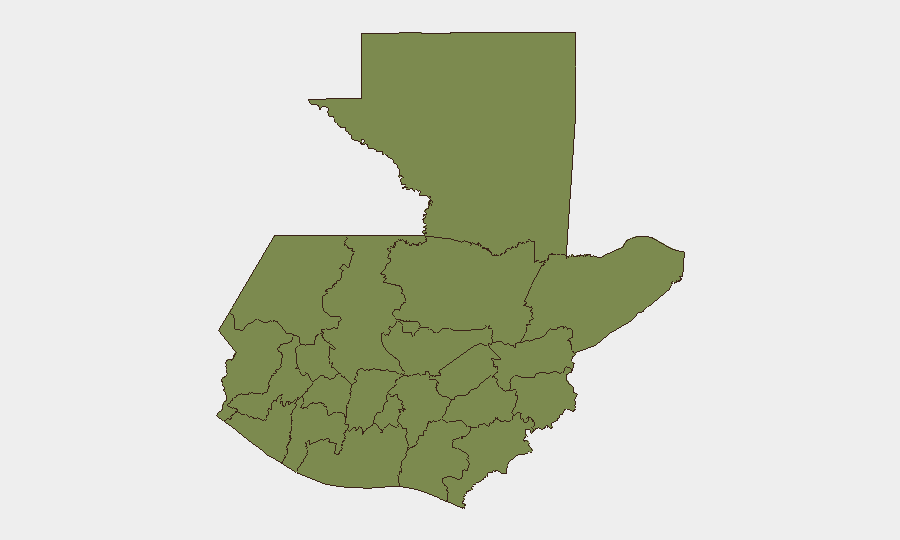
Situation Summary
Guatemala faces elevated urban violence concurrent with civil unrest over fuel pricing, creating a dual-layer security challenge. A violent weekend (25–27 July) with 20–24 homicides—including coordinated mass-shooting attacks on private residences—has triggered a national security-strategy review by the Ministry of Gobernación and coordinated military operations. Simultaneously, fuel-price protests have generated roadblocks on major national routes, compounding transit risk and limiting mobility options for organizations and personnel. The threat environment is concentrated in the Guatemala Department (Guatemala City and surrounding municipalities) but extends to border regions; the trajectory suggests sustained criminal violence with episodic civil disruption through early August.
Key Developments
- Countrywide security-strategy reassessment (27 Jul, ongoing). The Ministry of Gobernación announced a replan of joint security operations following a violent weekend; this policy shift is now shaping enforcement and military deployment across Guatemala City and Petén.
- Mass shooting, Boca del Monte, Villa Canales (Guatemala Dept., 25 Jul evening). Unknown armed assailants opened fire on a residential party, killing at least six people including a social-media personality. This attack was a primary trigger for the national security review.
- Fatal home invasion, San Benito, Petén (25 Jul). Attackers killed four people in a residential assault; the incident underscores a pattern of organized violence targeting private homes rather than street-level confrontations.
- MS-13 logistics arrest and expulsion (Oratorio, Santa Rosa Dept., 24 Jul; reported 26 Jul). Guatemalan authorities detained Marvin R. ("Manso"), a Salvadoran national described as an MS-13 logistics leader, and expelled him across the border as part of a joint cross-border gang-suppression operation.
- Mara 18 suspect arrest (San Lucas Sacatepéquez, Sacatepéquez Dept., 25 Jul; reported 26 Jul). PNC and INTERPOL detained a 48-year-old Salvadoran woman linked to Mara 18 on the Interamericana highway; this arrest formed the second part of a 48-hour coordinated operation against Salvadoran gang members in Guatemala.
- Fuel-price protest roadblocks (24 Jul, multiple active through 29 Jul). Demonstrations against rising fuel costs generated blockages on CA-1, CA-2, and regional routes in Alta Verapaz, Chimaltenango, Quetzaltenango, Huehuetenango, and the Guatemala metropolitan area; latest Provial updates indicate some blocks remain active or periodically re-established.
Highest-Risk Areas
Guatemala Department dominates the risk ranking (31.3) due to concentration of organized criminal activity, gang presence, and mass-violence incidents in and around Guatemala City and Villa Canales. Retalhuleu (13.8) and San Marcos (8.8) follow, reflecting cross-border gang activity and narcotics-trafficking corridors linked to Mexican cartels. These three departments account for the vast majority of tracked events; remaining departments show minimal activity, indicating that security risk and duty-of-care concerns should be concentrated in the capital region and southwestern border areas.
How GeoBit Would Assist
GeoBit's AOI Monitoring & Early Warning capability enables persistent watch on high-risk municipalities (Villa Canales, Guatemala City zones, Retalhuleu) with real-time alerting on security-force movements, roadblocks, and protest activity. Routing & Network Analysis supports alternative-route planning when primary arteries (CA-1, Interamericana) are blocked by civil unrest. OSINT fusion and multi-language event feeds provide 24–48-hour lead time on emerging roadblocks, gang operations, and policy shifts by tracking local media, government statements, and X/Twitter signals.
7-Day Outlook
Urban homicide rates are likely to remain elevated through early August as security operations intensify; organizations should expect periodic high-casualty incidents in the Guatemala Department. Fuel-price protests may persist or re-emerge if subsidies are not restored, creating recurring transit friction on major routes. Personnel movements into Guatemala City and southwestern departments should be assessed against current threat data and alternative routing; the next 5–7 days will clarify whether the military replan reduces violence or displaces it to secondary cities.
Highest-Risk Areas — Ranked
| # | State / Region | Risk |
|---|---|---|
| 1 | Guatemala Department | 31.3 |
| 2 | Retalhuleu | 13.8 |
| 3 | San Marcos | 8.8 |
| 4 | Escuintla | 3.8 |
| 5 | Petén | 1.3 |
| 6 | Huehuetenango | 1.3 |
| 7 | Quetzaltenango | 1.3 |
| 8 | Quiché | 1.3 |
| 9 | Alta Verapaz | 1.3 |
| 10 | Totonicapán | 1.3 |
| 11 | Sololá | 1.3 |
| 12 | Chimaltenango | 1.3 |
Sources
Previous Daily Briefs
A new Guatemala brief is written every day — each with its own risk map and downloadable CSV. Here's the last week; use the calendar to go further back.
📅 Browse every day by calendar →
Highlighted days have a brief. Tap a day for that day's map & analysis, or “csv” for that day's dataset ($5).
Atlas — our AI intelligence desk — emails them this snapshot personally. Nothing else, no list.