Situation Summary
Indonesia remains a moderate global security concern (rank #46, composite score 35) with 3,170 tracked events, but sub-national risk is highly concentrated—Jakarta and West Java account for the majority of threat activity. The past 24–48 hours have seen multiple simultaneous developments: lethal violence against police in Central Kalimantan during a drug operation, repeated seismic activity in Papua, active inter-communal tensions in Wamena, and transnational smuggling interdiction. Overall trajectory is one of sustained enforcement pressure on organized crime and narcotics trafficking, coupled with emerging or persistent social tensions in remote provinces.
Key Developments
- Central Kalimantan, Katingan Regency (Tumbang Kalemei Village) – 24 July: Three Indonesian National Police officers killed during a drug eradication operation; five suspects identified, with three named. President Prabowo publicly acknowledged the incident, indicating high-level awareness and heightened security response in the region.
- Papua, Sarmi offshore area (24 July): Two separate earthquakes recorded—magnitude 4.3 at 57 km northwest and magnitude 3.5 at 50 km southwest of Sarmi—raising short-term infrastructure and transport-corridor risk in coastal Papua.
- Papua, Wamena (Jayawijaya Regency) – last 24–48 hours: Regional Police Chief issued public appeal for peaceful resolution of inter-tribal disputes, explicitly warning against resurgence of tribal warfare, signaling recent or ongoing communal tensions treated as operationally significant by authorities.
- Papua (10 hours ago): Indonesian military announced deployment to guard high-risk airstrips, reflecting elevated threat assessment for aviation infrastructure and logistics nodes critical to remote operations and personnel mobility.
- National borders/Malaysia (current news cycle): Authorities interdicted attempted gold smuggling of ~3 kg to Malaysia, underscoring active transnational organized crime and continued border-enforcement activity.
- National (ongoing): Indonesian House of Representatives advancing asset-confiscation legislation and Indonesia–Russia anti-narcotics cooperation frameworks, reflecting structural policy adjustment to organized crime and drug trafficking.
Highest-Risk Areas
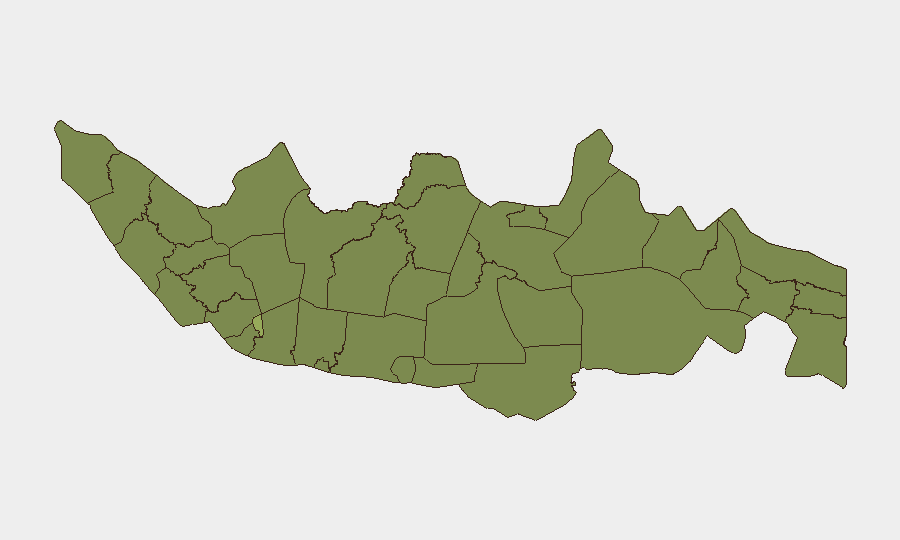
Jakarta (54.6) and West Java (39.6) are the dominant risk drivers, reflecting capital-city concentration of criminal networks, political protest activity, and governance tensions. Central Java (35.8) and North Sumatra (33.7) complete the top tier. Critically, Papua (26.3) and Central Kalimantan (27) have emerged as active operational hotspots despite lower absolute rankings—the lethal police attack and military airstrip-security deployment indicate localized but acute security instability tied to narcotics enforcement, inter-communal conflict, and remote-area governance challenges. Organizations with personnel or supply chains in Papua or Kalimantan should treat these as elevated-vigilance zones within the sub-national landscape.
How GeoBit Would Assist
Teams can employ AOI Monitoring & Early Warning for persistent watch on high-risk provinces (Jakarta, West Java, Papua, Kalimantan) to detect emerging flashpoints before operational escalation. Intel Sweep and multi-language OSINT (social media, local reporting, police statements) enable real-time tracking of inter-communal tensions and law-enforcement operations that affect travel and asset security. Routing & Network Analysis supports alternative-route planning around seismic zones and conflict areas, while Maritime & Aviation tracking monitors transport corridors in remote regions where infrastructure is limited and security is fluid.
7-Day Outlook
Anti-narcotics enforcement is likely to remain elevated in Central Kalimantan and other production/trafficking zones, with attendant risk of armed resistance or collateral incidents. Inter-communal tensions in Papua may persist or escalate absent rapid de-escalation by police and local governance; continued seismic activity in Sarmi may disrupt transport and complicate emergency response. Jakarta and West Java will remain the largest absolute risk zones, but remote-province volatility merits close tactical attention.
Highest-Risk Areas — Ranked
| # | State / Region | Risk |
|---|---|---|
| 1 | Special capital Region of Jakarta | 54.6 |
| 2 | West Java | 39.6 |
| 3 | Central Java | 35.8 |
| 4 | North Sumatra | 33.7 |
| 5 | Banten | 29.5 |
| 6 | East Java | 29.3 |
| 7 | Central Kalimantan | 27 |
| 8 | East Nusa Tenggara | 26.7 |
| 9 | Papua | 26.3 |
| 10 | Aceh | 25.3 |
| 11 | Riau | 25.1 |
| 12 | West Kalimantan | 25.1 |
Sources
Previous Daily Briefs
A new Indonesia brief is written every day — each with its own risk map and downloadable CSV. Here's the last week; use the calendar to go further back.
📅 Browse every day by calendar →
Highlighted days have a brief. Tap a day for that day's map & analysis, or “csv” for that day's dataset ($5).
Atlas — our AI intelligence desk — emails them this snapshot personally. Nothing else, no list.